
Breakup Season in Alaska
Breakup Season in Alaska: What It Is and What to Expect
Alaska’s breakup season marks the shift from winter to spring, when months of snow and ice begin to melt across the state. Rivers that were frozen solid start to move again, ice breaks apart, and the landscape quickly turns wet, muddy, and unpredictable. It’s one of the most dramatic seasonal changes in Alaska and a clear signal that winter is finally letting go.
This time of year isn’t always pretty, but it’s important. Breakup affects travel, access to trails, road conditions, and even entire communities along major rivers. For visitors, it can be a challenging time to explore. For locals, it’s a familiar and necessary transition that resets the state for the summer season ahead.
Breakup usually happens between April and early June, depending on the region. Interior areas like Fairbanks tend to see it first, while coastal and northern regions follow later. During this period, conditions can change quickly, and what looks solid one day can turn into mud or moving water the next.
What Breakup Season Looks Like
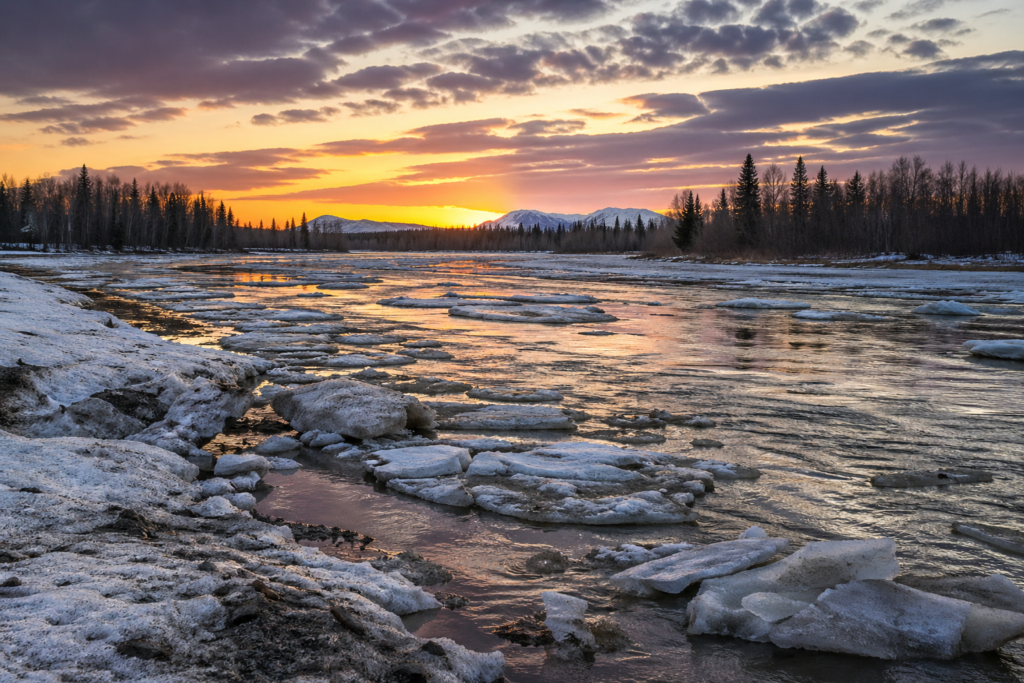
During breakup, snow melts rapidly and ice begins to break apart on rivers and lakes. Large chunks of ice move downstream, sometimes piling up and creating ice jams. Roads turn soft and muddy, parking lots fill with slush, and trails can become wet, uneven, and difficult to use.
In some areas, especially along major rivers, flooding can occur when ice blocks the flow of water. This is one of the more unpredictable parts of the season and can change conditions quickly.
When Breakup Happens
Breakup doesn’t happen all at once across Alaska. It typically begins in Interior regions like Fairbanks in April or early May and moves outward from there.
Southcentral Alaska usually follows in May, while northern and coastal areas may not fully break up until late May or even early June. Timing varies year to year depending on snowfall and spring temperatures.
Why Breakup Season Matters
Breakup has a direct impact on travel and daily life. Dirt roads can become soft and difficult to navigate, hiking trails are often unstable, and river conditions can shift quickly.
For travelers, this isn’t the easiest time to visit. Many summer activities aren’t fully available yet, and winter access has already ended. It’s a true transition period where conditions can feel inconsistent.
Where You Experience It Most
Breakup is most noticeable in Interior Alaska, especially around Fairbanks and along major river systems like the Yukon and Tanana. Ice movement and river changes are more dramatic in these areas.
You’ll still see breakup in Southcentral Alaska, including Anchorage and surrounding areas, but it tends to be less intense than in the Interior.
Travel Tips for Breakup Season
If you’re visiting during breakup, expect wet and muddy conditions almost everywhere. Waterproof boots are essential, and having flexible travel plans helps if conditions change.
Stick to paved roads when possible and avoid backcountry travel unless you’re familiar with the terrain. Checking local conditions before heading out can save you time and frustration.
Final Word
Breakup season isn’t Alaska at its most scenic, but it’s one of its most real. It’s the turning point between winter and summer, when everything starts moving again.
If you understand what to expect, you can still experience Alaska during this time. It just requires a little more flexibility, the right gear, and a willingness to see Alaska in a different light.