
Disclosure: This page contains affiliate links. As an Amazon Associate, I earn from qualifying purchases at no extra cost to you.
When people start planning a winter trip to Alaska, one of the first things they think about buying is a winter jacket. And I understand why. When you're looking at temperatures that can drop well below zero, having a dependable coat feels like the most important part of your packing list.
But here's something I've learned from living in Alaska: the warmest jacket isn't automatically the best jacket for every situation.
Winter in Anchorage is different from winter in Fairbanks. Coastal communities deal with moisture, wind, and wet snow, while Interior Alaska can experience prolonged stretches of extremely cold, dry weather. What works for walking around downtown Anchorage may not be enough for standing outside watching the northern lights near Fairbanks.
Your activity level matters, too. A jacket that keeps you comfortable while walking or snowshoeing might not provide enough insulation when you're standing still for an hour.
That's why I recommend thinking about winter jackets as part of an entire clothing system. Your base layers, mid layers, insulated outerwear, boots, gloves, and face protection all work together.
In this guide, we'll look at five insulated jackets worth considering for Alaska, explain the differences between their designs, and help you choose the right outerwear for the conditions you're likely to encounter.
Quick Navigation
Quick Picks
- Best Rugged Workwear Jacket: Carhartt Yukon Extremes Jacket
- Best Everyday Insulated Jacket: Columbia Pike Lake II Hooded Jacket
- Best Winter Parka for City Travel: The North Face McMurdo Parka
- Best Versatile 3-in-1 Jacket: Columbia Whirlibird IV Interchange
- Best Technical Cold-Weather Down Parka: Outdoor Research Super Alpine Down Parka
These jackets serve different purposes. Some prioritize durability, some offer flexibility for changing weather, and others emphasize substantial insulation. Choosing the right one depends on where you're going and how much time you'll spend outside.
Best Insulated Jackets for Alaska
Below are five jackets selected for different Alaska winter needs. Each has advantages and limitations, so consider the complete clothing system you'll be wearing rather than relying on the jacket alone.
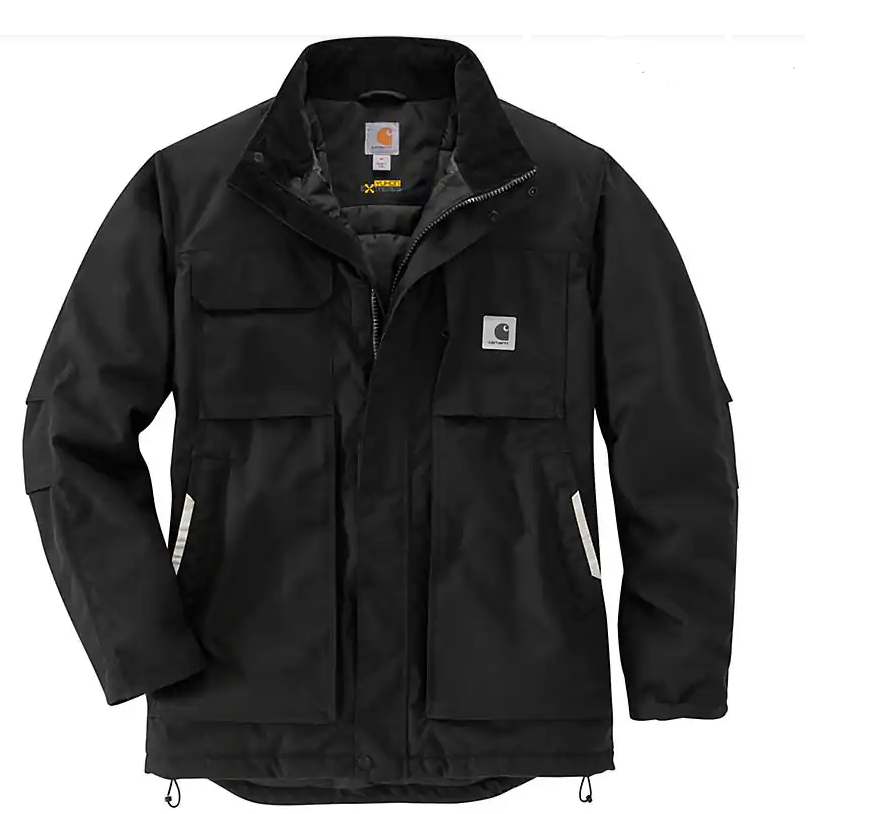
Best Rugged Workwear Jacket: Carhartt Yukon Extremes Jacket
If you've spent much time in Alaska, you've probably noticed that Carhartt clothing is everywhere. From construction sites to wood piles and everyday winter chores, durable workwear is a practical part of life here.
The Carhartt Yukon Extremes Jacket is designed for demanding cold-weather environments where durability, insulation, and protection from the elements matter.
One of its biggest advantages is its workwear-oriented construction. If you're hauling firewood, shoveling snow, maintaining equipment, or spending time around rough surfaces, a jacket designed for rugged use can make more sense than a lightweight technical parka.
It's also worth considering for people who need a dependable outer layer for everyday outdoor work rather than a jacket designed primarily for recreation.
However, rugged construction can come with trade-offs. Workwear jackets may feel heavier or less compressible than lightweight insulated alternatives, and fit can vary between models.
For prolonged stationary exposure in extreme Interior cold, you'll still need to evaluate whether the jacket provides enough insulation with your other layers. A durable winter jacket isn't automatically an expedition parka.
Best for: Outdoor work, winter chores, rugged everyday use, and cold-weather activities where durability is important.
Check Price on Amazon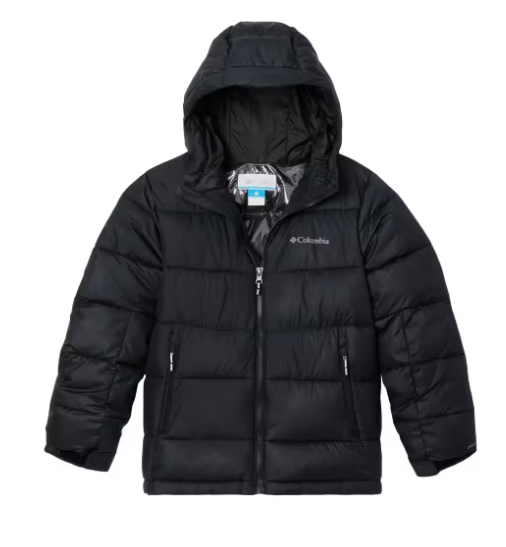
Best Everyday Insulated Jacket: Columbia Pike Lake II Hooded Jacket
Not every Alaska winter outing requires a heavy parka. Sometimes you need an insulated jacket that's comfortable for everyday activities, traveling between buildings, or spending shorter periods outdoors.
The Columbia Pike Lake II Hooded Jacket is designed around synthetic insulation, offering a practical option for people who want warmth without committing to a large expedition-style coat.
Synthetic insulation can be useful in Alaska because it generally maintains more insulating ability when damp than untreated down. That can be an advantage when you're dealing with changing weather, snow, or moisture.
The hood provides additional coverage, and the jacket can be combined with appropriate base and mid layers for colder conditions.
For visitors spending time around Anchorage, shopping, sightseeing, or moving between vehicles and heated buildings, this style of jacket may be a reasonable choice depending on the weather.
Its limitation is important, though. A relatively lightweight insulated jacket shouldn't be treated as sufficient protection for standing still in extreme subzero temperatures.
If you're planning northern lights viewing in Interior Alaska or extended exposure to severe cold, you'll likely need substantially more insulation.
Best for: Everyday winter wear, casual travel, errands, and moderate cold-weather activities.
Check Price on Amazon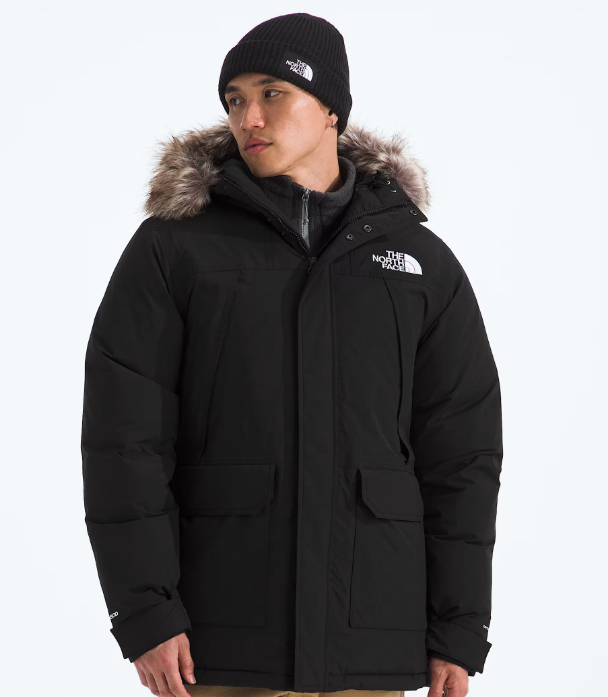
Best Winter Parka for City Travel: The North Face McMurdo Parka
If you're looking for a more substantial winter coat, The North Face McMurdo Parka is worth considering.
Unlike shorter insulated jackets, a parka generally provides additional coverage over your hips and upper legs. That extra length can make a noticeable difference when you're standing outside, walking around town, or waiting in cold weather.
The McMurdo combines down insulation with weather-protective construction, making it a practical option for cold-weather travel where warmth and coverage are priorities.
For Alaska visitors, I particularly like the concept of a longer parka for activities that involve relatively little movement. Walking through winter festivals, sightseeing, and spending time outdoors in colder communities can all call for more insulation than a lightweight jacket provides.
However, down insulation has limitations. If it becomes thoroughly wet, untreated down loses loft and insulating performance. Proper care and weather protection are important, especially in wetter coastal conditions.
Also remember that even a substantial parka isn't a guarantee of comfort at every Alaska temperature. Wind, activity level, base layers, and the amount of time you're outside all matter.
Best for: Cold-weather sightseeing, winter city travel, and people who prefer longer insulated outerwear.
Check Price on Amazon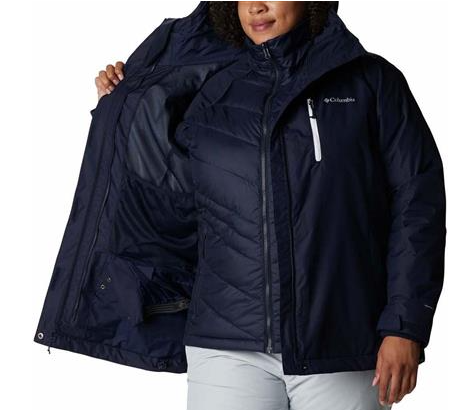
Best Versatile 3-in-1 Jacket: Columbia Whirlibird IV Interchange
One of the challenges of packing for Alaska is preparing for different weather conditions without bringing an entire closet of winter clothing.
The Columbia Whirlibird IV Interchange addresses that problem with a 3-in-1 design that combines a protective outer shell with a removable insulating layer.
That flexibility can be particularly useful if your Alaska itinerary includes several regions or activities.
You can wear the layers together when you need insulation and weather protection, use the outer shell separately when conditions are wet but relatively mild, or wear the insulating layer on its own when appropriate.
For winter travel around Southcentral or coastal Alaska, where precipitation and temperature changes can be significant, a versatile system like this has practical advantages.
However, flexibility shouldn't be confused with extreme-cold performance. A 3-in-1 jacket may be excellent for changing winter conditions without providing the same stationary warmth as a heavily insulated parka.
If you're visiting Fairbanks during a particularly cold period or planning extended northern lights viewing, evaluate the insulation carefully and bring additional cold-weather clothing.
Best for: Travelers visiting multiple Alaska regions, changing weather conditions, and people who want adaptable outerwear.
Check Price on Amazon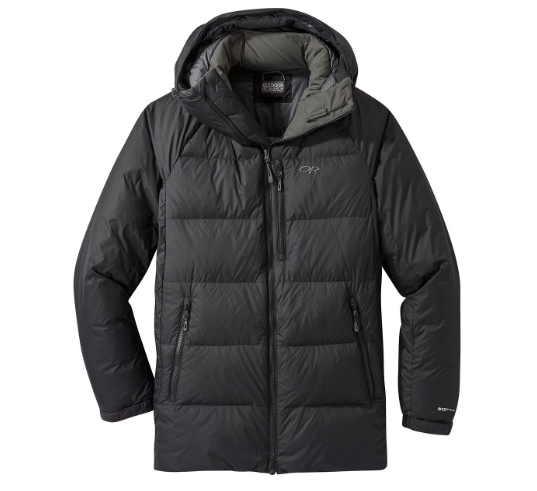
Best Technical Cold-Weather Down Parka: Outdoor Research Super Alpine Down Parka
Some Alaska winter activities demand more than an everyday insulated jacket. When you're spending extended periods outdoors, especially during low-activity situations, substantial insulation becomes increasingly important.
The Outdoor Research Super Alpine Down Parka is designed as a technical cold-weather insulating garment, making it worth considering for people who prioritize warmth and performance in demanding environments.
Down insulation is valued for its ability to trap warmth while remaining relatively lightweight and compressible. That can be particularly useful when you're carrying additional clothing for winter adventures.
For activities like winter camping, photography, or spending time outside during very cold conditions, having a substantial insulated parka available can make a significant difference.
Technical down parkas are often most useful when you're resting or stationary rather than working hard enough to generate substantial body heat.
However, down insulation requires appropriate moisture management. If you're sweating heavily during strenuous activity, you may be better off wearing lighter, breathable layers while moving and adding your insulated parka when you stop.
Technical parkas can also have different shell materials and durability priorities than heavy-duty workwear. Consider how you'll use the jacket before choosing it for activities involving abrasion or demanding physical work.
Best for: Technical cold-weather layering, winter photography, extended outdoor stops, and activities where substantial insulation is important.
Check Price on AmazonInsulated Jacket Comparison Chart
These jackets have different strengths, and the right choice depends on how you'll use them. Click any product name to view its Amazon listing.
| Jacket | Design | Best For |
|---|---|---|
| Carhartt Yukon Extremes Jacket | Rugged insulated workwear | Outdoor work and winter chores |
| Columbia Pike Lake II Hooded Jacket | Synthetic insulated jacket | Everyday winter wear |
| The North Face McMurdo Parka | Longer insulated parka | Cold-weather city travel |
| Columbia Whirlibird IV Interchange | 3-in-1 layering system | Changing winter weather |
| Outdoor Research Super Alpine Down Parka | Technical down insulation | Cold-weather stops and technical use |
Down vs. Synthetic Insulation: Which Is Better for Alaska?
One of the biggest decisions when shopping for an Alaska winter jacket is choosing between down and synthetic insulation.
Both can work well, but they perform differently depending on moisture, activity, and how the jacket is constructed.
| Feature | Down Insulation | Synthetic Insulation |
|---|---|---|
| Warmth-to-Weight | Often excellent, especially in high-quality down garments. | Varies by insulation type and construction. |
| Wet Conditions | Untreated down loses significant insulating ability when saturated. | Generally retains more insulating ability when damp. |
| Packability | Often highly compressible. | Varies, with some designs bulkier than down. |
| Drying | Can take longer to dry thoroughly. | Often dries more quickly. |
| Best Applications | Cold, relatively dry conditions and lightweight warmth. | Variable weather, damp environments, and versatile layering. |
For the dry, severe cold commonly experienced in Interior Alaska, a well-designed down parka can be an excellent choice. In wetter coastal conditions, synthetic insulation or a well-protected down garment may be more practical.
Keep in mind that insulation material alone doesn't determine warmth. Fill quantity, garment length, construction, wind protection, and fit all matter.
Choosing Insulated Jackets for Alaska Winter Conditions
Alaska's winter conditions can change dramatically depending on location, wind, precipitation, and activity level. The following chart offers general clothing considerations rather than guaranteed temperature ratings for any particular jacket.
| Temperature | Jacket Considerations | Additional Protection |
|---|---|---|
| 32°F to 20°F | Insulated jackets or adaptable layering systems may work depending on activity. | Windproof and waterproof protection may be important in wet conditions. |
| 20°F to 0°F | Substantial insulated outerwear combined with appropriate base and mid layers. | Insulated boots, gloves or mittens, and head protection. |
| 0°F to -20°F | Heavy insulation and winter outerwear appropriate for prolonged cold exposure. | Insulated lower-body clothing and face protection become increasingly important. |
| Below -20°F | Purpose-built extreme-cold clothing system, with substantial insulation and full coverage. | Careful exposure planning, shelter access, and emergency preparedness are essential. |
Do not interpret these ranges as certified temperature ratings for the featured products. A jacket that works while walking may be inadequate when standing still, even at the same temperature.
Best Insulated Jackets for Different Alaska Winter Activities
Northern Lights Viewing
Watching the northern lights is one of the most memorable winter experiences in Alaska, but it often means standing outside at night with very little movement.
That makes substantial insulation especially important. A longer insulated parka can be useful, but your entire clothing system needs to be appropriate for the temperature.
In Interior Alaska, where northern lights viewing conditions can coincide with extreme cold, don't assume an ordinary insulated jacket will be enough. Some guided tours provide specialized cold-weather clothing, which may be worth considering.
Winter Hiking and Snowshoeing
When you're hiking or snowshoeing, your body generates heat. Wearing an extremely heavy jacket while moving can cause excessive sweating, leaving you cold when you stop.
For active winter adventures, use breathable layers and weather-appropriate outerwear. Carry additional insulation for breaks, emergencies, and periods of inactivity.
A technical insulated parka may be more useful in your pack for stops than as your primary jacket during strenuous movement.
Winter Sightseeing
For sightseeing around Anchorage, Fairbanks, or other Alaska communities, comfort and versatility are important.
A substantial insulated parka can work well during colder weather, while a lighter insulated jacket or adaptable 3-in-1 system may be more practical in milder conditions.
Remember that sightseeing often involves alternating between heated buildings, vehicles, and outdoor areas. Being able to adjust your layers can make the day much more comfortable.
Outdoor Work and Winter Chores
If you're shoveling snow, hauling firewood, or working around equipment, durability may be just as important as warmth.
Workwear-oriented insulated jackets are worth considering for these activities because they're designed with demanding use in mind.
Just remember to manage perspiration and adjust insulation when your activity level changes.
Winter Road Trips
If you're driving between Alaska communities during winter, your jacket isn't just about comfort while you're sightseeing. It's also part of your emergency preparedness.
Keep substantial winter clothing in your vehicle, including extra insulating layers, boots, gloves, and head protection.
A breakdown or unexpected delay can leave you exposed to dangerous temperatures, particularly on remote highways where assistance may take time to arrive.
Buying Guide & Frequently Asked Questions
What is the best winter jacket for Alaska?
There isn't one jacket that's best for every part of Alaska or every winter activity.
For everyday use, a practical insulated jacket may be sufficient. For prolonged stationary exposure in severe cold, a substantial parka may be more appropriate. For wet or changing weather, a layered system with reliable weather protection can be especially useful.
Do I need a parka for Fairbanks in winter?
If you're visiting Fairbanks during the colder months and plan to spend significant time outdoors, a substantial winter parka is worth considering.
Temperatures can drop far below zero, and standing outside during northern lights viewing can require considerably more insulation than walking between buildings.
Is down or synthetic insulation warmer?
Both can provide excellent warmth. Down often offers an excellent warmth-to-weight ratio, while synthetic insulation generally performs better when damp.
Actual warmth depends on insulation quantity, garment construction, fit, and environmental conditions rather than material alone.
Can I wear a ski jacket in Alaska?
Yes, depending on the conditions and what you're doing.
Many ski jackets are designed for active movement and weather protection. They may work well for skiing and other active pursuits but may not provide enough insulation for prolonged stationary exposure during extreme cold.
Should an Alaska winter jacket fit loosely?
Your jacket should have enough room for appropriate base and mid layers without compressing insulation or restricting movement.
However, excessively loose clothing may allow more cold air to circulate. Look for a comfortable fit with adjustable cuffs, hems, and hood coverage where appropriate.
Is a waterproof jacket necessary in Alaska?
That depends on the region and weather.
Waterproof protection can be particularly valuable in coastal and Southcentral Alaska, where winter precipitation may include wet snow or rain.
In extremely cold, dry Interior conditions, substantial insulation and wind protection may be higher priorities. Many travelers benefit from a system that provides both insulation and appropriate weather protection.
Are expensive winter jackets worth it?
Sometimes, but price alone doesn't determine whether a jacket is suitable for Alaska.
Consider insulation, construction, weather resistance, fit, durability, and the conditions you'll actually encounter.
A costly technical jacket may be unnecessary for casual city travel, while an inexpensive everyday jacket may not provide adequate protection for extreme cold.
Can one jacket work for Anchorage and Fairbanks?
Possibly, but it depends on the season, weather, and your activities.
A versatile layering system may work across different conditions, but Fairbanks can experience substantially colder winter temperatures than Anchorage.
If you're visiting both areas, plan for the coldest conditions you're likely to encounter rather than packing only for the milder destination.
How should I care for an insulated winter jacket?
Always follow the manufacturer's care instructions.
Down garments often require careful washing and thorough drying to restore loft, while synthetic insulated jackets may have different cleaning requirements.
Avoid storing insulated garments tightly compressed for extended periods, and make sure they're completely dry before storage.
What's the biggest mistake people make when buying an Alaska winter jacket?
One of the biggest mistakes is assuming that a jacket labeled "winter" will provide enough protection for every Alaska winter situation.
A jacket designed for relatively mild winter weather may not be appropriate for standing outside in temperatures far below zero.
Choose outerwear based on your destination, expected conditions, activity level, and the rest of your clothing system.
Final Thoughts
Choosing the right insulated jacket for Alaska isn't necessarily about finding the heaviest or most expensive coat available. It's about understanding where you're going, what you'll be doing, and how much protection you'll need.
For everyday winter activities, a versatile insulated jacket may be enough. For outdoor work, durability becomes important. And for extended periods standing outside in extreme cold, substantial insulation can make all the difference.
But no jacket works alone. Your base layers, mid layers, insulated pants, boots, gloves, and face protection are all part of staying warm and comfortable.
One thing I always want visitors to understand is that Alaska's winter conditions deserve respect. A beautiful clear night can also be dangerously cold, especially when you're away from shelter.
Prepare for the conditions, carry additional clothing when traveling outside town, and don't rely on a single jacket to solve every winter clothing challenge.
With the right outerwear and a good layering system, you'll be better prepared to enjoy Alaska's winter landscapes, outdoor adventures, and unforgettable northern lights.