Permafrost in Alaska
Permafrost in Alaska: What It Is and Why It Matters
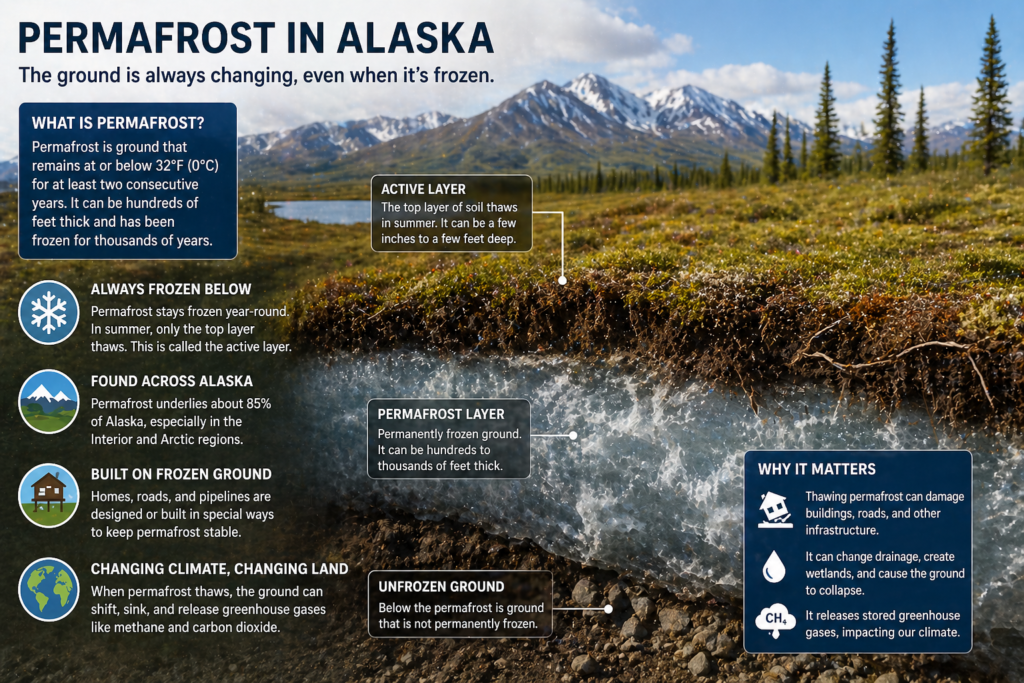
Permafrost in Alaska is ground that remains frozen for at least two consecutive years, often staying frozen for decades or even centuries. It lies beneath the surface across large parts of the state, especially in Interior and northern regions. While you may not always see it, permafrost plays a major role in shaping Alaska’s landscape and how people live here.
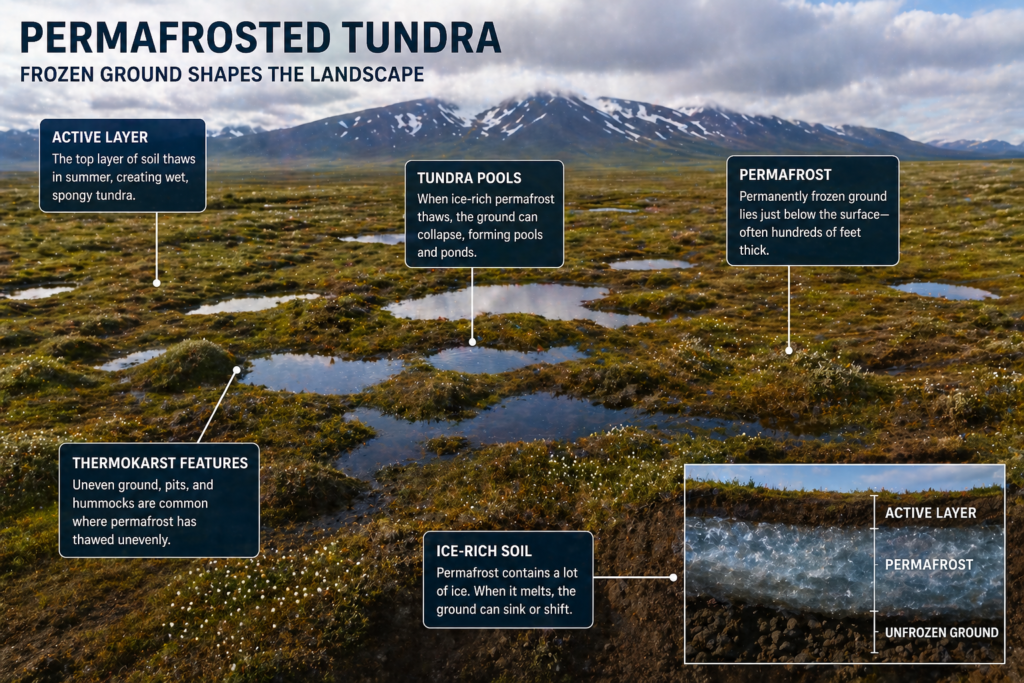
During the summer, the top layer of soil—called the active layer—thaws and becomes soft, while the ground below remains frozen. This creates unique conditions where the surface can shift, settle, or become uneven. It’s one of the reasons Alaska looks and behaves differently than other places.
Permafrost is especially common in Arctic areas, including regions like Utqiaġvik, where frozen ground is a constant part of the environment .
What Permafrost Looks Like
Permafrost isn’t always visible at the surface. In many places, it exists below a layer of soil, plants, or tundra. During summer, the top layer may feel soft or muddy, but just a short distance down, the ground is still frozen solid.
In some areas, thawing permafrost creates uneven terrain, small dips, or waterlogged ground. You may also see tilted trees or structures where the ground has shifted over time.
Where Permafrost Exists
Permafrost is found across much of Interior Alaska and the North Slope. Northern regions experience continuous permafrost, meaning the ground stays frozen almost everywhere below the surface.
Farther south, permafrost becomes more patchy, depending on elevation, vegetation, and local climate conditions.
Why Permafrost Matters
Permafrost affects everything from roads and buildings to ecosystems. When frozen ground stays stable, it provides a solid base. But when it begins to thaw, the ground can shift, sink, or become unstable.
This impacts infrastructure like homes, highways, and pipelines, which must be built with permafrost conditions in mind. It also affects drainage, plant growth, and wildlife habitats.
What Happens When Permafrost Thaws
When permafrost thaws, the ground can lose its structure. Ice within the soil melts, causing the surface to settle or collapse. This can create soggy ground, standing water, and uneven terrain.
In some areas, thawing leads to features like thermokarst, where the land forms small pits, ponds, or irregular surfaces.
Travel Tips for Permafrost Areas
If you’re exploring areas with permafrost, expect uneven ground and wet conditions, especially during summer. Trails may feel soft or unstable in places, and stepping off established paths can be more difficult than expected.
Stick to maintained trails when possible, and wear footwear that can handle mud and moisture.
Basically,
Permafrost is one of Alaska’s most important and often overlooked features. It shapes the land beneath your feet and influences how everything above it functions.
Even if you don’t always see it, understanding permafrost helps you better understand Alaska itself—how it’s built, how it changes, and why it’s unlike anywhere else.