
Wrangell, Alaska
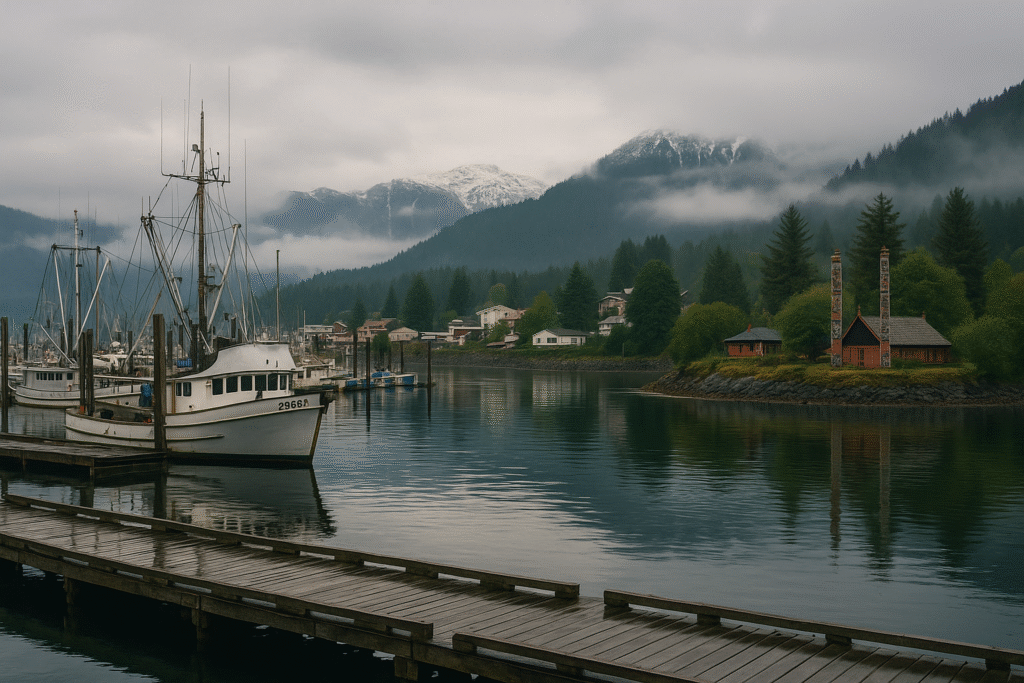
Wrangell, located on the northern tip of Wrangell Island in the heart of the Inside Passage, is one of Alaska’s oldest and most historic towns. Over the centuries, it has flown the flags of four nations—Tlingit, Russia, Britain, and the United States—making it the only city in Alaska with that distinction. Today, Wrangell is a welcoming community that blends Indigenous Tlingit heritage, a colorful frontier past, and a thriving fishing and tourism economy.
Set along the Stikine River and surrounded by the Tongass National Forest, Wrangell is known as a gateway to outdoor adventure. Visitors come here for bear viewing at Anan Wildlife Observatory, world-class sportfishing, and easy access to the Stikine River wilderness. The pace is relaxed, the town is small (around 2,000 residents), and the charm is genuine—Wrangell offers a glimpse of authentic Southeast Alaska away from the bigger cruise ship ports.
Did You Know?
Wrangell is one of the few Southeast Alaska towns not heavily dependent on cruise ships — most visitors arrive by ferry or small tours.
The Anan Wildlife Observatory is one of the best places in the world to view both black and brown bears feeding on salmon in the same habitat.
Wrangell’s name comes from Russian governor Ferdinand Wrangel, though he never actually visited Alaska.
During the Klondike Gold Rush, Wrangell briefly served as a booming supply center for miners heading north.
Petroglyph Beach has one of the highest concentrations of rock carvings in the Pacific Northwest, with some designs that remain a mystery to historians.