
Kotzebue, Alaska
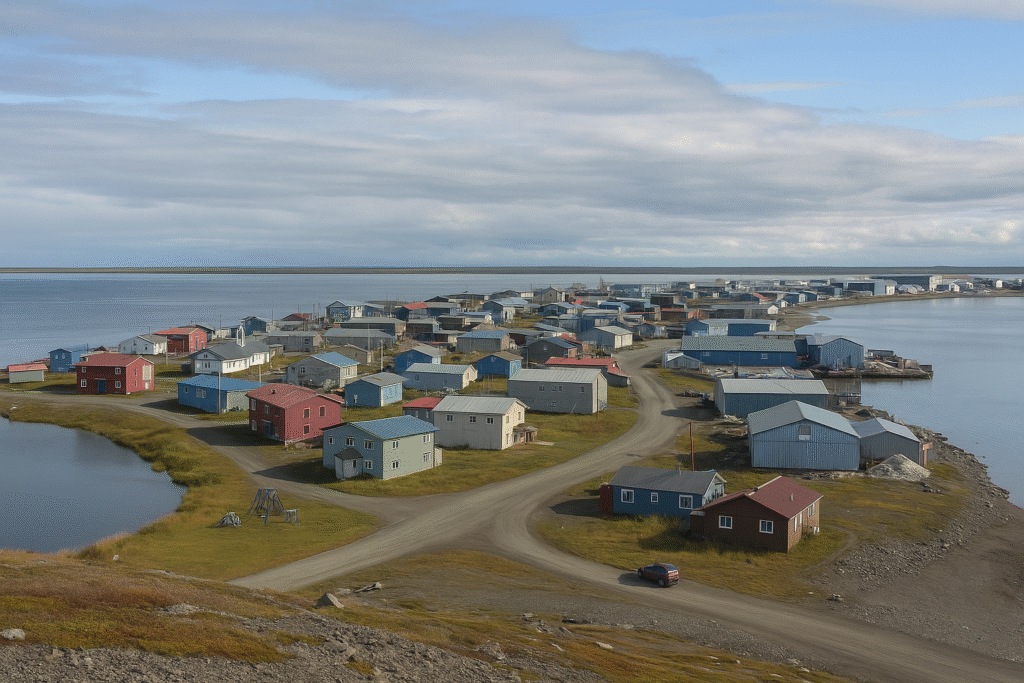
Kotzebue sits on a gravel spit at the end of the Baldwin Peninsula, reaching out into the Kotzebue Sound of the Chukchi Sea. This unique location has made it an important cultural and trade hub for centuries. Known locally as Qikiqtaġruk (“place that is almost an island”), the community is surrounded by water on three sides and tundra stretching endlessly to the east.
The city is home to around 3,000 people, many of whom are Iñupiat. Subsistence traditions remain strong here, with whaling, fishing, berry picking, and hunting playing central roles in both culture and daily life. Kotzebue is also the gateway to three spectacular national park units: Kobuk Valley National Park, Cape Krusenstern National Monument, and Noatak National Preserve, making it one of the most strategically located towns for wilderness access in all of Alaska.
Despite its remote location, Kotzebue is a vibrant community with a mix of modern amenities and deep cultural roots. Visitors can experience traditional Iñupiat heritage at the local cultural center, take part in seasonal festivals, and explore the Arctic landscapes that define life here.
Did You Know?
Kotzebue experiences continuous daylight for about 36 days each summer and polar night for about 30 days in winter.
The town was historically a major trading post, where inland peoples and coastal hunters exchanged furs, ivory, seal oil, and other goods.
Kotzebue is the largest community above the Arctic Circle in Alaska.
The surrounding region is one of the best places in the world to see caribou migrations, with herds numbering in the hundreds of thousands.
Famed explorer Otto von Kotzebue, for whom the town is named, first mapped this area in 1818 during a Russian expedition.