
Driving in Alaska Winter: Essential Safety Guide
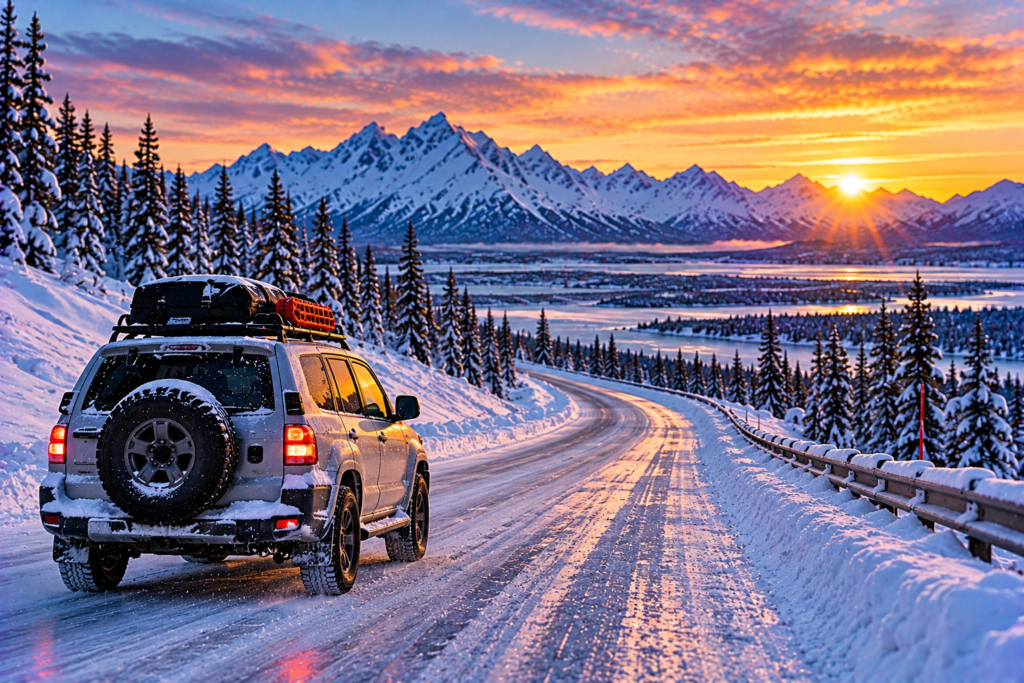
Driving in Alaska is one of the best ways to experience the state. From mountain ranges and glaciers to winding rivers, wildlife, and small communities tucked between vast stretches of wilderness, Alaska's roads offer experiences you simply cannot get from an airplane window.
But driving in Alaska is also different from driving in most of the Lower 48.
Distances are longer than many visitors expect. Services can be spread far apart. Wildlife regularly crosses highways, and weather conditions can change dramatically depending on the season, elevation, and location.
In summer, you'll encounter construction zones, recreational vehicles, tourists stopping for photographs, and occasional gravel or damaged road surfaces. In winter, snow, ice, darkness, and extreme cold introduce an entirely different set of challenges.
And then there's the size of Alaska itself.
A trip from Anchorage to Fairbanks is approximately 360 miles, and that's just one section of the state's highway system. Traveling between destinations often takes longer than visitors anticipate, especially when you factor in weather, roadwork, wildlife, and sightseeing stops.
Living in Alaska teaches you to think differently about driving. You pay attention to your fuel gauge, watch the weather, leave room in your schedule, and understand that some roads require more preparation than others.
Whether you're renting a car for your first Alaska vacation, planning a road trip through the Interior, or considering a winter adventure, this guide will help you understand what to expect and how to prepare.
Quick Navigation
- What Makes Driving in Alaska Different?
- Major Alaska Highways
- Alaska Driving Distances & Travel Times
- Summer Driving in Alaska
- Winter Driving in Alaska
- Wildlife on Alaska Roads
- Renting a Vehicle in Alaska
- Fuel, Cell Service & Remote Travel
- Checking Alaska Road Conditions
- Alaska Driving Emergency Kit
- Practical Alaska Road Trip Tips
- Frequently Asked Questions
- Related Alaska Travel Guides
- Final Thoughts
What Makes Driving in Alaska Different?
One of the biggest adjustments for visitors is understanding how much space exists between Alaska's communities.
In many parts of the United States, you can drive for an hour and pass several towns, restaurants, gas stations, and shopping centers.
In Alaska, you may drive for hours through forests, mountains, or open tundra with limited services.
Long Distances Between Destinations
Alaska's highway system connects many major communities, but distances can be substantial.
What looks like a short trip on a map may take several hours, especially when road conditions or construction slow traffic.
Plan your route before leaving and avoid scheduling too many major destinations into a single day.
Limited Services in Remote Areas
Some highways have long stretches without dependable fuel, restaurants, lodging, or cellular coverage.
Services may also operate seasonally or have limited hours.
Never assume a gas station, restaurant, or business will be open simply because it appears on your map.
Weather Can Change Quickly
Alaska's geography creates dramatically different weather conditions.
You may leave Anchorage in rain, encounter snow at higher elevations, and arrive somewhere with completely different conditions.
This is especially important during spring and fall, when temperatures can move above and below freezing.
Wildlife Is Part of the Driving Experience
Moose, caribou, bears, and other animals may be seen along Alaska highways.
Wildlife encounters are exciting, but animals near the road require your full attention.
Never stop in an active travel lane to take photographs.
Major Alaska Highways Visitors Should Know
Alaska has a relatively limited highway network compared with its enormous size. Several major routes connect the state's most popular road-accessible destinations.
George Parks Highway
The Parks Highway connects the Anchorage-area highway system with Fairbanks, passing through communities such as Wasilla, Talkeetna Junction, and Healy.
It provides road access to the Denali National Park entrance area and is one of Alaska's most popular scenic drives.
Expect mountain scenery, forests, wildlife opportunities, and seasonal tourist traffic.
Glenn Highway
The Glenn Highway runs from Anchorage northeast through Palmer and toward Glennallen, where travelers can connect with other routes.
The drive includes mountain views, river valleys, and access to recreational areas.
Conditions can vary considerably between Anchorage, the Matanuska Valley, and higher-elevation sections.
Seward Highway
The Seward Highway connects Anchorage with Seward and is widely considered one of Alaska's most scenic drives.
It follows Turnagain Arm before continuing through mountainous terrain toward the Kenai Peninsula.
Wildlife viewing, mountain scenery, and coastal conditions make this a memorable route, but drivers need to pay attention to traffic, weather, and designated pullouts.
Sterling Highway
The Sterling Highway branches from the Seward Highway and connects travelers with destinations such as Cooper Landing, Soldotna, Kenai, and Homer.
During summer, this highway can experience heavy recreational traffic, particularly during fishing season and holiday weekends.
Richardson Highway
The Richardson Highway connects Valdez with Fairbanks through portions of Interior and Southcentral Alaska.
It passes through varied terrain, including mountain passes and remote stretches where winter conditions can be challenging.
Alaska Highway
The Alaska Highway connects Alaska with Canada and is the primary road route for people driving to Alaska from the Lower 48.
Travelers entering Alaska by this route typically cross the border near Beaver Creek, Yukon, and continue toward Tok.
Road conditions, fuel availability, border requirements, and seasonal weather should all be considered when planning this trip.
Dalton Highway
The Dalton Highway runs north from the Elliott Highway toward Deadhorse and Alaska's North Slope.
This is a remote industrial highway with substantial gravel sections, limited services, commercial truck traffic, and potentially severe conditions.
It requires considerably more preparation than an ordinary sightseeing drive.
Not all rental companies allow their vehicles on the Dalton Highway.
Denali Highway
The Denali Highway connects the Paxson area with Cantwell and offers access to remote landscapes.
Much of the route is gravel, and it is not maintained for ordinary winter through-travel.
Travelers should confirm seasonal accessibility, road conditions, and rental vehicle restrictions before attempting the route.
Alaska Driving Distances & Estimated Travel Times
Distances in Alaska can be deceptive. The following estimates are useful for basic trip planning, but actual travel times depend on road conditions, construction, traffic, and stops.
| Route | Approximate Distance | Typical Driving Time |
|---|---|---|
| Anchorage to Fairbanks | 360 miles | 6–7.5 hours |
| Anchorage to Seward | 125 miles | 2.5–3 hours |
| Anchorage to Homer | 220 miles | 4–5 hours |
| Anchorage to Talkeetna | 115 miles | 2–2.5 hours |
| Fairbanks to Denali Park entrance | 120 miles | 2–2.5 hours |
| Fairbanks to Tok | 200 miles | 3.5–4.5 hours |
| Anchorage to Valdez | 300 miles | 5.5–7 hours |
These are rounded planning estimates, not live route times. Always confirm your specific route and current conditions before departure.
Summer Driving in Alaska
Summer is the most popular season for Alaska road trips, and for good reason.
Long daylight hours, accessible attractions, and generally milder weather make it easier to explore the state's highway system.
However, summer introduces its own driving challenges.
Road Construction
Alaska has a relatively short construction season, which means a great deal of road maintenance takes place during the warmer months.
Expect flaggers, pilot cars, reduced speeds, lane restrictions, and occasional delays.
Build extra time into your itinerary rather than expecting every drive to go exactly as planned.
Gravel and Road Damage
Some highways include gravel sections, loose aggregate, frost-heave damage, potholes, or uneven pavement.
Reduce your speed when necessary and leave plenty of distance between your vehicle and other traffic.
Flying rocks can damage windshields, particularly when following vehicles too closely on gravel roads.
Tourist and Recreational Traffic
Summer brings rental cars, recreational vehicles, tour buses, and drivers unfamiliar with Alaska highways.
Popular scenic routes may experience congestion around viewpoints and attractions.
Use designated pullouts for photographs and avoid sudden stops.
Long Daylight Hours
Summer daylight can make it easy to lose track of time.
Even when the sun is still up late in the evening, fatigue can affect your driving.
Take regular breaks and avoid pushing through exhaustion simply because it's still light outside.
Winter Driving in Alaska
Winter driving requires a different mindset.
Depending on where you're traveling, you may encounter packed snow, glare ice, drifting snow, limited visibility, and temperatures far below zero.
Some roads remain accessible throughout winter, while others close seasonally or receive limited maintenance.
Snow and Ice
Snow-covered roads are a normal part of winter driving in many Alaska communities.
Even when roads appear relatively clear, shaded areas, bridges, intersections, and curves may remain icy.
Slow down, increase following distance, and avoid sudden steering, acceleration, or braking.
Winter Tires
Appropriate winter tires can make a substantial difference in traction and braking performance.
Studded tires and studless winter tires are both used in Alaska, depending on local conditions and driver preferences.
Studded tire dates and restrictions vary by location and may change, so check current Alaska Department of Transportation rules.
Four-wheel drive can help a vehicle accelerate in slippery conditions, but it does not eliminate the need for appropriate tires or increase the available braking traction.
Extreme Cold
In Interior Alaska, winter temperatures can fall to -30°F, -40°F, or colder.
Extreme cold can affect vehicle batteries, tire pressure, fluids, and mechanical systems.
Many Alaska vehicles use winterization equipment such as engine block heaters, battery heaters, or other cold-weather starting aids.
Make sure your vehicle is prepared for the temperatures you expect to encounter.
Winter Darkness
Winter daylight varies dramatically across Alaska.
Fairbanks experiences only a few hours of daylight near the winter solstice, while communities farther north may experience periods when the sun does not rise above the horizon.
Plan long drives carefully and be especially alert for wildlife during darkness.
Blowing Snow and Reduced Visibility
Strong winds can create drifting snow and whiteout conditions.
If visibility becomes unsafe, find a safe place to stop rather than continuing blindly.
Never park in an active traffic lane.
A Practical Alaska Winter Driving Rule
If conditions are deteriorating, don't feel obligated to continue simply because you have a reservation or a schedule to keep. Delaying a drive is often much safer than trying to push through severe winter weather.
Wildlife on Alaska Roads
Seeing wildlife is one of the most exciting parts of an Alaska road trip, but animals near the highway require caution.
Moose
Moose are among the most serious wildlife hazards for Alaska drivers.
They are large animals, can be difficult to see in darkness, and may move unpredictably.
Be particularly alert in areas with moose warning signs and along roads bordered by thick vegetation.
If a moose is near the road, slow down and give it room.
Never assume an animal will stay where it is.
Caribou
Caribou may cross roads in certain regions, sometimes in groups.
Reduce your speed and watch for additional animals if one crosses ahead of you.
Bears
Bears may be seen near highways, particularly during the warmer months.
Do not approach or feed bears, and avoid creating traffic hazards while attempting to photograph them.
What If an Animal Is in the Road?
Reduce speed when you can do so safely, maintain control of your vehicle, and avoid abrupt maneuvers that could cause a collision with other traffic or roadside hazards.
Wildlife is unpredictable. Staying alert and driving at an appropriate speed are your best defenses.
Renting a Vehicle in Alaska
Renting a vehicle is one of the easiest ways for visitors to explore Alaska independently.
However, there are a few important things to understand before making a reservation.
Do You Need Four-Wheel Drive?
For many summer trips on major paved highways, a conventional passenger vehicle may be sufficient.
Four-wheel drive or all-wheel drive can be useful in some conditions, but it isn't a substitute for appropriate tires, careful driving, or road awareness.
For winter travel, ask the rental company specifically about tire equipment and whether the vehicle is suitable for the route and expected conditions.
Gravel Road Restrictions
Some rental companies prohibit travel on certain unpaved or remote highways.
Restrictions may apply to routes such as the Dalton Highway, Denali Highway, McCarthy Road, or other gravel roads.
Review your rental agreement before planning any remote drive.
Insurance and Windshield Damage
Gravel, road debris, and construction can create windshield damage risks.
Understand what your rental coverage includes and whether damage to tires, glass, or undercarriage components is excluded.
Reserve Early During Summer
Summer is Alaska's busiest visitor season.
Rental vehicles can become expensive or difficult to find during peak travel periods.
Booking ahead can provide more options, especially when your itinerary depends on having a particular vehicle type.
One-Way Rentals
Some visitors want to pick up a vehicle in Anchorage and return it in Fairbanks, or vice versa.
One-way rentals may be available, but additional fees and limited availability can apply.
Confirm arrangements before finalizing flights or lodging.
Fuel Stops, Cell Service & Remote Alaska Travel
One of the simplest ways to avoid problems while driving in Alaska is to plan your fuel stops.
Don't Wait Until You're Almost Empty
On remote routes, fill your tank when dependable fuel is available rather than assuming another station will be open farther down the road.
This is especially important during winter and when traveling on highways with limited services.
Check Fuel Availability
Some communities have limited station hours, and certain services operate seasonally.
Verify important stops before leaving.
Download Offline Maps
Cell service can be inconsistent or unavailable along remote stretches of highway.
Download maps before departure and keep a backup navigation plan.
Don't rely exclusively on live navigation or an internet connection.
Carry Food and Water
Pack enough food and water for your trip, with extra supplies appropriate for possible delays.
In winter, protect drinking water from freezing.
Tell Someone Where You're Going
For remote travel, share your planned route and expected arrival time with someone who can check on you if you don't arrive.
Satellite communication equipment may be worth considering for routes without reliable cellular coverage.
How to Check Alaska Road Conditions Before Driving
Road conditions can change quickly, particularly during winter storms, spring breakup, and periods of heavy precipitation.
Before leaving, use official resources to review conditions and travel advisories.
Useful Alaska Driving Resources
- Alaska 511: 511.alaska.gov — Highway conditions, travel advisories, and reported road restrictions.
- Alaska Department of Transportation: dot.alaska.gov — Transportation information and official updates.
- National Weather Service Alaska: weather.gov/arh — Weather forecasts, warnings, and advisories.
- Alaska State Troopers: dps.alaska.gov/AST — Public safety information.
Check road conditions before leaving, and continue paying attention to weather and posted advisories throughout your trip.
Official road reports are valuable, but they don't replace cautious driving and observing the conditions directly in front of you.
What to Keep in Your Vehicle When Driving in Alaska
Vehicle preparedness is important year-round in Alaska, but it becomes especially critical during winter.
A mechanical problem that would be inconvenient in a city can become dangerous when you're far from help and temperatures are below zero.
Alaska Vehicle Emergency Checklist
- Appropriate spare tire or tire repair equipment
- Jack and necessary tire-changing tools
- Jumper cables or a suitable jump starter
- Portable tire inflator
- Flashlight or headlamp with backup power
- First aid kit
- Reflective warning devices
- Ice scraper and snow brush
- Shovel appropriate for winter conditions
- Warm blankets or emergency insulation
- Extra winter clothing, including gloves and socks
- Food and drinking water
- Phone charging equipment
- Offline maps and backup navigation
- Appropriate emergency communication equipment for remote routes
- Winter traction or recovery equipment suitable for your vehicle and conditions
For more detailed product recommendations and winter preparedness advice, read our Best Winter Vehicle Emergency Kits for Alaska guide.
What If Your Vehicle Breaks Down in Winter?
If your vehicle becomes disabled, assess whether remaining with it is safer than attempting to travel on foot. In many remote situations, staying with a vehicle that can provide shelter and is easier for rescuers to locate is the safer choice.
Call for help when possible, make your location known, and use emergency supplies to conserve warmth.
If running the engine for heat, ensure the exhaust pipe remains completely clear of snow and that exhaust gases cannot enter the vehicle. Carbon monoxide poisoning can be fatal.
Do not attempt to walk long distances through severe cold or unfamiliar terrain without carefully considering the risks.
Practical Tips for Planning an Alaska Road Trip
1. Don't Overload Your Itinerary
Alaska is enormous, and trying to visit too many destinations in a short period can turn your vacation into a constant driving schedule.
Choose a manageable route and leave time to actually enjoy the places you're visiting.
2. Build in Extra Travel Time
Construction, wildlife, weather, and scenic stops can all extend a drive.
Avoid planning tight connections after long road trips.
3. Use Designated Scenic Pullouts
Alaska's scenery makes it tempting to stop everywhere.
But narrow shoulders, blind curves, and busy highways can make stopping dangerous.
Use established pullouts and parking areas whenever possible.
4. Keep Your Fuel Tank Above Half When Practical
This is particularly useful on remote routes and during winter travel.
Fuel availability may be more limited than expected.
5. Watch for Frost Heaves and Uneven Pavement
Freezing and thawing can damage road surfaces, creating bumps and uneven sections.
Reduce speed when road conditions warrant it.
6. Be Courteous Around Slower Traffic
RVs, commercial trucks, and sightseeing drivers are common during Alaska's summer months.
Pass only when it is legal and safe, and use designated passing lanes when available.
7. Prepare for Limited Cell Service
Download maps, save important contact information, and know your route before departing.
8. Understand That Not Every Alaska Community Is Road Accessible
Many Alaska communities cannot be reached by the connected highway system.
Destinations such as Juneau, Ketchikan, Bethel, and Utqiaġvik require other transportation arrangements for most visitors, including air travel or marine transportation where available.
Check transportation options before assuming you can drive directly to a destination.
9. Know When to Change Your Plans
Sometimes the smartest decision is to postpone a drive, take a different route, or stay another night.
Alaska's scenery will still be there when conditions improve.
Driving in Alaska: Frequently Asked Questions
Is driving in Alaska difficult?
Driving on Alaska's major highways can be straightforward during favorable conditions, but long distances, wildlife, changing weather, and limited services require more preparation than many visitors expect.
Is it safe to drive in Alaska?
Many people travel Alaska highways safely every day. Your risk depends on road conditions, weather, driving experience, vehicle preparedness, and your willingness to adjust plans when necessary.
Do I need a four-wheel-drive vehicle in Alaska?
Not necessarily. Many summer trips on paved highways can be completed in a conventional passenger vehicle. Winter driving and certain remote routes may require additional consideration, but tires and driver judgment remain essential.
Can tourists drive in Alaska during winter?
Yes, but visitors unfamiliar with snow and ice should be especially cautious. Consider your experience, the vehicle's equipment, current weather, and whether an alternative transportation option would be safer.
Are Alaska highways paved?
Many major highways are paved, but some remote roads have substantial gravel sections. Even paved highways may include construction areas, surface damage, or temporary gravel sections.
Can I drive from Anchorage to Fairbanks?
Yes. The Parks Highway provides the main road connection between the Anchorage area and Fairbanks. The drive is approximately 360 miles and commonly takes around six to seven and a half hours in favorable conditions.
Can I drive to Denali National Park?
Yes. The park entrance area is accessible from the Parks Highway. However, private vehicle access farther into Denali National Park is restricted, and park road access can change due to seasonal conditions and ongoing infrastructure work.
Can I drive to Juneau?
Juneau is not connected to Alaska's main road system. Visitors generally arrive by airplane or ferry, with vehicle transport available on certain ferry routes.
Can I drive to Utqiaġvik?
No. Utqiaġvik is not connected to Alaska's public highway network. Visitors generally travel there by air.
Can I drive the Dalton Highway in a rental car?
Some specialized rental companies may permit Dalton Highway travel, but many standard rental agreements prohibit it. Confirm restrictions directly with the rental provider.
What is the most scenic drive in Alaska?
The Seward Highway is especially popular for its views of Turnagain Arm, mountains, and coastal scenery. The Parks, Glenn, Richardson, and other highways also offer remarkable landscapes.
What is the best time of year for an Alaska road trip?
Summer generally offers the broadest access to roads, attractions, and visitor services. However, it is also the busiest season for tourism and road construction.
Are gas stations far apart in Alaska?
They can be, especially on remote highways. Plan fuel stops in advance and verify that important services will be open.
Will my cell phone work while driving in Alaska?
Coverage varies by carrier and location. Some highways have significant gaps in service, so download offline maps and consider backup communication options for remote travel.
Do I need winter tires in Alaska?
Appropriate winter tires are strongly recommended for frequent driving in snow and ice. Tire requirements and studded tire regulations vary, so check current rules for your route and season.
Is it dangerous to drive at night in Alaska?
Night driving requires additional attention because wildlife may be difficult to see and remote highways may have limited lighting. In winter, darkness may last much of the day in northern regions.
What should I do if I see a moose on the road?
Slow down safely, give the animal plenty of room, and watch for additional animals. Avoid sudden maneuvers that could cause you to lose control.
Should I rent an RV or a car?
Both can work for Alaska travel. An RV offers flexible lodging but may be more expensive and less convenient on narrow or rough roads. A car can be easier to maneuver, especially if you're staying in hotels or cabins.
How do I check Alaska road closures?
Visit Alaska 511 for reported highway conditions, advisories, and restrictions.
What's the biggest mistake visitors make when driving in Alaska?
Underestimating distances and trying to fit too much driving into a short itinerary is a common mistake. Allow extra time, plan fuel stops, and remain flexible when weather or road conditions change.
Related AK Standard Travel Guides
Continue planning your Alaska adventure with these helpful resources:
Final Thoughts: Enjoy the Drive, but Respect Alaska's Roads
Driving through Alaska can be one of the most memorable parts of your entire trip.
There's something special about traveling through miles of wilderness, watching mountains rise in the distance, and discovering places that feel completely different from anywhere else in the country.
But Alaska isn't a place where you want to rush from one destination to another without a plan.
Take the time to understand your route, check the weather, prepare your vehicle, and leave enough room in your schedule for unexpected delays.
In summer, watch for wildlife, construction, and heavy visitor traffic. In winter, pay close attention to snow, ice, darkness, and extreme cold.
And no matter what season you're visiting, remember that preparation gives you more freedom to enjoy the experience.
Because driving in Alaska isn't just about getting from one place to another.
Sometimes, the drive itself is the adventure.