
Disclosure: This page contains affiliate links. As an Amazon Associate, I earn from qualifying purchases at no extra cost to you.
Winter driving in Alaska is something you learn to take seriously. Whether you're commuting around Fairbanks, traveling between Anchorage and the Mat-Su Valley, or heading down a remote stretch of highway, the conditions can change quickly. And when temperatures drop well below zero, even a relatively minor vehicle problem can become a serious situation.
A dead battery, flat tire, unexpected snowfall, or a vehicle stuck in a snowbank might be nothing more than an inconvenience in warmer climates. In Alaska, especially when you're far from services or reliable cell coverage, those same problems can leave you exposed to dangerous conditions.
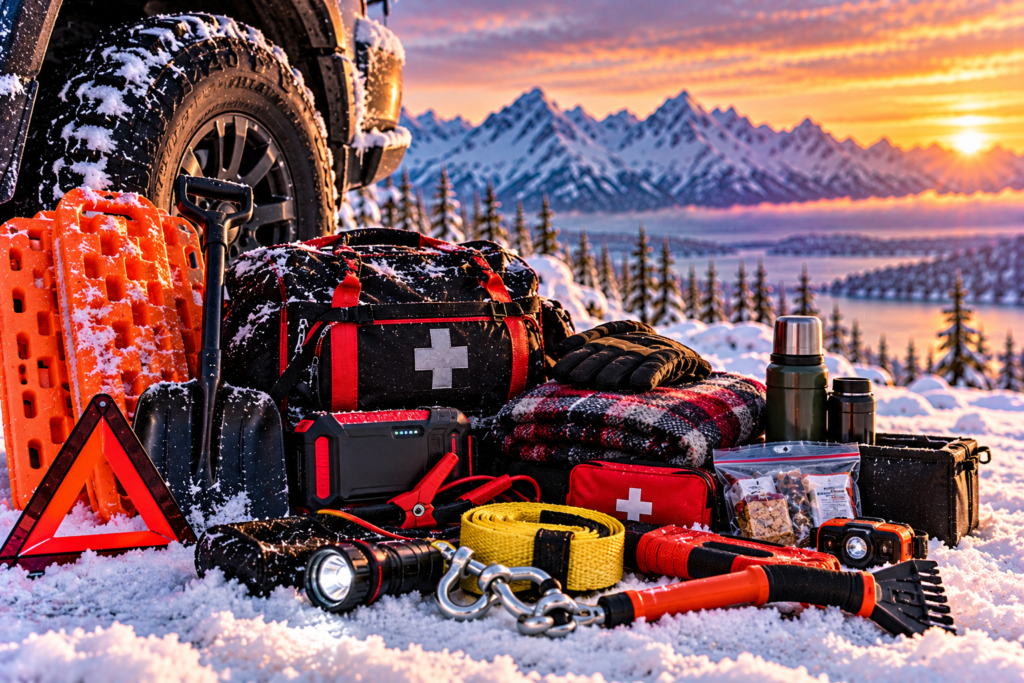
That's why keeping a winter vehicle emergency kit in your car or truck is one of the smartest preparations you can make. You don't need every gadget on the market, but you do need dependable equipment that helps you handle common vehicle problems, stay visible, keep warm, and manage an unexpected delay.
Below are my recommendations for the best winter vehicle emergency gear for Alaska, along with practical advice for putting together a kit that makes sense for the places you travel.
Quick Navigation
Quick Picks
- Best Portable Jump Starter: NOCO Boost GB40
- Best Portable Tire Inflator: DEWALT Tire Inflator
- Best Emergency Blanket: Arcturus Emergency Blanket
- Best First Aid Kit: Adventure Medical Kits Mountain Series
- Best Jumper Cables: Energizer Jumper Cables
- Best Folding Shovel: RHINO USA Folding Shovel
- Best Emergency Road Flares: Marcala 6-Pack LED Road Flares
- Best Portable Power Bank: Goal Zero Venture 75
- Best Recovery Strap: Rhino USA Recovery Strap
These products address different winter emergencies. For Alaska driving, I recommend combining vehicle recovery equipment with supplies that protect the people inside the vehicle.
Best Winter Vehicle Emergency Gear for Alaska
These nine products cover some of the most common problems Alaska drivers face, from dead batteries and low tire pressure to getting stuck in snow or waiting for assistance in freezing temperatures.
Best Portable Jump Starter: NOCO Boost GB40
If you've lived through an Interior Alaska winter, you already know what extreme cold can do to a vehicle battery. A car that started perfectly fine yesterday might not turn over the next morning, especially when temperatures plunge or the battery is getting older.
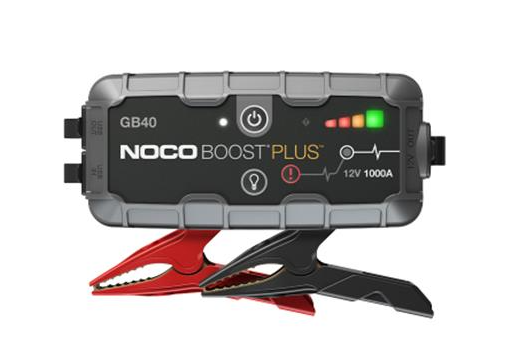
The NOCO Boost GB40 is a compact lithium jump starter designed to start compatible vehicles without needing another car. That makes it especially useful when you're parked alone, traveling between communities, or dealing with a battery that doesn't have enough power to start your engine.
One of its biggest advantages is portability. It takes up relatively little space compared with traditional jump-starting equipment, making it easy to keep with your vehicle emergency supplies.
However, lithium batteries lose performance in extreme cold. A jump starter that has been sitting in a vehicle at deeply subzero temperatures may not work as expected. Follow NOCO's temperature and storage guidance, and check the unit's charge regularly.
Also confirm that the model is suitable for your engine size and vehicle type. Not every jump starter is appropriate for every truck, SUV, or diesel engine.
Best for: Drivers who want a portable way to jump-start a compatible vehicle without depending on another driver.
Check Price on Amazon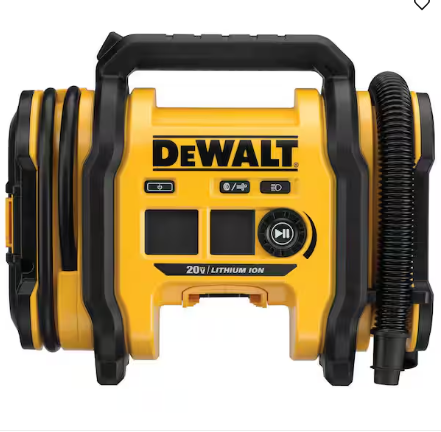
Best Portable Tire Inflator: DEWALT Tire Inflator
Alaska's temperature swings can have a noticeable effect on tire pressure. As temperatures drop, tire pressure generally decreases, and that can affect handling, tire wear, and overall driving safety.
The DEWALT Tire Inflator is a portable inflation tool designed to help you maintain tire pressure without needing to find a gas station or repair shop.
That's particularly useful when traveling between communities where services may be limited or when you discover a low tire before leaving home on a cold morning.
Depending on the exact model, DEWALT inflators may offer different power options. Check the listing carefully to confirm the power source, battery compatibility, included accessories, and tire inflation capacity.
Remember that a portable inflator is not a substitute for repairing a puncture or replacing an unsafe tire. It also shouldn't be used to inflate a damaged tire beyond safe operating limits.
Best for: Alaska drivers who want a convenient way to check and restore tire pressure during winter travel.
Check Price on Amazon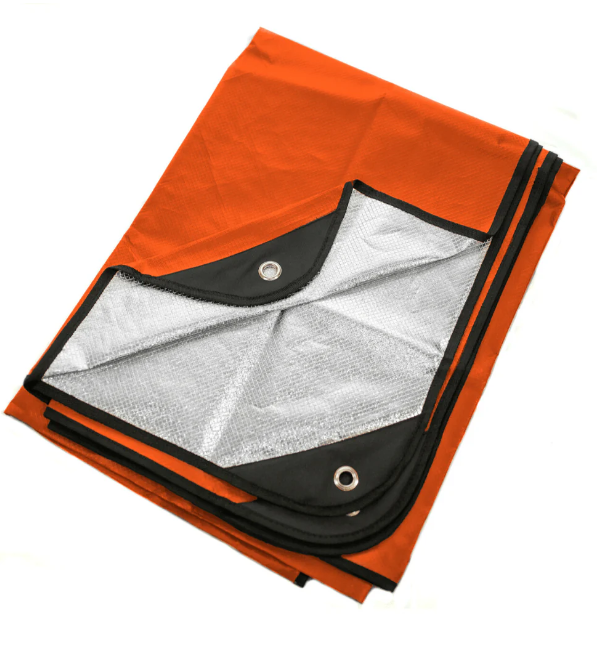
Best Emergency Blanket: Arcturus Emergency Blanket
Staying warm is one of the biggest concerns when a vehicle breaks down during an Alaska winter. If your engine won't start or you can't safely run the heater, the temperature inside your vehicle can eventually become dangerously cold.
The Arcturus Emergency Blanket is a reusable reflective blanket that can help provide an additional barrier against wind and moisture while supplementing other insulating materials.
Unlike disposable emergency blankets, its reusable construction makes it a practical addition to a vehicle kit that you can inspect, fold, and store between uses.
However, it's important to understand what an emergency blanket can and cannot do. Reflective materials do not produce heat, and they don't replace properly insulated winter clothing, heavy blankets, or a cold-weather sleeping bag.
For remote Alaska travel, I would carry an emergency blanket as an additional layer of protection, not as my only way to stay warm.
Best for: Supplemental emergency warmth and protection from wind and moisture.
Check Price on Amazon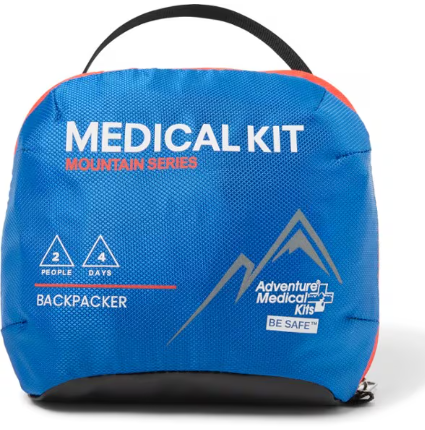
Best First Aid Kit: Adventure Medical Kits Mountain Series
When you're driving in Alaska, especially outside major communities, having basic first aid supplies readily available is simply good preparation.
The Adventure Medical Kits Mountain Series offers organized first aid supplies intended for outdoor activities and travel. Depending on the specific kit size, the contents may include materials for managing common injuries such as cuts, scrapes, blisters, and minor wounds.
For a vehicle emergency kit, having supplies organized in one place makes them easier to find when you need them. That matters when you're cold, wearing gloves, or dealing with a stressful situation.
Before relying on any premade first aid kit, review its contents. Add personal medications, any supplies specific to your family, and items recommended by your healthcare provider where appropriate.
Also check expiration dates and protect medications and temperature-sensitive supplies from freezing or excessive heat. A first aid kit is useful, but it doesn't replace emergency medical care when someone is seriously injured.
Best for: Drivers who want an organized first aid kit for winter road trips and unexpected emergencies.
Check Price on Amazon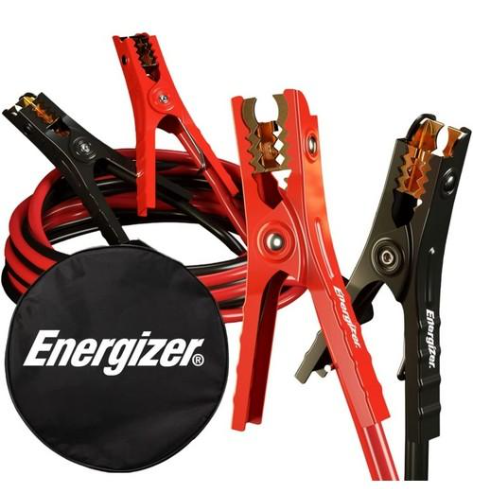
Best Jumper Cables: Energizer Jumper Cables
Even if you carry a portable jump starter, traditional jumper cables are still worth keeping in your vehicle.
Energizer Jumper Cables provide a way to connect a compatible vehicle with a discharged battery to another vehicle or approved power source when proper jump-starting procedures are followed.
For Alaska winters, cable length, wire gauge, clamp quality, and flexibility in cold temperatures are important considerations. The right cables need to be long enough to reach between vehicles while being appropriately sized for the electrical demands involved.
Keep in mind that jumper cables require another suitable vehicle or power source, which may not be available on a remote highway. That's why I like the idea of carrying both a portable jump starter and traditional cables.
Always follow your vehicle manufacturer's jump-starting instructions. Incorrect connections can damage electrical systems or create dangerous sparks, particularly around damaged or frozen batteries.
Best for: Drivers who want a dependable backup method for addressing a discharged vehicle battery.
Check Price on Amazon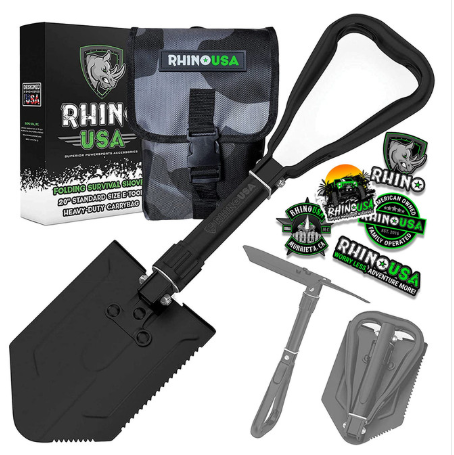
Best Folding Shovel: RHINO USA Folding Shovel
A shovel is one of those things you might not think about until you're stuck in a snowbank and suddenly wish you had one.
The RHINO USA Folding Shovel is a compact tool that can be stored in a vehicle without taking up the space of a full-sized snow shovel.
It can help clear snow around tires, remove buildup near the exhaust pipe, and make room for traction or recovery equipment. That's useful whether you're stuck in a driveway, a parking area, or somewhere much farther from home.
There are limitations to compact shovels. If you're regularly driving through deep snow or on remote roads, a larger snow shovel may be more efficient for serious digging.
One particularly important winter safety consideration is keeping the vehicle's exhaust system clear of snow. A blocked exhaust can allow deadly carbon monoxide to accumulate inside the vehicle.
Best for: Drivers who need a compact snow-clearing tool for their winter vehicle emergency kit.
Check Price on Amazon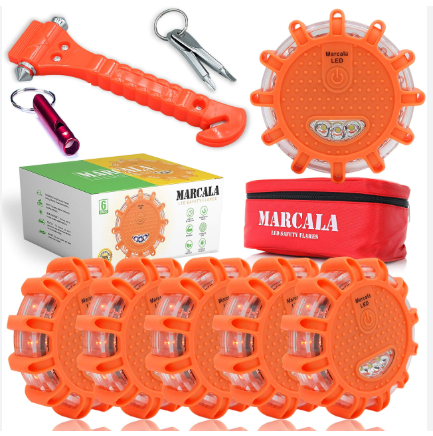
Best Emergency Road Flares: Marcala 6-Pack LED Road Flares
Winter visibility in Alaska can be challenging. Between darkness, blowing snow, fog, and limited daylight, a disabled vehicle may be difficult for approaching drivers to see.
The Marcala 6-Pack LED Road Flares provide battery-powered warning lights that can help increase visibility during certain roadside emergencies.
Unlike traditional burning flares, LED warning lights don't rely on an open flame. They can be a convenient addition to an emergency kit, particularly when you want reusable signaling equipment.
However, the safest way to use roadside warning devices depends on the situation. Never step into traffic or expose yourself to an unsafe roadway simply to position a flare. If you're stopped in a dangerous location, prioritize your personal safety and contact assistance.
Check the batteries regularly, especially after extended cold-weather storage, and verify the specific product's operating temperature and visibility specifications.
Best for: Improving the visibility of a disabled vehicle when warning lights can be deployed safely.
Check Price on Amazon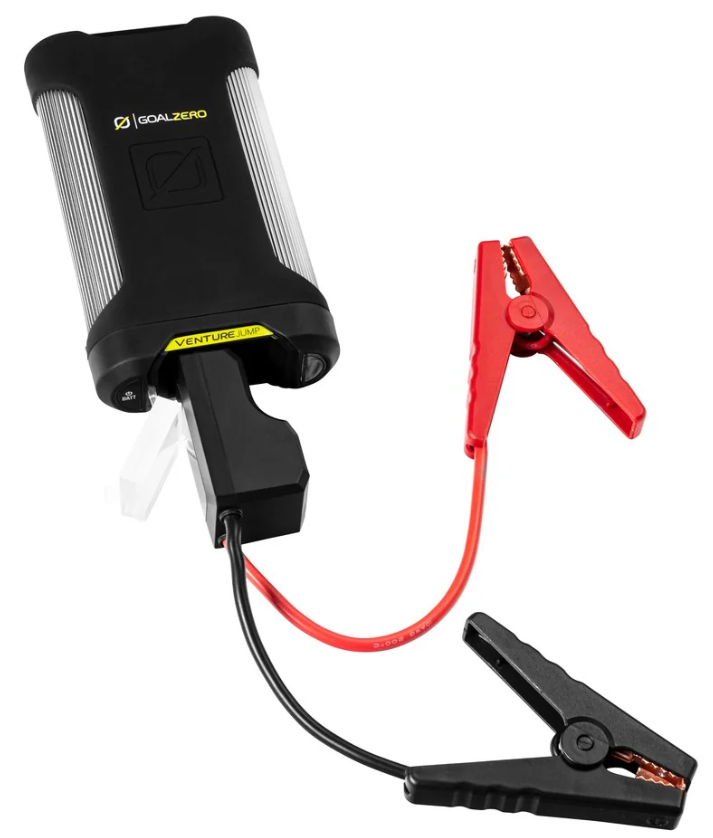
Best Portable Power Bank: Goal Zero Venture 75
When your vehicle isn't running, keeping your phone and other small electronic devices charged can become a challenge.
The Goal Zero Venture 75 is a portable power bank designed to provide backup charging for compatible USB-powered devices.
For winter driving in Alaska, having an independent power source can be especially useful if you need your phone for communication, navigation, or emergency information.
Like other lithium battery products, the Venture 75 is affected by cold temperatures. Follow the manufacturer's storage, operating, and charging guidance, and avoid assuming a power bank stored in a freezing vehicle will perform normally.
Also remember that a power bank doesn't create cell coverage. On remote routes, a separate satellite communication device may still be appropriate.
Best for: Backup charging for phones and other compatible small electronic devices during winter travel.
Check Price on Amazon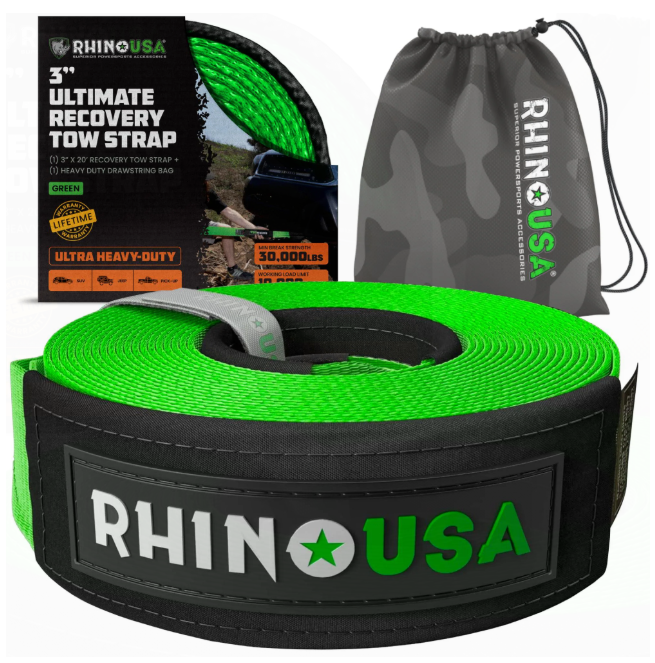
Best Recovery Strap: Rhino USA Recovery Strap
Getting stuck in snow is something many Alaska drivers eventually experience. Sometimes it's a simple matter of digging out the tires, and other times the vehicle needs assistance from another properly equipped vehicle.
The Rhino USA Recovery Strap is designed for compatible vehicle recovery applications when used with suitable attachment points and equipment.
Recovery equipment can be extremely useful, but it's also an area where improper use can cause serious injuries. Straps, hooks, shackles, and vehicle attachment points must all be appropriate for the load and recovery method.
Not all tow straps are designed for dynamic or kinetic recovery. Before using any strap, verify its intended purpose, ratings, and instructions. Never attach recovery equipment to an unsuitable vehicle component or stand near a tensioned strap.
For drivers without recovery training or the correct equipment, calling a professional recovery service may be the safer option.
Best for: Properly equipped drivers who need a rated strap for suitable vehicle recovery situations.
Check Price on AmazonWinter Vehicle Emergency Gear Comparison Chart
Each product serves a different purpose in a winter vehicle emergency kit. Click any product name to view its Amazon listing.
| Product | Primary Purpose | Best For |
|---|---|---|
| NOCO Boost GB40 | Portable jump starting | Dead or weak vehicle batteries |
| DEWALT Tire Inflator | Portable tire inflation | Low tire pressure |
| Arcturus Emergency Blanket | Supplemental thermal protection | Unexpected cold-weather delays |
| Adventure Medical Kits Mountain Series | First aid supplies | Minor injuries and initial care |
| Energizer Jumper Cables | Battery jump-start connection | Assisted jump starts |
| RHINO USA Folding Shovel | Snow removal | Digging around tires and exhaust |
| Marcala 6-Pack LED Road Flares | Emergency warning lights | Disabled vehicle visibility |
| Goal Zero Venture 75 | Backup USB power | Charging compatible devices |
| Rhino USA Recovery Strap | Vehicle recovery | Suitable assisted recovery situations |
Alaska Winter Driving Conditions: What to Prepare For
One of the biggest mistakes visitors can make is assuming winter driving conditions are the same throughout Alaska. They're not. Weather, road maintenance, distance between services, and access to assistance vary significantly by region.
| Driving Conditions | Potential Challenges | Recommended Preparation |
|---|---|---|
| Interior Alaska | Extreme cold, weak batteries, icy roads, and long winter nights. | Jump-start equipment, substantial insulation, reliable lighting, and emergency communication. |
| Southcentral Alaska | Snowstorms, freezing rain, slick roads, and changing visibility. | Appropriate tires, shovel, warning lights, extra clothing, and emergency supplies. |
| Remote Highways | Long distances between services, limited cell coverage, and potentially delayed assistance. | Additional warmth, food, water, communication equipment, and a detailed travel plan. |
| Coastal Alaska | Wet snow, strong winds, freezing precipitation, and variable temperatures. | Waterproof clothing, visibility equipment, tire maintenance, and dry emergency supplies. |
| Heavy Snowfall | Vehicles stuck in snow, blocked exhaust pipes, and reduced roadway visibility. | Shovel, suitable recovery equipment, warning lights, and safe exhaust clearance. |
Before a winter road trip, check current road conditions through Alaska 511 and review the weather forecast for your entire route, not just your destination.
Alaska Winter Vehicle Emergency Kit Packing List
Even with good equipment, a winter vehicle kit is only as useful as the supplies you've actually packed. I recommend organizing your kit into three categories: vehicle recovery, personal survival, and communication.
Vehicle Recovery and Maintenance
- Portable jump starter rated for your vehicle
- Jumper cables
- Portable tire inflator and tire pressure gauge
- Snow shovel
- Vehicle recovery equipment appropriate for your vehicle
- Ice scraper and snow brush
- Reflective warning equipment or LED road flares
- Vehicle-specific tools and necessary spare parts
Personal Survival and Comfort
- Heavy insulated blankets or cold-weather sleeping bags
- Emergency reflective blanket as additional protection
- Extra winter gloves, socks, hats, and insulated clothing
- Insulated winter boots
- Food that stores safely in winter conditions
- Drinking water protected from freezing
- First aid kit and necessary personal medications
- Hand and foot warmers
Communication and Visibility
- Fully charged cell phone
- Portable power bank and compatible charging cables
- Satellite communicator for remote routes where appropriate
- Headlamp and backup batteries or lighting
- Offline maps or a paper road map
- Written emergency contact information
- Travel plan shared with someone you trust
For long winter drives, especially on remote highways, pack enough food, water, and insulation to account for the possibility of a prolonged delay. The farther you travel from services, the more important your emergency planning becomes.
What to Do If You're Stranded in Alaska During Winter
Even with preparation, emergencies happen. If your vehicle becomes disabled during an Alaska winter, the most important thing is to make decisions that protect you and your passengers.
1. Assess Your Immediate Safety
Determine whether the vehicle is in a dangerous location, such as an active traffic lane, unstable roadside, or an area exposed to falling snow or other hazards. Contact emergency services if anyone is injured or in immediate danger.
2. Communicate Your Location
Use your phone or satellite communication device to contact assistance. Provide your location, the number of people traveling with you, and the condition of the vehicle. If possible, share GPS coordinates or a clearly identifiable location.
3. Protect Yourself From the Cold
Put on additional insulating layers before becoming severely chilled. Use blankets or sleeping bags, keep clothing dry, and reduce unnecessary exposure to wind.
If someone shows signs of hypothermia, such as confusion, unusual drowsiness, or impaired coordination, seek emergency medical assistance.
4. Prevent Carbon Monoxide Exposure
Snow can block a vehicle's exhaust pipe, allowing deadly carbon monoxide to accumulate inside the passenger compartment. Never operate an engine with an obstructed exhaust system.
Do not use camping stoves, grills, or other fuel-burning heating devices inside a vehicle. If the vehicle can be operated safely, follow appropriate guidance for ventilation and exhaust clearance.
5. Avoid Unnecessary Travel on Foot
In many circumstances, a vehicle provides shelter and is easier for rescuers to locate than someone traveling through snow on foot. However, whether to remain with the vehicle depends on immediate hazards and the circumstances of the emergency.
Follow emergency responder instructions whenever communication is available, and avoid making an already dangerous situation worse by attempting an unsafe journey.
Buying Guide & Frequently Asked Questions
Choosing the right winter vehicle emergency equipment depends on where you drive, what vehicle you own, and how long you might have to wait for assistance. These are some of the most important questions to consider.
What should every Alaska winter vehicle emergency kit include?
At a minimum, prepare for warmth, communication, visibility, and common vehicle problems. A shovel, appropriate jump-starting equipment, insulated clothing, blankets, food, water, first aid supplies, and emergency lighting are good starting points.
For remote winter travel, additional communication equipment and enough supplies for an extended delay become especially important.
Is a portable jump starter better than jumper cables?
They serve related but different purposes. A portable jump starter may allow you to start a compatible vehicle without another vehicle nearby, while jumper cables require a suitable external power source.
For Alaska, carrying both provides additional options. Just remember that lithium jump starters can lose performance in extreme cold, and both methods must be used according to the vehicle and equipment manufacturers' instructions.
Will a portable tire inflator work in freezing temperatures?
That depends on the specific inflator and its rated operating conditions. Cold weather can affect batteries, seals, hoses, and other components.
Check the manufacturer's specifications and make sure your power source is suitable. Never rely on a portable inflator to make a damaged tire safe for continued driving.
Do I really need a shovel in my vehicle?
Yes, a shovel is one of the most practical items to carry during an Alaska winter. It can help clear snow around tires, remove accumulated snow, and assist with certain recovery situations.
A folding shovel is convenient for storage, but a larger snow shovel may be more effective for serious digging.
Are LED road flares better than traditional flares?
LED road flares are reusable and don't produce an open flame, which makes them convenient for many emergency kits. However, their effectiveness depends on battery condition, visibility, placement, and the particular roadway situation.
Traditional flares and other warning devices have different advantages and limitations. Choose equipment appropriate to your needs, and never enter unsafe traffic conditions to deploy it.
Can I leave a power bank in my vehicle all winter?
Check the manufacturer's storage temperature limits before doing so. Extreme cold can reduce battery performance, and charging lithium-ion batteries below their approved charging temperatures can be unsafe.
For reliable emergency power, regularly check your battery's charge and store it in accordance with its instructions.
Should I carry a sleeping bag in my vehicle?
For remote Alaska winter travel, a properly rated sleeping bag or substantial insulated blankets can provide valuable protection if you're stranded without heat.
Emergency reflective blankets are useful additional supplies, but they do not replace adequate insulation for prolonged exposure to extreme cold.
Can I use a recovery strap to pull any stuck vehicle?
No. Vehicle recovery equipment must be appropriately rated and compatible with the vehicles, attachment points, and recovery method involved.
A conventional tow strap is not necessarily designed for kinetic recovery, and improper use can result in equipment failure or serious injury. If you don't have the proper training or equipment, professional recovery assistance is often the safer choice.
How often should I inspect my winter vehicle emergency kit?
Inspect it before winter, before long road trips, and after using any supplies. Check batteries, charging cables, food, water, medications, first aid supplies, and recovery equipment for damage or deterioration.
Also make sure every driver who uses the vehicle knows where the emergency kit is stored and how to operate its equipment safely.
Final Thoughts
Winter driving in Alaska is part of everyday life for many of us, but that doesn't mean we should become casual about preparation.
There's a big difference between getting stuck somewhere inconvenient and becoming stranded somewhere dangerous. The temperature, distance from help, road conditions, and supplies in your vehicle can all determine how serious an unexpected breakdown becomes.
A good winter vehicle emergency kit doesn't have to be complicated. Start with the basics: a way to address common vehicle problems, equipment to stay visible, reliable communication, and enough supplies to protect yourself and your passengers if you have to wait for help.
And remember, even the best equipment doesn't replace good judgment. Check the weather and road conditions, maintain your vehicle, share your travel plans when heading into remote areas, and know when it's safer to postpone a trip.
Alaska is an incredible place to explore year-round. Being prepared for winter travel is one of the best ways to enjoy it safely and make sure you get home after every adventure.