
Wrangell Mountains
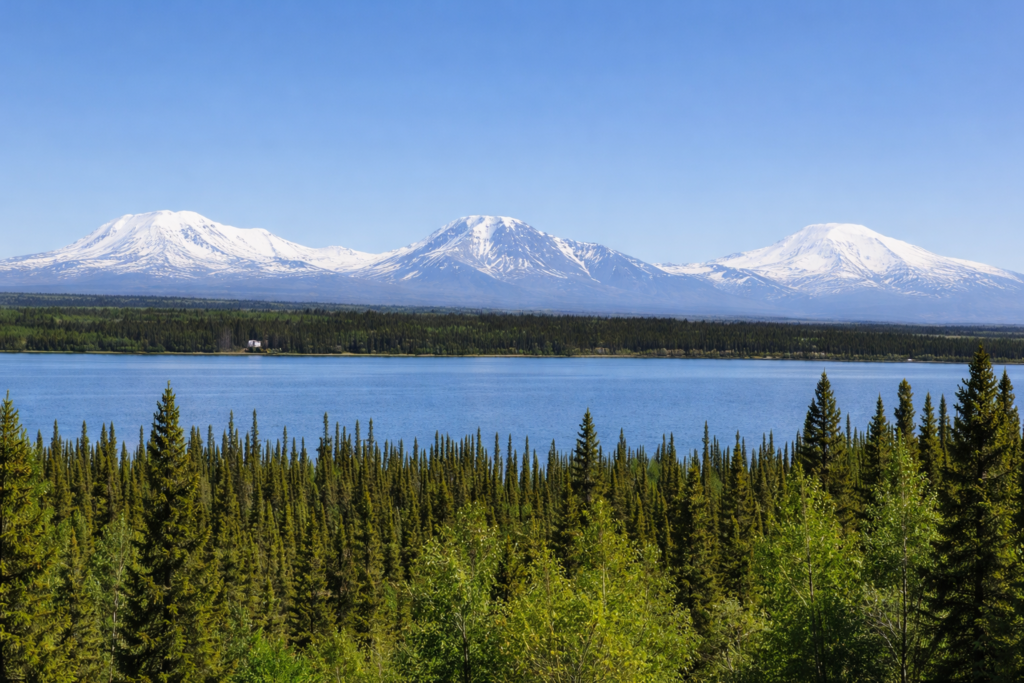
The Wrangell Mountains stretch across eastern Alaska, forming one of the largest and most geologically unique mountain systems in the state. This range sits inland from the coast near the Alaska–Canada border and is part of the massive wilderness area protected within Wrangell–St. Elias National Park and Preserve.
Unlike other mountain ranges in Alaska, the Wrangell Mountains are largely volcanic in origin. Instead of sharp, jagged peaks, many of the mountains here are broad, massive, and built up over time by repeated volcanic activity. This gives the range a heavier, more rounded appearance compared to the steeper profiles seen in places like the Alaska Range.
Some of the tallest peaks in the Wrangell Mountains include Mount Blackburn, Mount Sanford, and Mount Wrangell. Several of these volcanoes are still considered active, though eruptions are rare and typically not explosive. Mount Wrangell itself is known for its steam vents and geothermal activity near the summit, even in winter.
Glaciers play a major role in shaping the Wrangell Mountains. Large icefields and valley glaciers spread out from the peaks, feeding major river systems that flow across Interior Alaska. These glaciers are extensive but often less steep than those found in coastal ranges, creating wide, open valleys filled with ice.
Most people experience the Wrangell Mountains from a distance, as much of the range is remote and difficult to access. The most common access point is the McCarthy Road, which leads into the small community of McCarthy and the historic Kennecott mining area. From here, the mountains rise in every direction, offering some of the closest views available without flying into the backcountry.
The Wrangell Mountains sit within one of the most expansive wilderness areas in the United States, and that sense of scale defines the experience. There are few developed roads, limited services, and large stretches of land where there are no trails at all.
Wildlife moves freely through the valleys and lower elevations, including moose, bears, caribou, and wolves. The wide spacing between peaks and the open terrain make it easier to see wildlife here compared to tighter, more forested ranges.
While most of the Wrangell Mountains are not trail-based, there are a few areas where visitors can explore on foot. Near McCarthy and the Kennecott area, trails and routes provide access to glaciers, old mining sites, and surrounding terrain. Beyond that, much of the range is best suited for backcountry travel, often requiring experience, planning, and sometimes air access.
The Wrangell Mountains stand apart from other ranges in Alaska. Their volcanic origins, massive scale, and remote setting create a landscape that feels quieter and more spread out, but no less powerful. It’s a place where the size of the land and the lack of development shape the experience as much as the mountains themselves.