
Walrus in Alaska
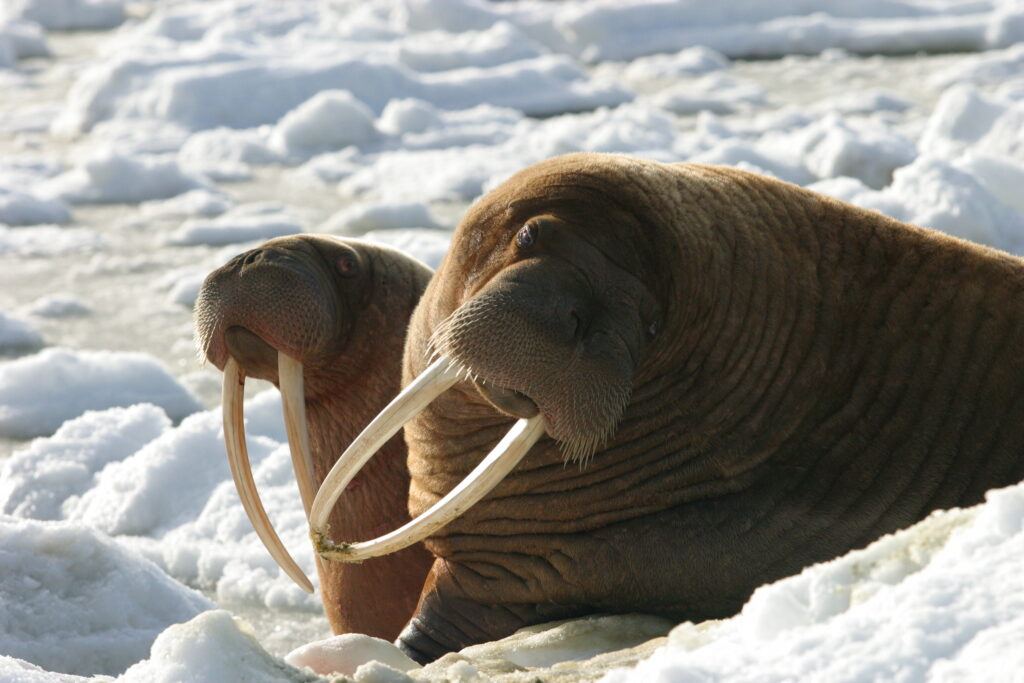
Walrus don’t blend into their environment. When you see one hauled out on ice or packed onto a remote beach, there’s no mistaking it. Massive body. Long ivory tusks. Thick folds of skin built for cold water and shifting sea ice.
They belong to Alaska’s western and northern coasts — places shaped by ice, wind, and long distances between settlements.
Identification
Walrus are large marine mammals built for Arctic conditions.
Color: Pinkish-brown to cinnamon
Size: Males can exceed 3,000 pounds
Tusks: Long ivory tusks present in both males and females
Whiskers: Dense, stiff bristles (vibrissae) around the mouth
Their tusks are used for hauling onto ice, dominance displays, and social interaction.
Unlike sea lions, walrus move more slowly on land, relying on sheer size rather than agility.
Where You’ll See Them in Alaska
Walrus are found primarily in:
Bering Sea
Chukchi Sea
Western Alaska coast
Near St. Lawrence Island
Offshore Arctic waters
They follow seasonal sea ice, hauling out on ice floes or isolated coastal beaches.
Large groups may gather during certain seasons, forming tightly packed haul-outs that can number in the hundreds.
These are not casual roadside sightings. Most viewing occurs via Arctic tours, aircraft, or from western coastal communities.
Seasonal Patterns
Winter & Spring: Associated closely with sea ice
Summer: May haul out on remote beaches as ice retreats
Feeding: Dive to the seafloor for clams and benthic invertebrates
Walrus feed primarily on bottom-dwelling shellfish, using their whiskers to detect prey in sediment.
Walrus are central to subsistence traditions for coastal Alaska Native communities, particularly in western and northern regions. Harvest practices are rooted in generational knowledge and cultural continuity. Because walrus haul-outs can be sensitive, disturbance poses real risk. When startled, large groups may rush toward water, potentially injuring younger animals. Viewing from a respectful distance is critical.
Arctic wind exposure near walrus habitat is severe. Even summer air can carry biting chill across open water. Insulated, wind-resistant outer layers are essential for extended viewing in northern coastal environments. Walrus don’t move with speed. They carry their mass deliberately — shaped by sea ice, migration routes, and Arctic tides.