
What to Pack for Alaska ( A basic Packing Guide)
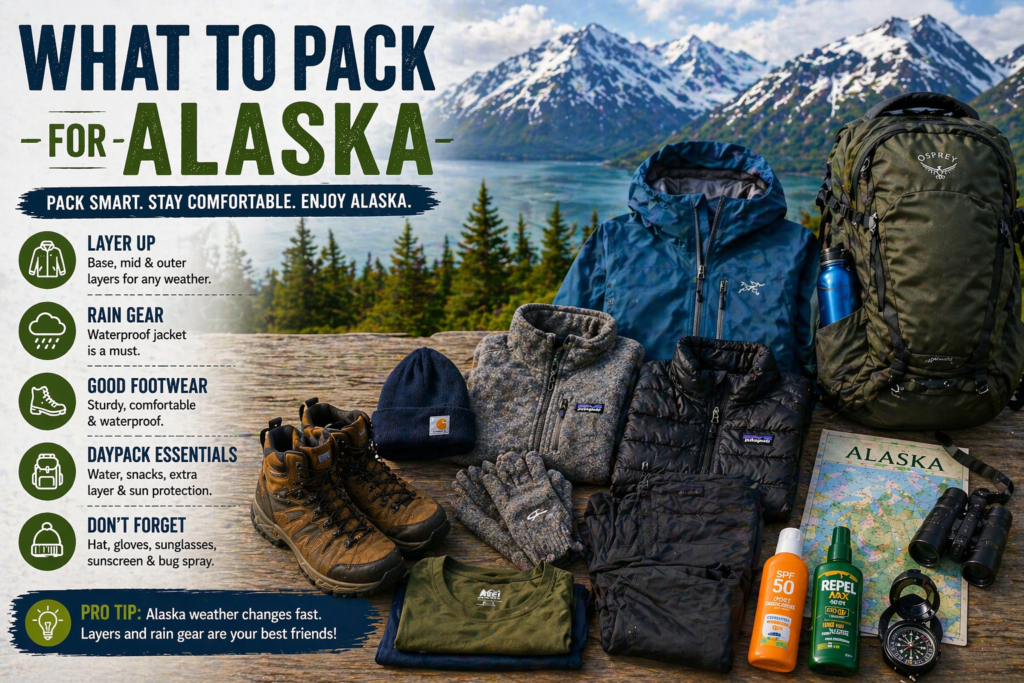
What to Pack for Alaska
Packing for Alaska is different than most places. Weather changes quickly, temperatures vary by region, and even in summer you can experience rain, wind, and cold conditions in the same day.
The key is layering and being prepared without overpacking.
The Alaska Layering System
The most important part of packing for Alaska is dressing in layers.
Start with a base layer that keeps you dry. Add a mid-layer for warmth, like a fleece or light jacket. Finish with an outer layer that protects against wind and rain.
This system lets you adjust throughout the day as conditions change.
Essential Clothing
Focus on practical, weather-ready clothing.
Bring moisture-wicking shirts, a warm mid-layer, and a waterproof jacket. Even in summer, you’ll want something warm for early mornings and evenings.
Pants should be comfortable and durable. Avoid relying on just shorts unless you’re prepared for changing conditions.
Rain Gear
Rain is common in many parts of Alaska, especially coastal areas.
A quality waterproof jacket is one of the most important items you can bring. Waterproof shoes or boots can also make a big difference, especially if you plan to hike or explore outdoors.
Footwear
Good footwear matters more than almost anything else.
Bring sturdy, comfortable shoes or hiking boots. Trails can be muddy, uneven, or wet. If you plan to do any hiking, proper footwear is essential.
Cold Weather Add-Ons
Even in summer, it can get cold depending on where you are.
Pack a hat, light gloves, and an extra warm layer if you’re heading into higher elevations, taking boat tours, or traveling early or late in the season.
Daypack Essentials
A small backpack helps you stay prepared during the day.
Carry water, snacks, an extra layer, and basic supplies. This keeps you flexible without having to return to your lodging.
Travel and Personal Items
Don’t forget the basics.
Bring sunscreen, sunglasses, and insect repellent. Mosquitoes can be intense in summer, especially inland. A reusable water bottle is also helpful for long days out.
Seasonal Differences
What you pack depends on when you visit.
Summer requires layers and rain protection. Spring and fall need warmer gear and flexibility for mixed conditions. Winter requires full cold-weather clothing, including insulated jackets, boots, gloves, and thermal layers.
What Not to Overpack
You don’t need excessive outfits or heavy gear.
Focus on versatile layers you can reuse. Packing smart is more important than packing more.
What Matters Most
Packing for Alaska is about preparation, not perfection.
If you bring layers, protect yourself from rain, and have solid footwear, you’ll be ready for most conditions you’ll encounter.