
Alaska Trip Planning Guide: Step by Step for First time visitors
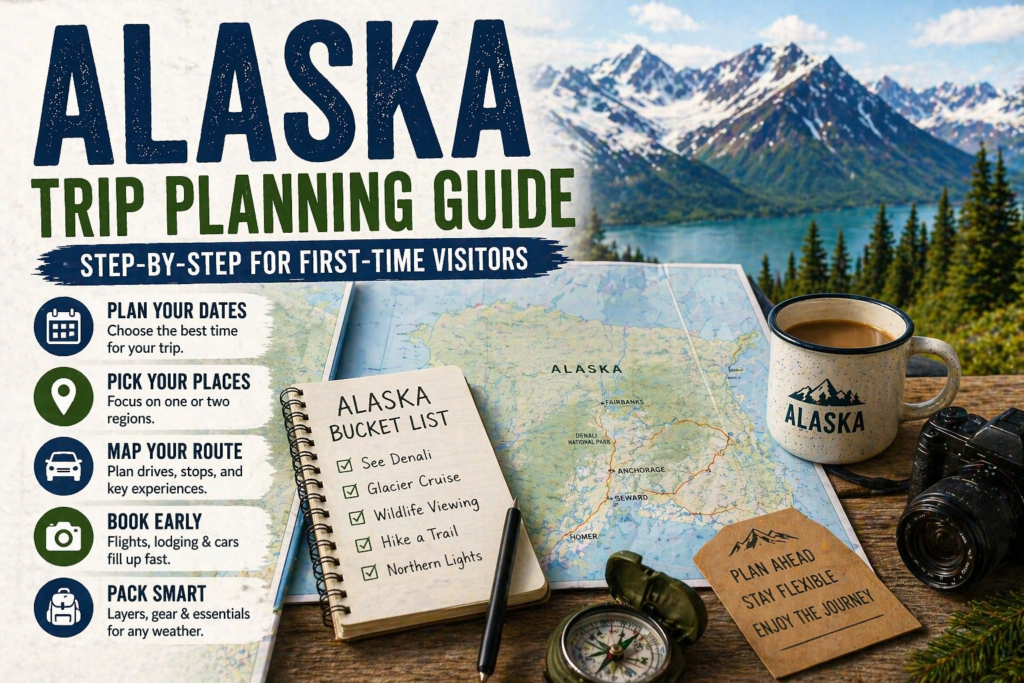
Step-by-Step for First-Time Visitors
Planning a trip to Alaska can feel overwhelming at first. The state is massive, travel takes time, and conditions change quickly depending on the season.
The key is to keep things simple and build your trip step by step. Once you understand how Alaska works, planning becomes much easier.
Step 1: Decide When to Visit
Start by choosing your season. This decision affects everything else.
Summer (mid-May to mid-September) is the easiest time to visit, with full access to roads, tours, and services. Fall offers fewer crowds and a chance at northern lights. Winter is best for aurora viewing and snow-based activities but requires more planning.
Step 2: Choose Your Region
Do not try to see all of Alaska in one trip.
Most first-time visitors focus on Southcentral Alaska (Anchorage and the Kenai Peninsula) and Interior Alaska (Denali and Fairbanks). These areas are connected by road and offer a strong mix of scenery, wildlife, and activities.
Keeping your trip to one or two regions will make everything smoother.
Step 3: Decide How Many Days You Have
Your trip length determines how much you can realistically do.
3–5 days works best for one area.
7 days allows you to combine two areas.
10–14 days gives you a more complete trip without rushing.
Trying to do too much in a short amount of time is the most common mistake.
Step 4: Plan Your Route
Once you know your region and trip length, map out your route.
A common first-time route is Anchorage → Kenai Peninsula → Denali → back to Anchorage. This gives you mountains, wildlife, coastline, and a national park experience.
Build your route so you’re not constantly backtracking or driving long hours every day.
Step 5: Book Flights and Lodging Early
Alaska has a short peak season, and things fill up fast.
Flights, rental cars, and lodging should be booked as early as possible, especially for June through August. Waiting too long limits your options and increases costs.
Step 6: Choose a Few Key Activities
You don’t need to do everything.
Pick a few experiences that matter most to you, like a glacier cruise, wildlife tour, or hiking in Denali. Leave room in your schedule to explore without feeling rushed.
Step 7: Plan Transportation
Decide how you’ll get around.
Rental cars are the most common option for flexibility. The Alaska Railroad and ferries offer scenic travel but are less flexible. Flights are needed for remote areas not connected by road.
Plan transportation around your route, not the other way around.
Step 8: Pack for Changing Conditions
Weather in Alaska is unpredictable.
Bring layers, a waterproof jacket, and solid footwear. Even in summer, temperatures can change quickly depending on location and time of day.
Packing correctly makes a big difference in how comfortable your trip feels.
Step 9: Build in Extra Time
Things take longer in Alaska.
Driving, weather, and unexpected stops all add time. Give yourself flexibility so you’re not rushing from place to place.
Slower travel almost always leads to a better experience.
Step 10: Keep It Simple
The best Alaska trips are focused and realistic.
Choose a region, plan a simple route, and give yourself time to enjoy it. You don’t need to see everything to have an incredible trip.
What Matters Most
Alaska rewards preparation, but it also rewards flexibility. If you plan the basics and stay open to adjusting along the way, your trip will come together naturally. Start simple, stay focused, and let the experience build from there.