
Shishaldin Volcano
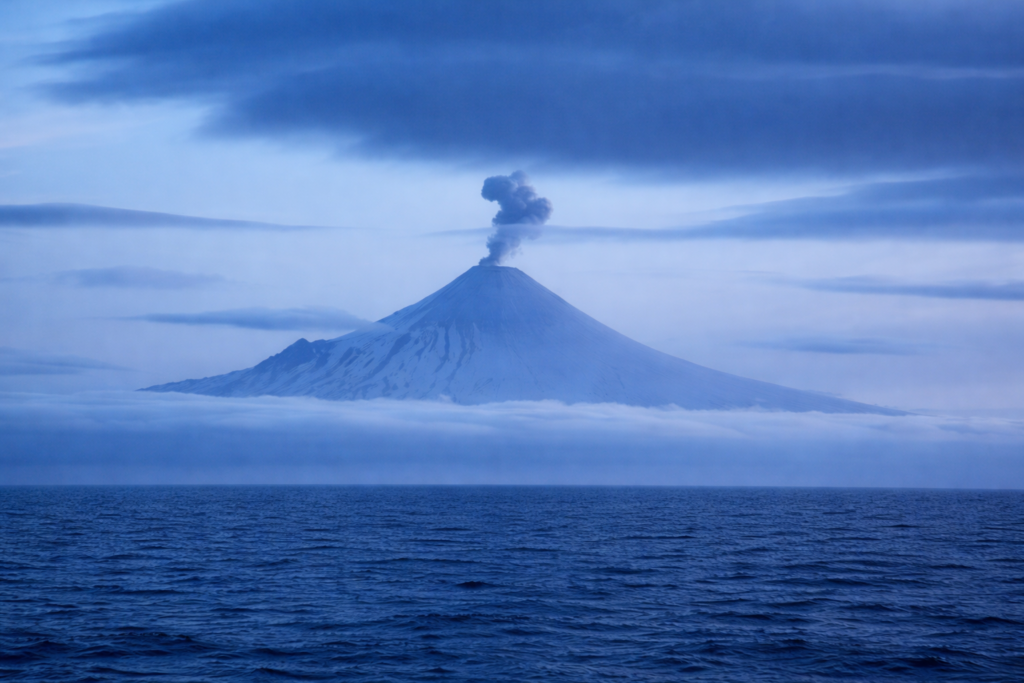
Shishaldin Volcano rises to about 9,373 feet on Unimak Island and is one of the most perfectly shaped volcanoes in Alaska. It’s part of the Aleutian volcanic arc and stands out immediately because of how symmetrical it is — a clean, steep cone that looks almost too precise to be natural.
Unlike many of Alaska’s broader, glacier-covered volcanoes, Shishaldin has a sharp, classic profile. Snow and ice cover its upper slopes, but the structure of the cone is still clearly visible, giving it that textbook volcano appearance you don’t see as often in this state.
Shishaldin is also one of the most active volcanoes in the Aleutians. It has frequent eruptions, often producing lava flows, ash plumes, and glowing activity near the summit crater. These eruptions can happen with little warning, and ash clouds from the volcano regularly impact air traffic across the region.
The surrounding landscape is remote and rugged, shaped by volcanic activity and coastal weather. There are no easy access points, and most people only see Shishaldin from the air or from distant parts of Unimak Island.
Because of its activity and structure, the mountain is constantly changing in small ways. Lava builds up, slopes shift, and ash layers settle over time, slowly reshaping the cone while still keeping that near-perfect form.
Shishaldin stands out not just because it’s active, but because of how it looks. It’s one of the cleanest examples of a classic stratovolcano in Alaska, and one of the most visually recognizable peaks in the entire Aleutian chain.