
Pavlof Volcano
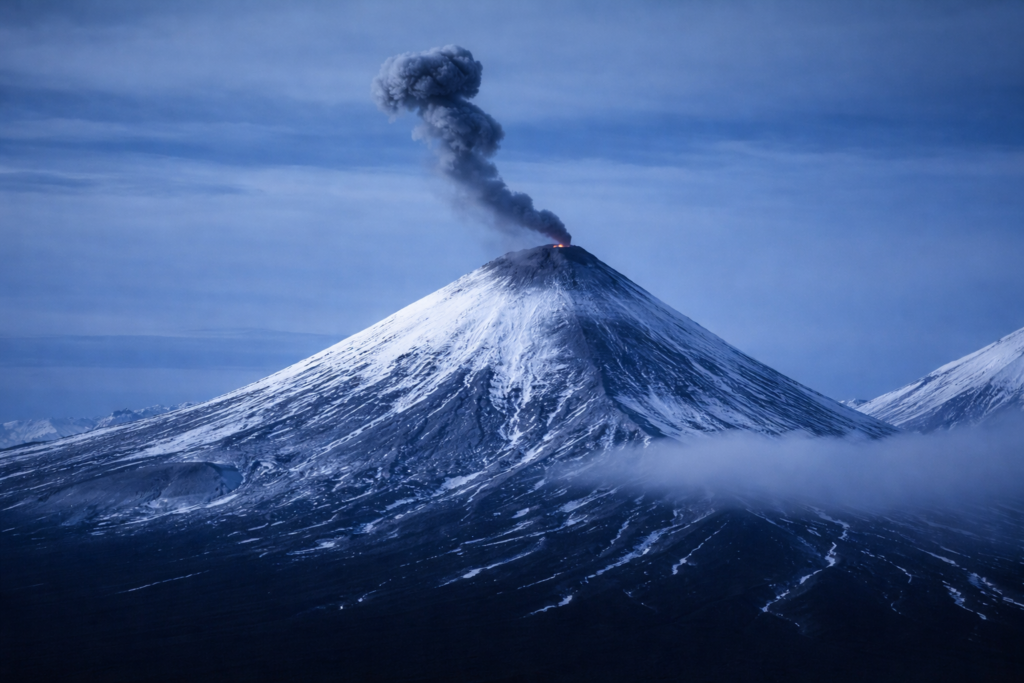
Pavlof Volcano rises to about 8,261 feet on the Alaska Peninsula and is one of the most consistently active volcanoes in Alaska. It sits along the Aleutian volcanic arc near the community of Cold Bay, and when it erupts, it’s often one of the first places to show activity in the region.
What makes Pavlof stand out is its shape. It has that classic, steep-sided cone that most people picture when they think of a volcano. Compared to some of the broader, glacier-covered peaks in Alaska, Pavlof looks sharper and more defined, especially when it’s active.
Eruptions here are frequent and often involve lava fountains, ash clouds, and glowing activity near the summit. It’s erupted many times in recent decades, sometimes with little warning, sending ash high into the atmosphere and affecting air travel across the region.
Unlike some of the larger volcanoes, Pavlof doesn’t rely heavily on glaciers to define its shape. It’s more about loose volcanic rock, ash, and steep slopes that can shift quickly during eruptions. That gives it a more unstable, constantly changing appearance.
This is a remote part of Alaska, and most people never see Pavlof up close. It’s usually viewed from the air or from a distance near Cold Bay, where it can dominate the skyline on clear days.
Wildlife exists throughout the surrounding area, but like many volcanoes, the mountain itself feels more defined by geology than anything else — ash, lava, and constant movement shaping it over time.
Pavlof stands out because of how active it is. It’s not just part of the landscape — it’s one of the volcanoes in Alaska that reminds you, regularly, that the ground here is still very much alive.