
Novarupta
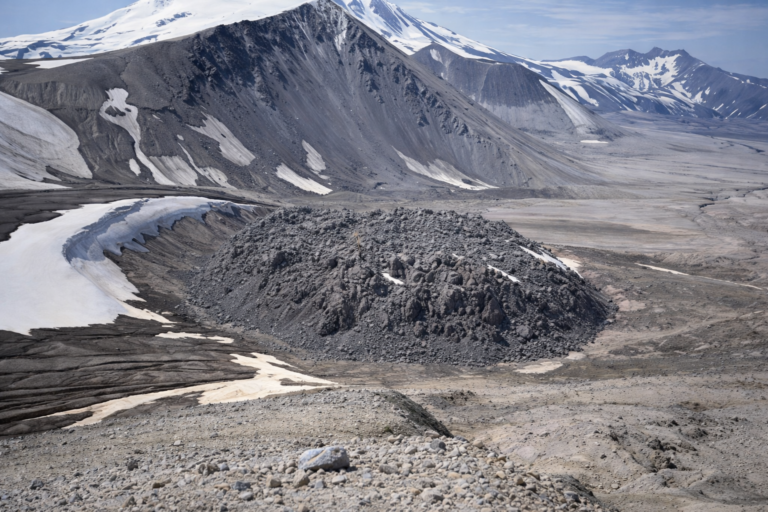
Novarupta doesn’t look like much at first, but it’s one of the most important volcanic sites in Alaska. It sits on the Alaska Peninsula within Katmai National Park and is responsible for the 1912 eruption — the largest volcanic eruption of the 20th century.
What makes Novarupta different is that it wasn’t even a major peak before the eruption. The event itself created the volcanic dome that stands there today. Instead of a tall mountain, you’ll see a rough, broken-looking dome surrounded by a wide field of ash and volcanic debris.
That eruption completely reshaped the region. It produced the Valley of Ten Thousand Smokes, where hot ash and gas once vented from the ground across miles of landscape. Even now, the area feels raw and altered, with thick ash deposits and terrain that doesn’t look like typical Alaska wilderness.
The explosion was so powerful that it caused the summit of nearby Mount Katmai to collapse, forming the crater lake seen today. So while Katmai gets a lot of attention, Novarupta is actually the source of what happened.
Access is remote. Most people reach the area by flying into Brooks Camp and then traveling out to the valley. It’s not a quick stop — it’s something you experience as part of being in that landscape.
There’s no constant eruption activity today, but the ground tells the story. Layers of ash, broken rock, and the scale of the valley all point back to what happened here.
Novarupta isn’t about height or appearance. It’s about impact. It changed the entire region in a single event, and even now, it still feels like one of the most powerful places in Alaska.