
Augustine Volcano
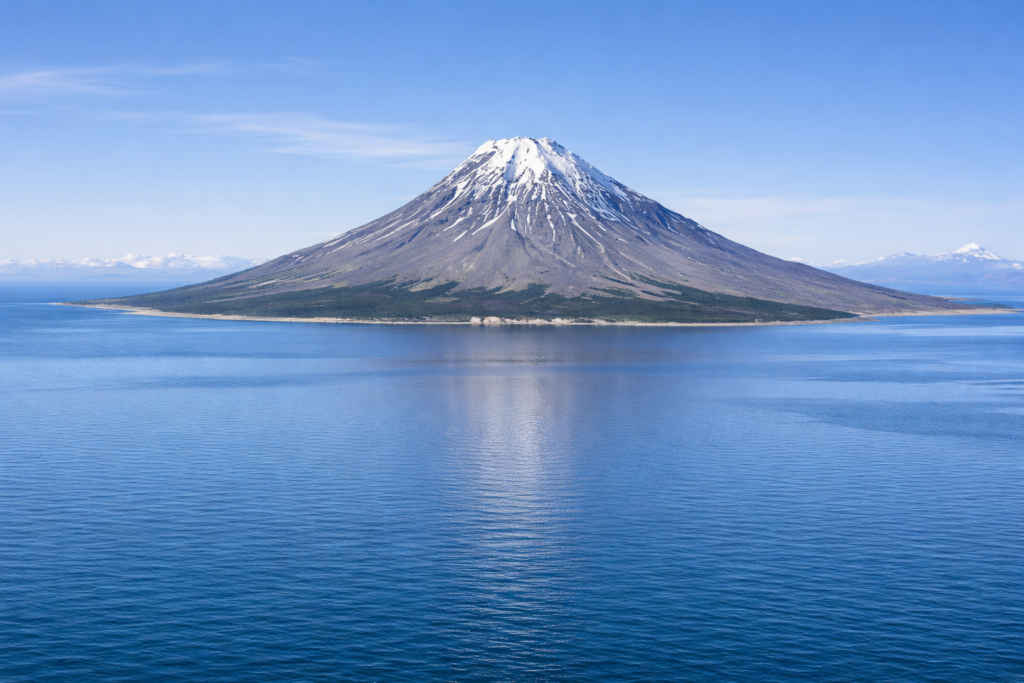
Augustine Volcano rises to about 4,134 feet from the waters of Cook Inlet and sits alone on its own island, which immediately makes it stand out from the other volcanoes in the region. It’s located southwest of Anchorage and is one of the most active volcanoes in Alaska, part of the Aleutian volcanic arc.
From a distance, Augustine has that classic cone-shaped look people expect from a volcano, but it’s constantly being reshaped by eruptions, landslides, and debris flows. It doesn’t stay perfectly symmetrical — parts of the mountain collapse and rebuild over time, giving it a rough, changing appearance.
Eruptions have been recorded multiple times, including well-documented activity in 1976, 1986, and 2006. These eruptions sent ash clouds into the atmosphere and affected air travel across southcentral Alaska. The volcano is closely monitored because of how frequently it becomes active.
One of the most notable features of Augustine is how unstable it can be. Past eruptions have triggered massive landslides that moved into Cook Inlet, and the combination of loose volcanic material and steep slopes makes it prone to sudden changes.
There’s no public access to the island, so most people experience Augustine from a distance — either across Cook Inlet or from the air. On clear days, it rises sharply out of the water, and because it stands alone, it draws your attention immediately.
Augustine Volcano isn’t the tallest or the largest, but it’s one of the most active and dynamic. It’s a reminder that Alaska’s volcanoes aren’t just part of the landscape they’re still shaping it.