
Yukon River
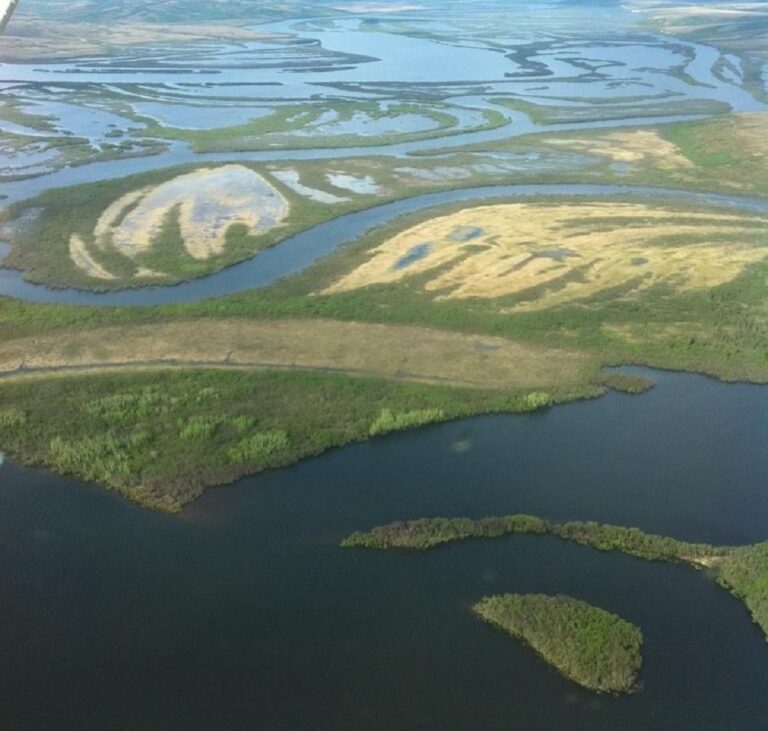
The Yukon River is one of the longest rivers in North America, stretching over 1,900 miles from Canada through Interior Alaska and out to the Bering Sea. It’s massive, slow-moving in some sections, and deeply tied to the history and culture of the state.
You can access parts of it from communities like Fairbanks, Galena, or smaller villages along its length. In many of these places, the river isn’t just scenery—it’s transportation, food, and daily life.
The water is typically silty and brown from the amount of sediment it carries, especially during the summer melt. It doesn’t have that clear, glacial-blue look—but what it lacks in color, it makes up for in scale and importance.
The Yukon has been used for generations for travel, trade, and subsistence fishing. Salmon runs move through here, and many communities rely on them.
Boating on the Yukon feels different than smaller rivers. It’s wide, powerful, and constantly moving. It’s not about tight turns or rapids—it’s about distance and presence. This river isn’t just a feature on a map—it’s part of how Alaska functions.