
Morel Mushrooms in Alaska
Morel Mushrooms in Alaska
Morel mushrooms are one of the most sought-after wild foods in Alaska. They don’t grow everywhere, and they don’t show up the same way every year – which makes finding them feel earned.
In Alaska, morels are most often associated with wildfire burn areas. The summer after a burn can bring a flush of mushrooms across blackened hillsides and regenerating forest. It’s one of the clearest examples of how disturbance and renewal work together in the boreal ecosystem.
They’re seasonal, unpredictable, and worth the walk.
Where Morels Grow in Alaska
Morels are most commonly found:
In areas that burned the previous summer
Along disturbed forest edges
In well-drained soils
In Interior and Southcentral Alaska
The best year is often the first growing season after a wildfire. They typically appear from late May through July, depending on snowmelt and soil temperature.
Not every burn produces morels — but when conditions are right, they can appear in impressive numbers.
Identifying True Morels
True morels have:
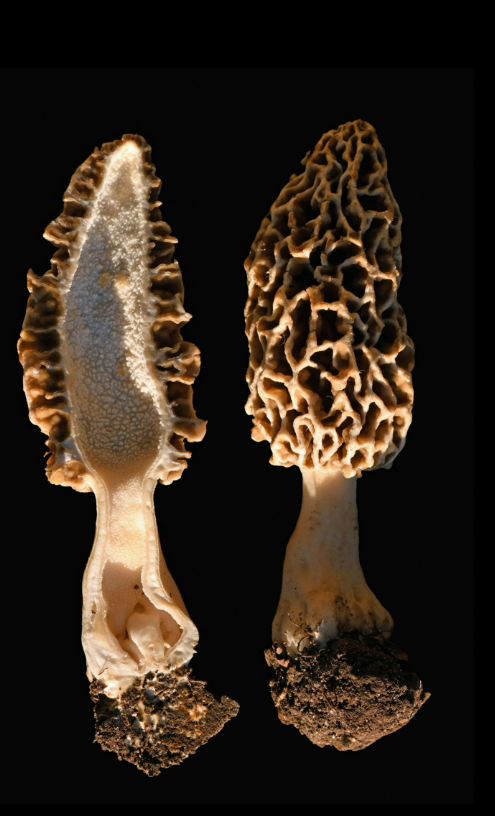
A honeycomb-patterned cap
A hollow interior from tip to stem
A cap fully attached to the stem
If sliced lengthwise, they should be completely hollow inside.
There are false morels that resemble true morels but can be toxic. If you are not completely confident in identification, do not harvest or eat them.
When in doubt, leave it.
Harvesting Responsibly
When foraging:
Cut the stem at the base
Leave small mushrooms to mature
Avoid disturbing surrounding soil
Respect burn areas and regulations
A simple mesh foraging bag helps prevent crushing and allows spores to disperse naturally as you walk.
Cooking and Edible Uses
Morels are known for their earthy, nutty flavor.
They’re commonly:
Sautéed in butter
Added to pasta
Used in cream sauces
Paired with wild game
Dried for later use
Morels should always be cooked before eating.