
Fly Agaric in Alaska
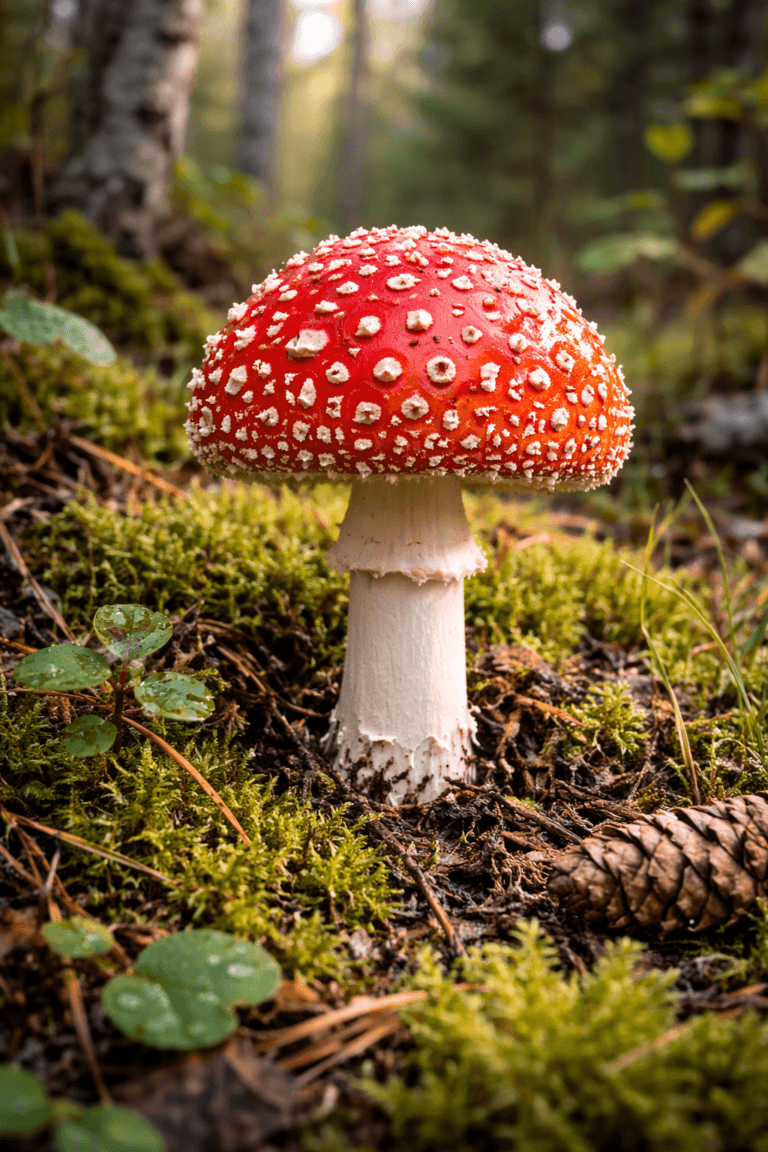
Fly Agaric in Alaska
If you hike long enough in Interior spruce forest, you’ll eventually see it — bright red cap, white spots, standing out against green moss like it doesn’t belong there.
Fly agaric is one of the most recognizable mushrooms in Alaska. It’s also one you absolutely do not eat.
It shows up in late summer, usually after steady rain, often in the same areas year after year.
Where It Grows
Fly agaric prefers:
• Spruce forests
• Birch–spruce mixed woods
• Mossy, damp ground
• Areas with well-established tree roots
It grows in connection with trees underground. If you’re walking through mature forest with thick moss and scattered birch, you’re in the right zone.
August through September is prime season.
How to Identify It
The cap is usually:
• Red to orange-red
• Dotted with white wart-like patches
• Rounded when young, flattening as it ages
Underneath, the gills are white. The stem is white with a ring near the top and a bulb at the base.
In Alaska, heavy rain can wash some of the white spots off, making the cap appear smoother.
If you’re serious about mushroom identification, carry a reliable Alaska mushroom field guide. Amanitas include deadly species, and guessing is not a strategy.
Is It Edible?
No.
Fly agaric contains compounds that can cause nausea, vomiting, disorientation, and neurological effects. It is not a beginner mushroom. It is not a “try it once” mushroom.
Its bright appearance attracts attention — especially from kids. If you hike with family, this is a good species to teach clearly: look, don’t touch.
If you’re foraging edible species like morels or boletes, use a breathable mesh mushroom bag so different species don’t mix together in a container.
Why It Matters in Alaska
Not everything in the forest is food.
Some species exist simply as part of the larger picture — reminders that Alaska’s woods are complex, layered, and sometimes strange.
Fly agaric is one of those.
It’s the mushroom that makes people stop mid-trail and say, “That can’t be real.”