
False Morels in Alaska
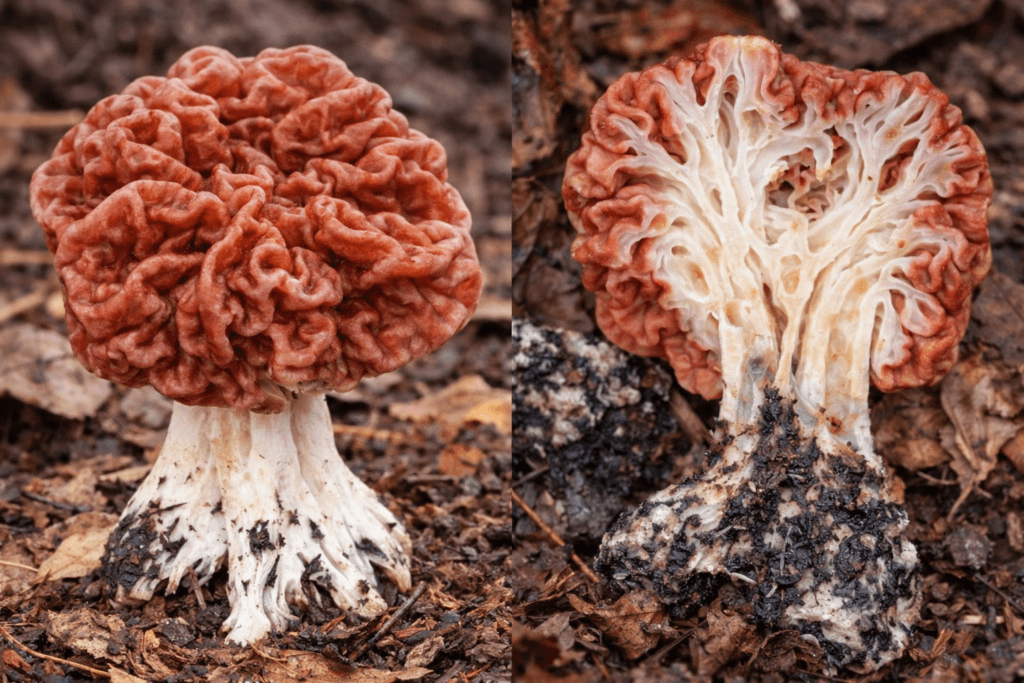
False Morels in Alaska
False morels appear in many of the same areas as true morels, especially after wildfire. At first glance, they can look similar. But they are not the same.
Some false morel species contain toxins and should never be casually harvested.
If you’re foraging in Alaska, learning the difference matters.
Where False Morels Grow
False morels are commonly found in:
• Post-wildfire areas
• Conifer forests
• Burned slopes
• Disturbed soil
They often emerge in spring and early summer.
How to Identify False Morels
Unlike true morels, false morels:
• Have wrinkled, brain-like caps
• Do not have uniform honeycomb pits
• Are often irregular in shape
• May not be hollow inside
Cutting a mushroom in half lengthwise is one of the most important identification steps.
If you are uncertain, do not consume.
Why Identification Matters
Some false morels contain compounds that can convert into toxins when ingested. Even when cooked, improper preparation can be dangerous.
Foraging requires patience and caution.
A field guide specific to Alaska mushrooms is one of the most important tools a forager can carry.
A Cautionary Species
False morels are part of Alaska’s wildfire regrowth story — but they are not a beginner mushroom.
They serve as a reminder that knowledge matters in the wild.