
Birch Bolete Mushrooms in Alaska
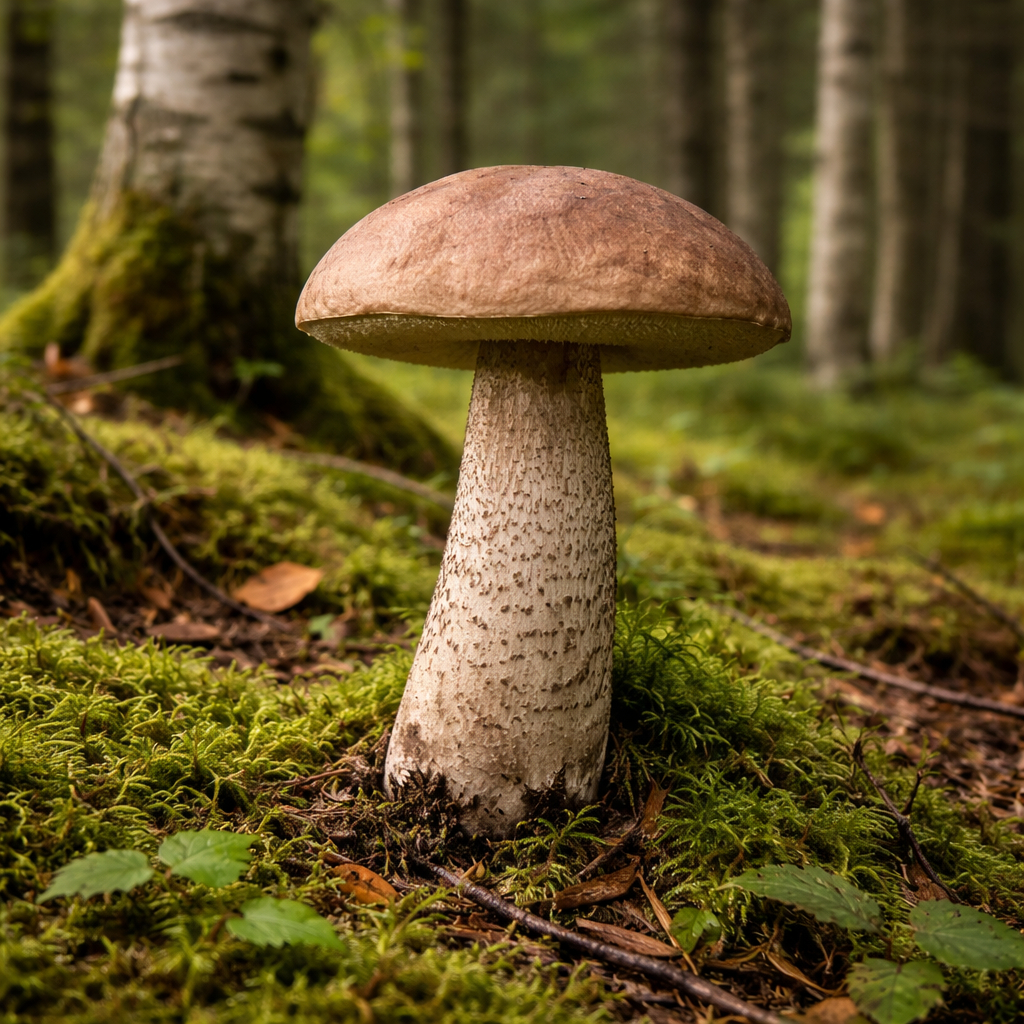
Birch Bolete in Alaska
If you spend time in Interior forests where birch trees are common, you’ve probably walked past this one.
Brown cap. Tall stem. Quiet, unassuming.
Birch bolete doesn’t stand out like brighter mushrooms, but once you learn to recognize it, you start seeing it everywhere.
It usually appears in late summer, often after rain, growing close to the same trees year after year.
Where It Grows
Birch bolete prefers:
• Birch forests
• Mixed spruce–birch woods
• Well-drained soils
• Mossy forest floors
It grows in direct connection with birch trees underground. If there are no birch trees nearby, you won’t find this mushroom.
August through September is the most common time to see it.
How to Identify It
The cap is usually:
• Light to medium brown
• Smooth, slightly rounded
• Often dull rather than shiny
Instead of gills, the underside has pores.
The stem is:
• Pale with dark speckling
• Long and slightly rough in texture
It has a classic bolete shape — thick cap, solid stem.
Is It Edible?
Yes, but with caution.
Birch bolete is considered edible, though not as highly valued as king bolete. Texture can vary depending on age and growing conditions.
Older specimens often become soft or waterlogged and are not worth collecting.
As with all wild mushrooms, correct identification is critical before consuming.
Why It Matters in Alaska
Birch bolete reflects how connected Alaska’s forests are.
It doesn’t exist on its own. It grows with birch, depends on it, and appears in the same places year after year.
Once you learn that connection, you stop just looking for mushrooms—you start reading the forest.