
Bering Glacier
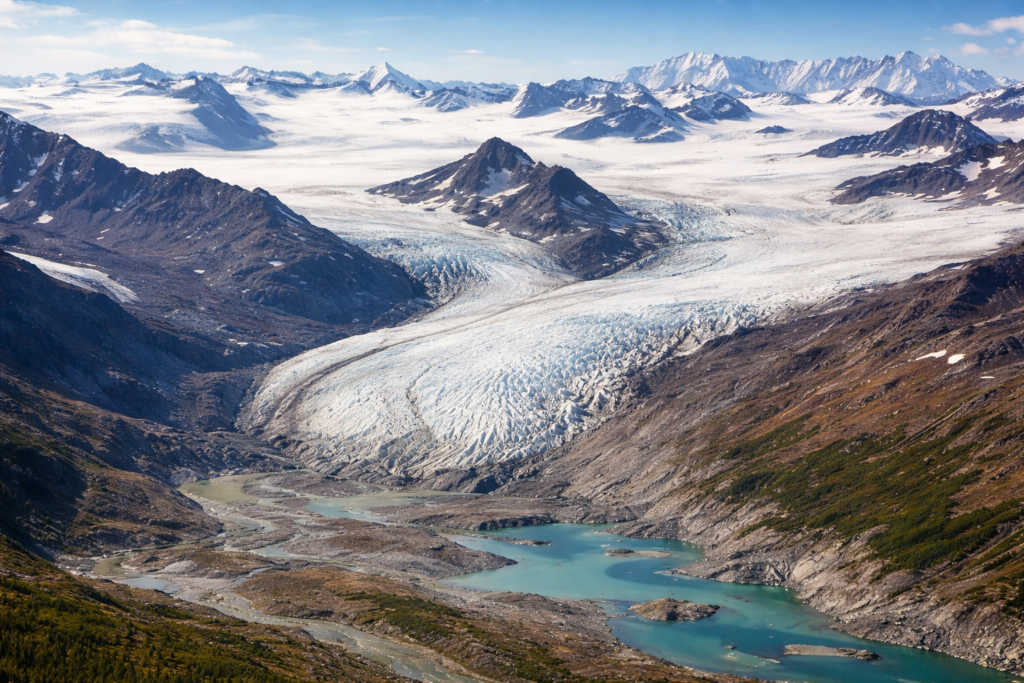
Bering Glacier is the largest glacier in North America by area, stretching across southern Alaska in a massive system of ice, meltwater, and glacial lakes. It’s not just a single flow of ice- it’s a complex, shifting landscape that changes constantly.
Access is difficult. Most people only see Bering Glacier by air, which honestly gives you the best perspective. From above, you can see just how vast it is: ice fields, crevasses, and pools of meltwater scattered across the surface.
One of the defining features here is movement. Bering Glacier is known for periodic surges, where sections of the glacier suddenly advance forward. It’s an active system, not a static one.
On the ground, the terrain is rugged and unpredictable. Ice mixes with sediment, water channels, and unstable surfaces, making travel challenging without proper experience.
This glacier isn’t about easy access or guided walks. It represents the raw scale and power of Alaska’s glacial systems- massive, dynamic, and constantly reshaping the land around it.