
Glaciers of Alaska
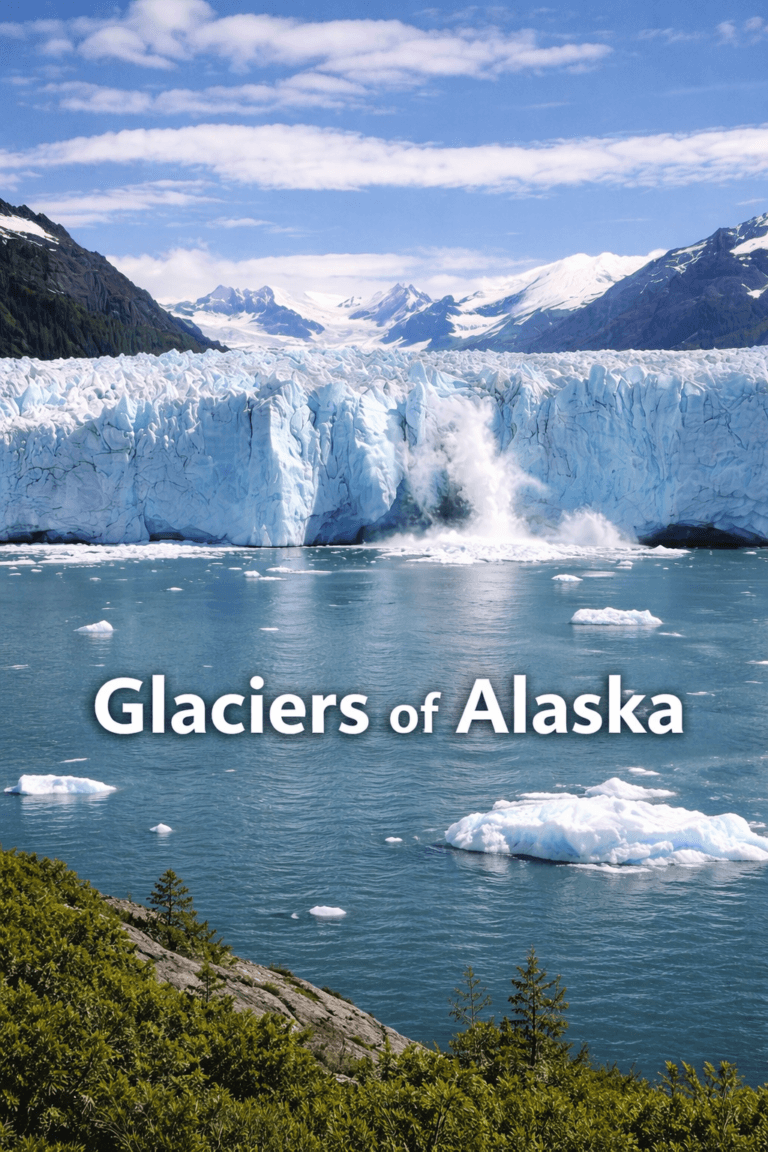
Alaska is one of the most glacier-rich places on Earth. Massive icefields, slow-moving valley glaciers, and dramatic tidewater glaciers shape much of the state’s landscape, influencing rivers, coastlines, ecosystems, and even how people move through Alaska today.
This concentration of glaciers exists because of Alaska’s geography and climate. Large mountain ranges stretch across much of the state and sit directly in the path of moist air coming off the Pacific Ocean. As that air rises over the mountains, it cools and drops heavy snowfall. Over time, layers of snow compress into ice, feeding glaciers that slowly move downhill under their own weight. Cold temperatures, frequent snowfall, and steep terrain combine to create ideal conditions for glacier formation, resulting in tens of thousands of individual glaciers across the state.
From the coastal mountains of Southeast Alaska to the vast icefields of Southcentral Alaska, glaciers are a defining feature of the landscape. Some are easy to access by road or short hikes, while others lie far from any infrastructure, visible only by boat or from the air.
This page provides an overview of the different types of glaciers found in Alaska, where they are most commonly found, and how they continue to shape the state.
Type of Glaciers
Alaska contains nearly every major glacier type found on Earth. Understanding these types helps explain why glaciers look and behave differently depending on where you are in the state.
Valley Glaciers
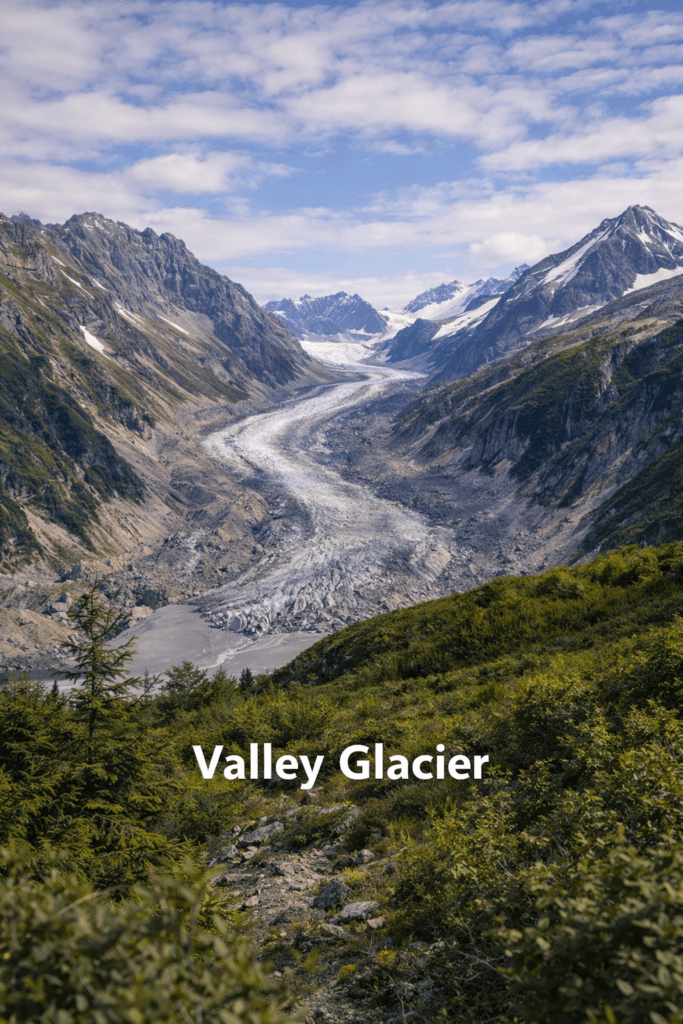
Valley glaciers flow down mountain valleys, following the natural shape of the land. They are the most common glacier type in Alaska and often the easiest to recognize.
These glaciers typically form high in the mountains and move slowly downhill, carving broad U-shaped valleys over time. Many of Alaska’s most familiar glaciers fall into this category, including glaciers visible from highways, hiking trails, and nearby communities
Tidewater Glaciers
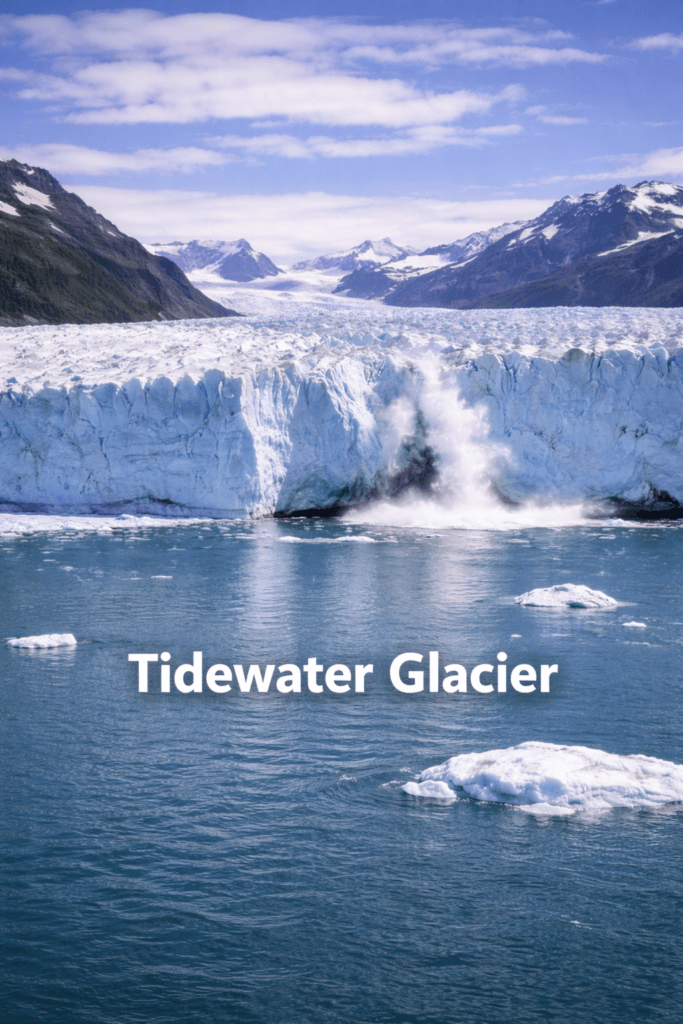
Tidewater glaciers extend all the way to the ocean, where ice meets saltwater. As they advance or retreat, large chunks of ice can break off into the water through a process known as calving.
Alaska has more tidewater glaciers than almost anywhere else in the world, particularly along the Gulf of Alaska and throughout Southeast Alaska. These glaciers are often observed by boat and are known for dramatic icefalls and floating icebergs.
Piedmont Glaciers
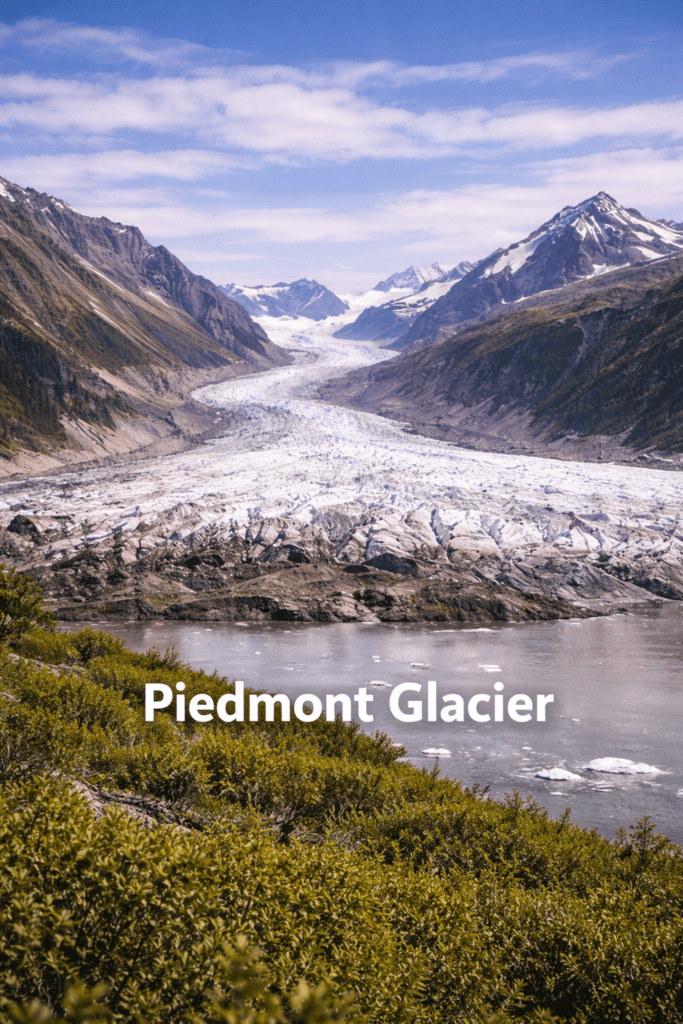
Piedmont glaciers form when one or more valley glaciers spill out of mountain valleys and spread across flatter ground. Instead of remaining confined to narrow channels, the ice fans outward into a broad, rounded shape.
These glaciers can cover enormous areas and are often best viewed from the air. Some of the largest glaciers in Alaska fall into this category.
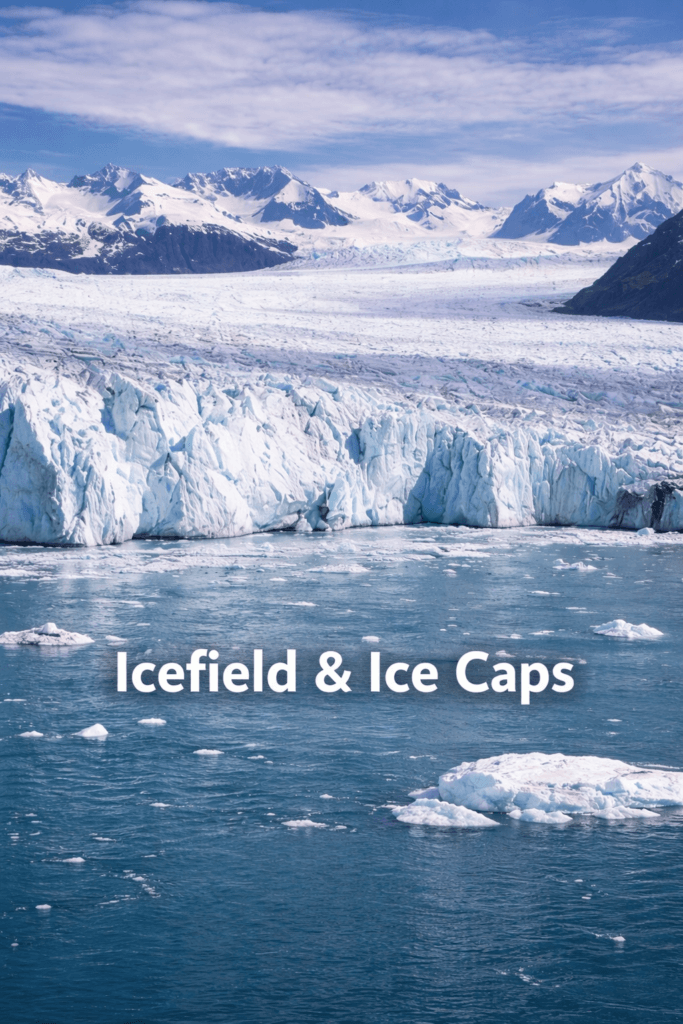
Icefields and Ice Caps
Icefields are large expanses of connected glaciers that blanket mountain ranges and feed multiple outlet glaciers. Ice caps are similar in structure but smaller in scale.
Alaska is home to some of the largest icefields in North America. These ice-covered regions are responsible for feeding many of the valley and tidewater glaciers found throughout the state.
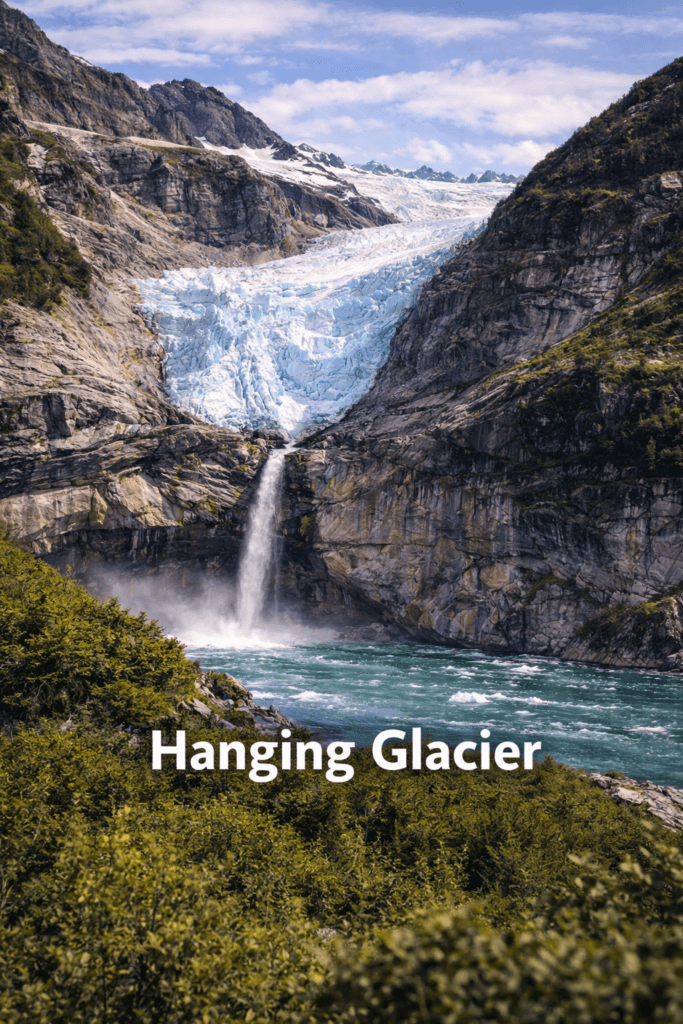
Hanging Glaciers
Hanging glaciers cling to steep mountain slopes and do not extend all the way to valley floors. While often smaller than other glacier types, they can be visually striking and sometimes unstable.
Ice from hanging glaciers may break off due to gravity and steep terrain, occasionally contributing to icefalls or avalanches. These glaciers are most commonly found in Alaska’s coastal mountain ranges and high alpine areas.
Where Alaska’s Glaciers Are Found and Why They Matter
Glaciers are not evenly distributed across Alaska. They are most concentrated in coastal mountain regions where snowfall is heaviest, especially in Southeast Alaska and Southcentral Alaska. These areas receive consistent moisture from the Pacific Ocean, which feeds large icefields, valley glaciers, and tidewater glaciers that shape much of the surrounding landscape.
Interior Alaska, despite extremely cold winters, has far fewer glaciers. Drier conditions and lower snowfall limit glacier formation, even in regions where temperatures remain below freezing for much of the year.
Alaska’s glaciers are dynamic, constantly responding to long-term shifts in snowfall, temperature, and terrain. Over time, glaciers naturally advance and retreat, and many across the state have changed noticeably over the past century. Some are thinning or retreating, while others remain relatively stable or advance temporarily due to local conditions. Because of their size and diversity, Alaska’s glaciers are closely studied and provide valuable insight into climate patterns, sea-level change, and how landscapes evolve over time.
Beyond science, glaciers play a central role in Alaska’s environment and history. They carve valleys and mountains, feed rivers and watersheds, influence ecosystems, and shape travel routes and access across the state. Glaciers also support tourism, research, and cultural understanding of Alaska’s past and present.
Even as glaciers continue to change, their influence remains deeply embedded in Alaska’s landscape.
Alaska is home to thousands of individual glaciers, many of which have their own unique histories, characteristics, and levels of accessibility. Some are visible from highways or nearby communities, while others lie deep within remote wilderness areas.
The following well-known glaciers serve as starting points for learning more about Alaska’s glacial landscape. Each can be explored in greater detail on its own dedicated page.
Notable Glaciers in Alaska
Mendenhall Glacier – Located near Juneau and one of the most visited glaciers in the state
Exit Glacier – A road-accessible glacier near Seward that clearly shows long-term change
Hubbard Glacier – The largest tidewater glacier in North America, known for active calving
Columbia Glacier – One of the most studied glaciers in the world due to its rapid retreat
Malaspina Glacier – A massive piedmont glacier covering hundreds of square miles
Bering Glacier – The largest glacier in North America by total area
Knik Glacier – A large valley glacier near Palmer, commonly accessed by airboat and winter routes
Worthington Glacier – One of the most accessible roadside glaciers in Alaska, located near Valdez
Matanuska Glacier – A heavily visited valley glacier east of Palmer, known for guided ice walks
Root Glacier – Located in Wrangell–St. Elias National Park and popular for hiking and ice trekking
Spencer Glacier – Accessible by train or boat from Anchorage, known for ice features and calving events
**This page is still under construction, these links may not work now but try back later!!**