
Yellow Marsh Marigold
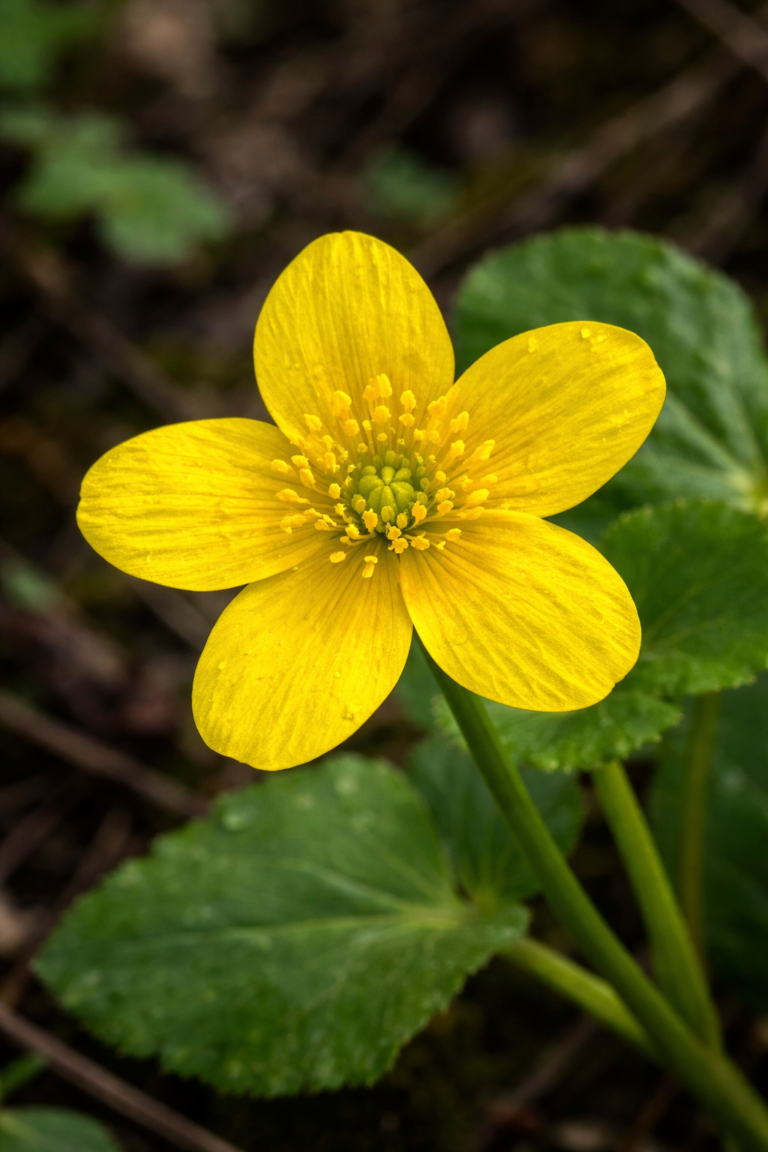
Yellow Marsh Marigold in Alaska
Yellow Marsh Marigold is one of the first flowers to bloom in Alaska, often appearing as snow begins to melt. Its bright yellow petals stand out against wet ground and lingering ice, making it a clear signal that spring has arrived.
What It Is
Yellow Marsh Marigold (Caltha palustris) is a perennial wetland plant adapted to cold, saturated soils. It grows in clusters and is commonly found in areas that remain wet throughout the growing season.
It is one of the earliest flowering plants in Alaska and plays an important role in seasonal transitions.
Where It Grows
Yellow Marsh Marigold is found across Alaska in wet environments. It commonly grows:
• In marshes and wetlands
• Along streambanks and river edges
• In shallow standing water
• In low-lying areas with seasonal flooding
It thrives in areas where snowmelt collects and soils remain consistently moist.
Plant Characteristics
This plant grows low to moderate in height, typically reaching several inches to about a foot tall.
Key features include:
• Rounded, glossy green leaves
• Thick, smooth stems
• Clustered growth pattern
• Bright yellow flowers with multiple petals
Its leaves are broad and often grow close to the ground, helping it retain moisture.
Flowers & Seasonal Changes
Yellow Marsh Marigold blooms in early spring to early summer, often before many other plants have begun growing.
The flowers are:
• Bright yellow
• Cup-shaped
• Usually found in small clusters
Because it blooms early, it is one of the most noticeable plants in wetlands during spring thaw.
Edibility & Toxicity
Yellow Marsh Marigold is considered toxic in its raw form.
The plant contains compounds that can cause irritation and digestive issues if consumed without proper preparation.
Symptoms may include:
• Burning in the mouth
• Nausea
• Digestive discomfort
It should not be eaten unless properly processed, and it is generally best avoided.
Why It’s Important
This plant plays a key role in wetland ecosystems:
• Provides early-season resources for insects
• Stabilizes soil in saturated environments
• Marks the transition from winter to spring
It is often one of the first signs of life returning after long winters.
Identification Tips
• Bright yellow flowers in early spring
• Found in wet, muddy, or flooded ground
• Rounded, glossy leaves
• Clustered growth near water
If you see yellow flowers in a wet area early in the season, it is likely Yellow Marsh Marigold.
Why It Matters in Alaska
Yellow Marsh Marigold represents the beginning of Alaska’s growing season.
It appears before most other plants, signaling that conditions are changing and life is returning to the landscape.
Its ability to thrive in cold, wet conditions makes it a defining species of Alaska’s wetlands.