
Twinflower in Alaska
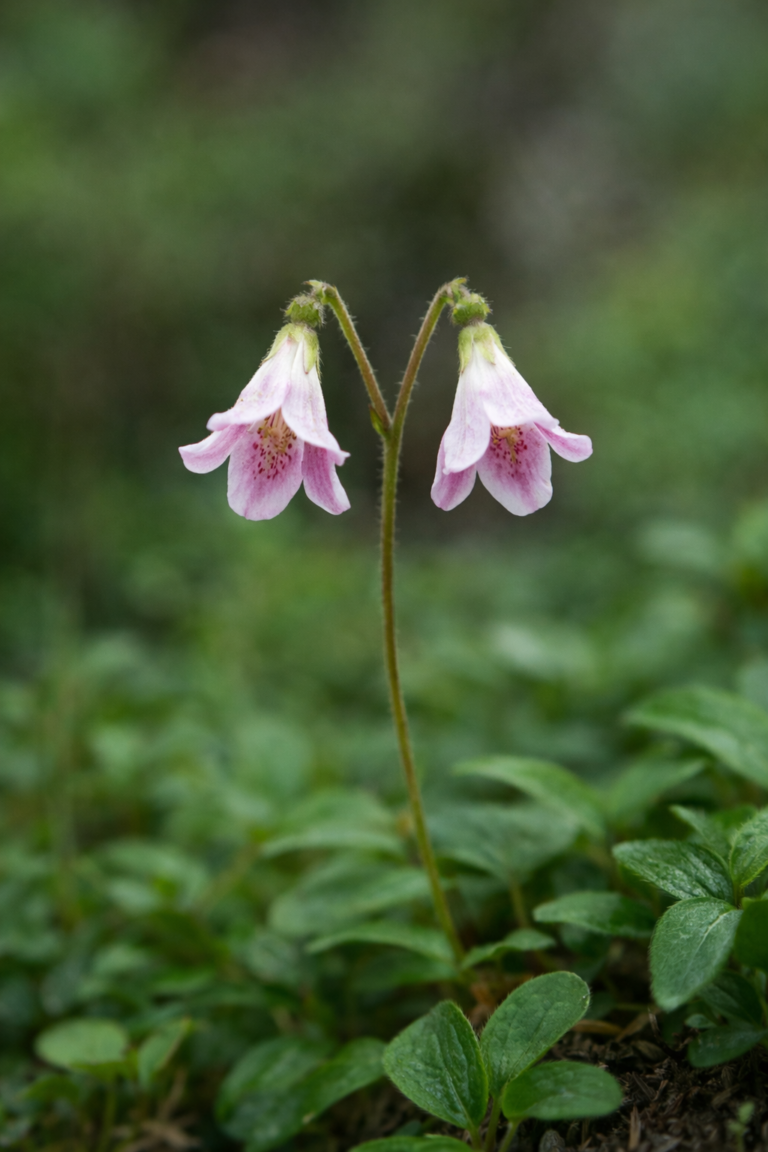
Twinflower in Alaska
Twinflower is a small, low-growing plant found in Alaska’s forested areas. It stays close to the ground, spreading quietly through moss and leaf cover. Its name comes from its most recognizable feature — two delicate, bell-shaped flowers hanging from a single stem. It’s easy to miss at first, but once you notice it, it starts to appear across the forest floor.
Where It Grows
Twinflower prefers:
• Boreal forests
• Mossy ground
• Shaded woodland areas
• Cool, damp environments
• Interior and Southcentral Alaska
You’ll find it growing in quiet, shaded areas where the ground is soft and covered in moss. It spreads outward as a creeping groundcover, forming thin, low patches rather than dense clusters.
When to Notice It
Early to mid-summer. The flowers appear during the warmer part of the growing season, usually after the forest has fully leafed out. Because they hang low and are small, they’re easiest to notice when you slow down and look close to the ground.
How to Identify It
Key traits:
• Paired, pink bell-shaped flowers
• Thin stems with two blooms per stalk
• Small, rounded evergreen leaves
• Low, creeping growth habit
The paired flowers are the biggest clue. Few other plants in Alaska have that same two-flower structure. It stays very low, often blending into moss and forest floor vegetation.
Why It Matters in Alaska
Twinflower is part of the quiet layer of Alaska’s forest ecosystems. It grows in stable, shaded environments and spreads slowly over time, helping form groundcover in undisturbed areas. It doesn’t compete with larger plants — it lives beneath them.
Is It Edible?
No. Twinflower is not considered a food plant and is not used for foraging. It is best left undisturbed in its natural environment.
Why It Matters in Alaska
Twinflower doesn’t stand out from a distance. It’s something you find by paying attention. It grows low, spreads slowly, and blooms quietly under the canopy. Recognizing it helps you see a different layer of Alaska — not the big landscapes, but the small details that make up the forest floor.
Learn more forest species in Flowers of Alaska.