
Shooting Star in Alaska
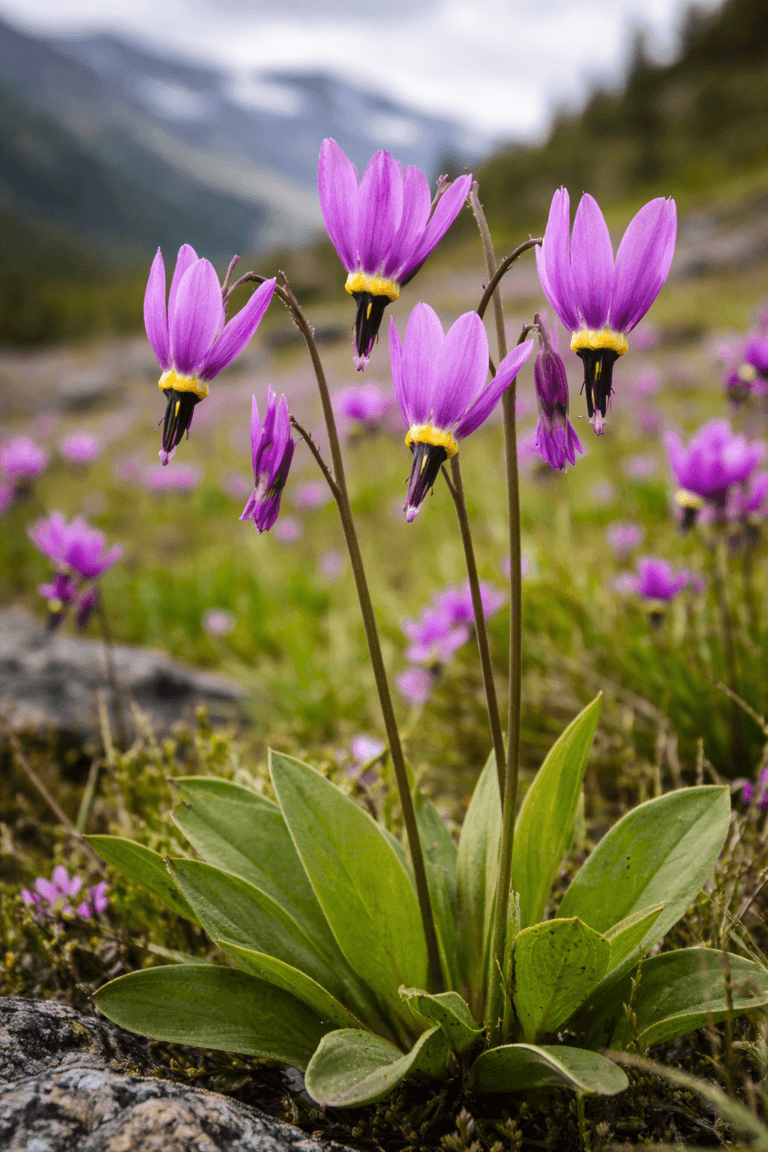
Shooting Star in Alaska
Shooting star doesn’t look like most flowers.
The petals sweep backward, almost like they’re caught in motion. The center points forward. It looks like it’s flying.
You’ll usually find it in early summer, often in damp ground where snow has only recently melted.
It’s not loud or flashy from a distance. But up close, it’s one of the most distinctive wildflowers in Alaska.
Where It Grows
Shooting star prefers:
• Moist meadows
• Tundra flats
• Open forest edges
• Wet spring ground
• Low alpine slopes
It often grows where snow lingers late into the season.
If the soil is soft and the ground still feels cool from runoff, you’re in the right zone.
You’ll see it across much of Alaska, especially in Interior and northern regions.
When to Notice It
Late spring to early summer.
It’s one of the earlier blooming flowers after snowmelt.
Because its growing window is short, it blooms quickly, sets seed, and fades before peak summer heat.
If you wait too long into July in lower elevations, you may miss it.
How to Identify It
Key traits:
• Pink to purple petals
• Petals swept sharply backward
• Dark central cone
• Single flower or small cluster on a leafless stem
• Leaves grow low at the base
The backward-swept petals are the giveaway.
No other common Alaska wildflower looks quite like it.
When in bloom, it’s easy to spot once you know the shape.
Is It Edible?
No.
Shooting star is not considered a food plant in Alaska. It isn’t used in common recipes or traditional foraging.
It’s best left alone and appreciated where it grows.
If you’re looking for edible plants to work into recipes, focus on well-known species like wild berries or certain mushrooms instead.
Why It Matters in Alaska
Shooting star marks the transition from snow season to growing season.
It shows up when the ground is still cold and the air still carries that early-summer chill.
Seeing it means the tundra and meadows are waking up.
Recognizing it helps you read the season — and in Alaska, knowing the season matters.
Learn more seasonal wildflowers in Flowers of Alaska.