
Fireweed in Alaska
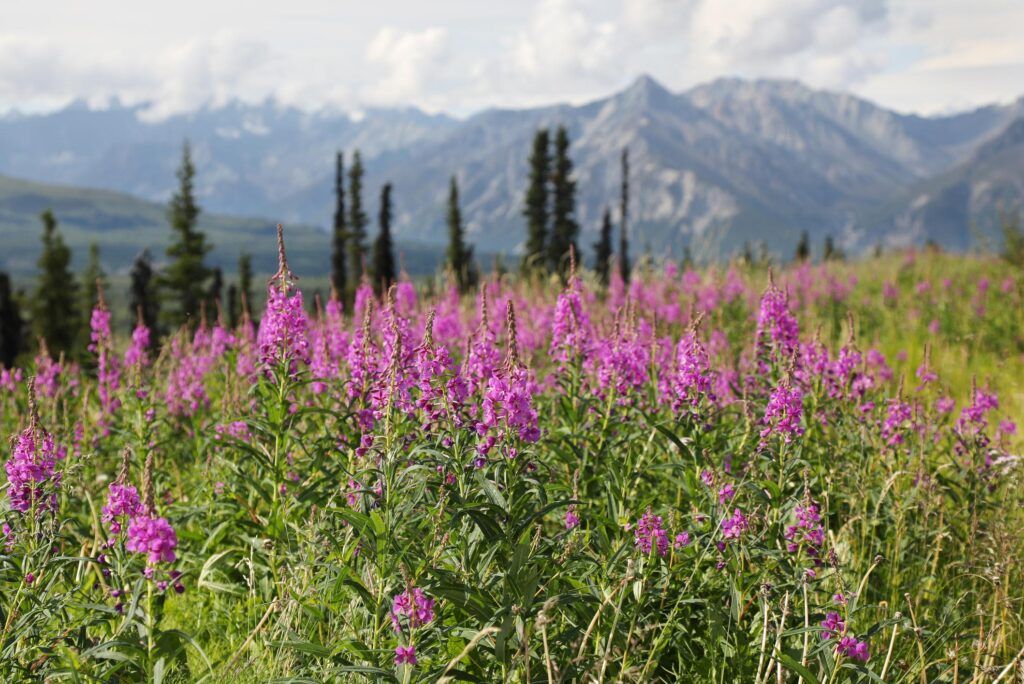
Fireweed in Alaska
Fireweed is one of the most recognizable wildflowers in Alaska. Tall pink-purple blooms rise above open ground, especially in areas that have recently burned. It’s often the first splash of color after wildfire, which is how it earned its name.
If you’ve driven through Alaska in summer and seen fields of bright pink, you’ve seen fireweed.
Where Fireweed Grows
Fireweed is commonly found in:
• Post-wildfire areas
• Roadside clearings
• Open fields
• Riverbanks
• Recently disturbed soil
It thrives in full sunlight and quickly colonizes open ground.
Identifying Fireweed
Fireweed is easy to recognize:
• Tall stalks (often 3–6 feet)
• Pink to purple four-petaled flowers
• Narrow leaves arranged along the stem
• Long seed pods that split into fluffy white fibers
Bloom begins at the bottom of the stalk and moves upward. Many Alaskans say summer is “half over” when fireweed blooms reach the top.
Edible Uses
Young fireweed shoots can be eaten in early spring when tender.
Flowers are sometimes used for:
• Fireweed jelly
• Infused honey
• Tea blends
Leaves can also be dried and used for herbal tea.
Harvest only from clean areas away from roads and contaminants.
A simple fine-mesh strainer is helpful when making fireweed jelly to separate seeds and pulp. This is another plant that really comes into its own once it’s turned into something.
This page will eventually connect to full fireweed recipes in the Alaska Recipes section.
Herbal & Traditional Uses
Fireweed has a long history of use as a practical, everyday plant.
• Leaves are commonly dried and used to make a mild herbal tea, often compared to a light green tea
• The plant has been traditionally used for its calming and soothing properties
• Fresh leaves can be crushed and applied to minor skin irritations, burns, or insect bites
• It is naturally rich in antioxidants and has been used as a general wellness plant
It’s one of the more approachable herbal plants in Alaska — easy to identify, widely available, and simple to use.
Fire and Regrowth
Fireweed is one of the first plants to return after wildfire. When spruce forests burn, sunlight suddenly reaches the ground again. That open, exposed soil creates the perfect conditions for fireweed seeds to take hold.
Its seeds are light and carried easily by wind. Within a single growing season, blackened ground can be covered in bright pink blooms.
Fireweed doesn’t just survive fire — it depends on it.
The plant spreads quickly through both wind-blown seeds and underground root systems. In the years following a burn, fireweed helps stabilize soil and protect the ground while slower-growing trees begin to return.
Over time, as spruce and alder grow taller and shade increases, fireweed gradually fades out of the area.
It is a transitional plant. A signal of renewal.
In Alaska, fields of fireweed aren’t just beautiful, they are a visible reminder that the landscape is rebuilding itself.
A Symbol of Alaska Summer
Fireweed marks the seasonal shift from spring growth into full summer. It’s part of Alaska’s rhythm — especially in Interior and roadside landscapes.