
Dwarf Dogwood in Alaska
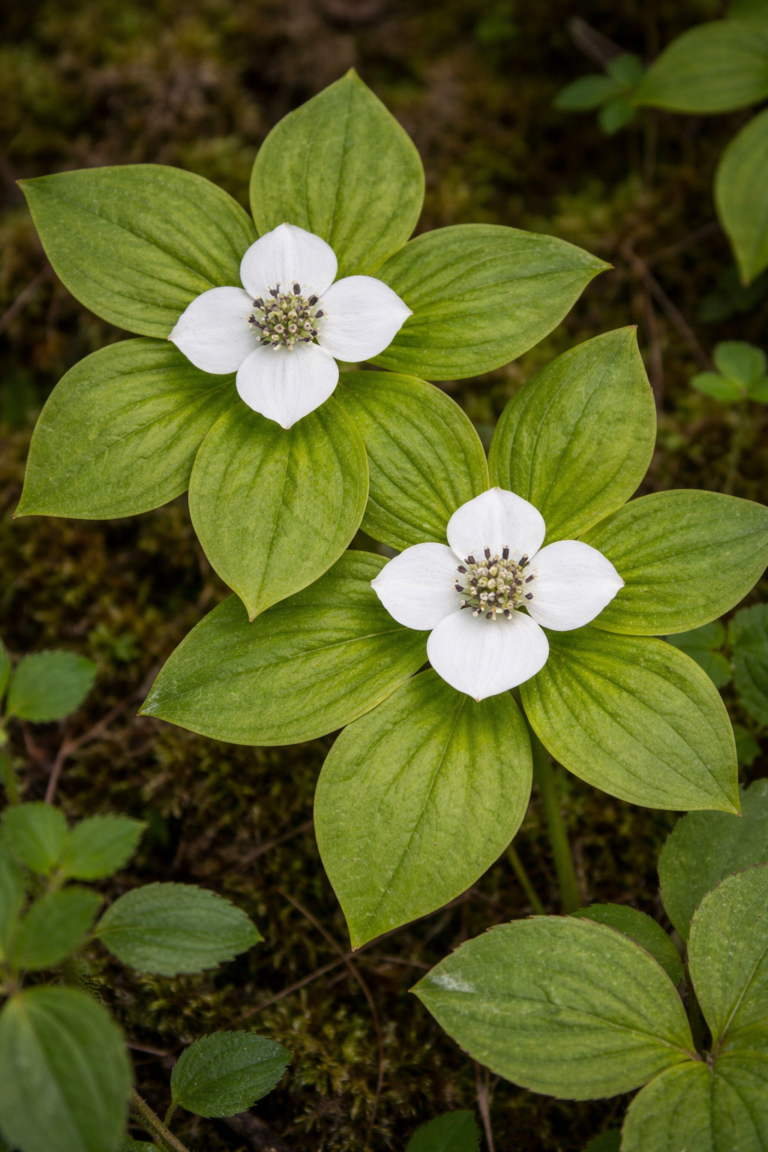
Dwarf Dogwood in Alaska
Dwarf dogwood is a low-growing plant found across Alaska’s forests, often covering the ground in mossy areas. Its white, petal-like bracts make it stand out, even though it grows close to the forest floor.
What It Is
Dwarf Dogwood (Cornus canadensis) is a small, herbaceous plant that behaves like a groundcover rather than a typical tree or shrub.
It spreads across forest floors and is commonly found in cool, shaded environments.
Where It Grows
Dwarf dogwood is found throughout Alaska in forested areas. It commonly grows:
• In mossy spruce forests
• On shaded forest floors
• In cool, moist environments
• In areas with thick ground cover
It thrives where sunlight is filtered and moisture is consistent.
Plant Characteristics
This plant grows low to the ground, usually only a few inches tall.
Key features include:
• Whorled leaves forming a circular pattern
• Low, spreading growth
• Thin stems
• Ground-covering habit
It often forms dense patches across the forest floor.
Flowers & Seasonal Changes
Dwarf dogwood blooms in late spring to early summer.
The flowers appear as:
• White, petal-like bracts
• A small cluster of tiny flowers in the center
Later in the season, it produces bright red berries.
Edibility & Toxicity
The berries are technically edible but are not commonly consumed.
They have a mild taste and are generally not considered a significant food source.
As with any wild plant, proper identification is important before consumption.
Why It’s Important
Dwarf dogwood plays a role in forest ecosystems:
• Provides ground cover and protects soil
• Supports small wildlife and insects
• Adds diversity to forest understory
It helps maintain moisture and stability in forest environments.
Identification Tips
• Low-growing plant in mossy areas
• White bracts with a central flower cluster
• Whorled leaf pattern
• Bright red berries later in the season
It is often one of the most noticeable plants on the forest floor once you know what to look for.
Why It Matters in Alaska
Dwarf dogwood represents the understory of Alaska’s forests.
It fills in the spaces between larger plants, helping create a complete and balanced ecosystem.
Even though it stays low to the ground, it plays a significant role in the overall forest environment.