
Arctic Cotton (Cotton Grass)
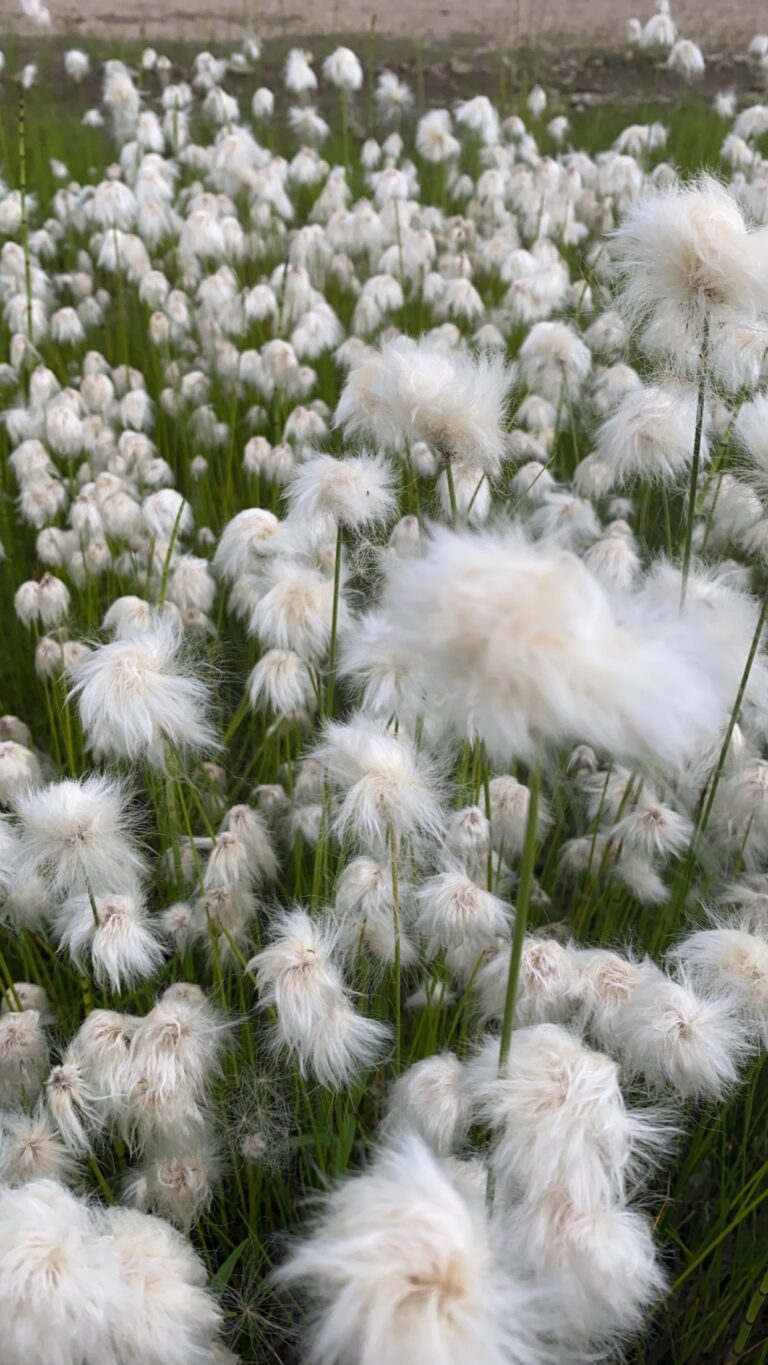
Arctic Cotton in Alaska
Arctic cotton, often called cotton grass, is one of the most recognizable plants in Alaska’s tundra. From a distance, it looks like patches of white scattered across the landscape. Up close, those white tufts are soft, cotton-like seed heads rising above thin green stems — like little poofs floating above the ground. It grows low and steady in wet ground, moving with the wind across open tundra and bogs. This is a plant built for Alaska’s cold, exposed environments.
Where It Grows
Arctic cotton prefers:
• Tundra landscapes
• Bogs and wetlands
• Mossy, waterlogged ground
• Low, open terrain
• Arctic and Interior regions
You’ll find it in areas where the ground stays wet and the horizon feels wide and open. It often grows in large patches, especially in tundra where few taller plants compete.
When to Notice It
Late spring through summer. The white, cotton-like tufts appear as the plant goes to seed and are most noticeable in early to mid-summer. In windy conditions, entire patches seem to move together, giving the tundra a soft, shifting texture.
How to Identify It
Key traits:
• White, cotton-like seed heads
• Thin, upright green stems
• Grows in clusters or patches
• Found in wet, open ground
The white tufts are the most obvious feature and are visible from a distance. Each stem typically carries a single cotton-like head that catches the wind.
Why It Matters in Alaska
Arctic cotton is part of the foundation of tundra landscapes. It thrives in waterlogged, nutrient-poor soils and is commonly found in areas where few other plants can grow. Its presence often signals true tundra conditions — open, wet, and exposed.
Is It Edible?
No. Arctic cotton is not considered a food plant. While it has been used historically in limited ways, it is not part of modern foraging or food use in Alaska.
Why It Matters in Alaska
Arctic cotton is one of the visual markers of Alaska’s tundra. When the landscape turns white with seed heads, it signals the height of the short growing season. It grows where the land is soft, wet, and open — places that define much of Alaska’s northern terrain. Recognizing it helps you understand tundra ecosystems, where survival depends on low growth, resilience, and adaptation to constant exposure.
Learn more tundra and wetland species in Flowers of Alaska.