
Thimbleberry
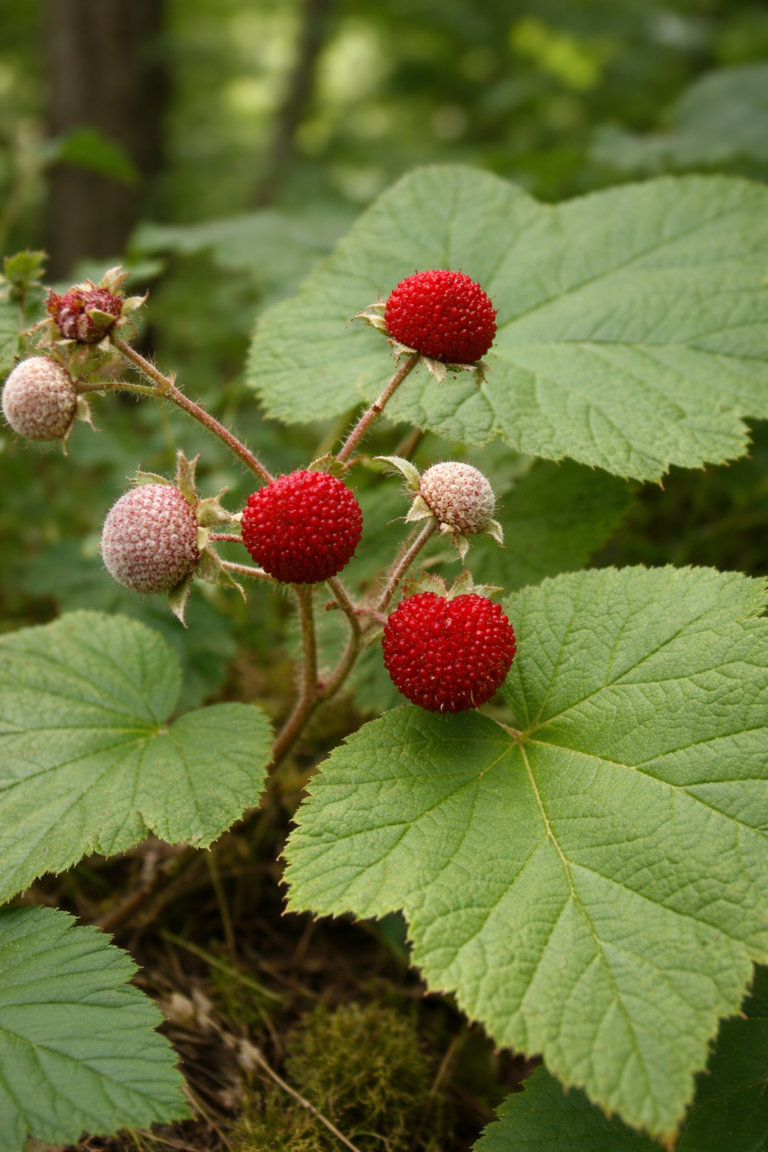
Thimbleberry in Alaska
Thimbleberry is a soft, bright red berry found in parts of Alaska, known for its delicate texture and large, maple-like leaves. While it is edible, it is often included in cautionary discussions because it can be confused with other berry-producing plants.
What It Is
Thimbleberry (Rubus parviflorus) is a deciduous shrub in the raspberry family that produces soft, hollow red berries.
Unlike raspberries, the fruit is very fragile and easily crushed.
Where It Grows
Thimbleberry is commonly found in:
Coastal regions of Alaska
Southeast Alaska forests
Southcentral Alaska in milder areas
Forest edges and clearings
Roadsides and disturbed soils
It prefers moist soil and partial sunlight.
Plant Characteristics
Thimbleberry grows as a shrub, typically reaching 3 to 6 feet in height.
Key features include:
Large, soft, maple-like leaves
Bright red, flat-topped berries
No thorns on stems
Soft, fuzzy texture on leaves and stems
Open, spreading growth pattern
The large leaves are one of its most noticeable features.
Flowers & Seasonal Changes
Thimbleberry blooms in early summer with white, five-petaled flowers.
By mid to late summer, the plant produces bright red berries.
The berries are hollow and delicate, often falling apart when picked.
Toxicity & Danger
Thimbleberry itself is not toxic and is safe to eat.
However, it can be confused with other berry-producing plants that may not be safe.
Misidentification can lead to:
Eating non-edible berries
Consuming low-quality or unpleasant fruit
Potential digestive discomfort from unknown species
Correct identification is important.
Why It’s Dangerous
Thimbleberry can be risky because:
It grows near other berry species
Its red color can be mistaken for other berries
People may assume all red berries are safe
It has similarities to raspberries and other Rubus species
The main concern is confusion with other plants.
Medicinal & Historical Notes
Thimbleberry has been used traditionally as a food source.
The berries are often eaten fresh or used in jams, though they are fragile and do not store well.
Leaves have occasionally been used for teas in some traditional uses
Identification Tips
Large, soft leaves shaped somewhat like maple leaves
Bright red, flat, and hollow berries
No thorns on the plant
White flowers earlier in the season
Soft, fuzzy texture overall
The combination of large leaves and thornless stems makes it easier to identify.
Why It Matters in Alaska
Thimbleberry is important to recognize because:
It is an edible native plant
It grows in commonly visited areas
It can be confused with other species
It helps build foraging knowledge and confidence
Understanding plants like thimbleberry helps people safely recognize edible species in Alaska.