
Rose Hips
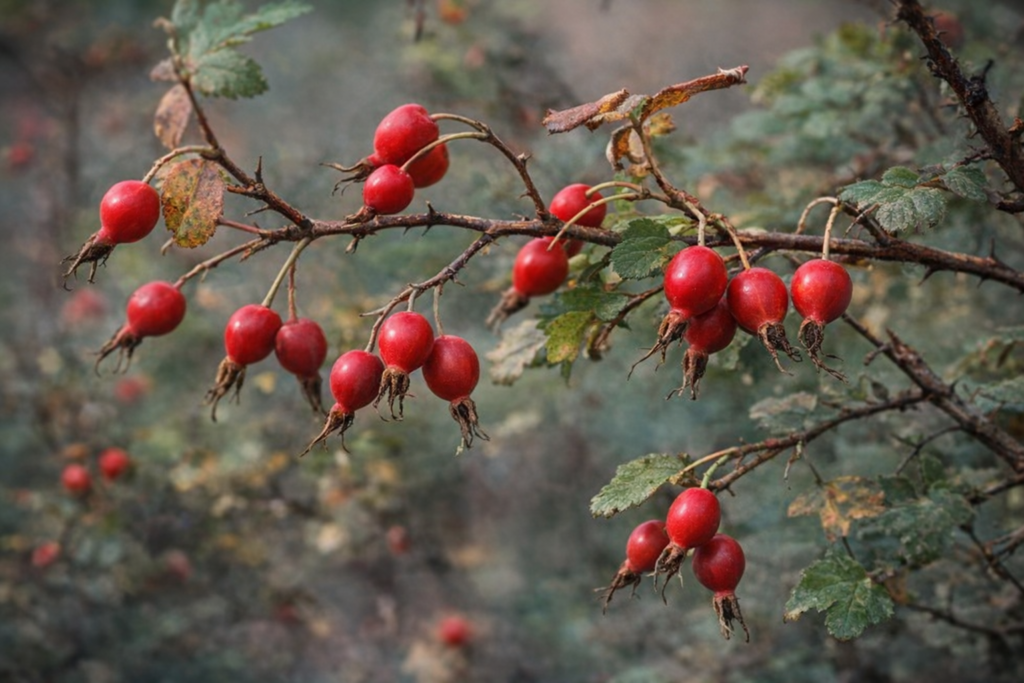
Rose Hips in Alaska
Rose hips are the fruit of wild rose plants and are found across much of Alaska. Bright red to orange and highly visible in late summer and fall, they are one of the most commonly recognized wild plant foods in the state.
They are widely used but require proper preparation before eating.
What It Is
Rose hips are the seed-containing fruit of wild roses (Rosa spp.), forming after the flowers bloom and fade.
They develop as small, fleshy pods that hold seeds inside.
Where It Grows
Rose hips are commonly found in:
Southcentral Alaska
Interior Alaska
Coastal regions
Riverbanks and gravel bars
Open fields and roadsides
They grow well in sunny areas with well-drained soil and are often seen along disturbed ground.
Plant Characteristics
Rose hips grow on thorny shrubs that typically reach 2 to 6 feet tall.
Key features include:
Bright red to orange oval-shaped fruit
Thorn-covered stems
Compound leaves with serrated edges
Shrub-like, spreading growth
Fruit that remains on the plant into fall and early winter
The plant is easy to recognize once the hips appear.
Flowers & Seasonal Changes
Wild roses bloom in early to mid-summer with pink to light purple flowers.
After blooming, the petals drop and the hips begin forming.
By late summer and fall, the fruit ripens into its bright red or orange color and becomes more noticeable across the landscape.
Edibility & Safety
Rose hips are edible and widely used, but they must be prepared properly.
The outer flesh is safe, but the seeds inside contain fine hairs that can cause irritation.
Potential issues include:
Mouth and throat irritation
Digestive discomfort if seeds are consumed
Skin irritation when handling in large amounts
Removing the seeds eliminates these risks.
Why Preparation Matters
Rose hips can cause problems when:
Eaten whole without removing seeds
Used raw without cleaning
Handled carelessly around thorns
Proper preparation makes them safe and useful.
Uses in Alaska
Rose hips are valued for their high vitamin C content and are commonly used for:
Teas
Syrups
Jams and jellies
They are one of the more reliable and accessible wild harvests in many parts of Alaska.
Identification Tips
Bright red or orange oval fruit
Grows on thorny rose bushes
Compound leaves with multiple leaflets
Often found in open, sunny areas
Fruit persists into fall
The combination of thorns and bright fruit makes identification straightforward.
Why It Matters in Alaska
Rose hips are important because:
They are a dependable wild food source
They grow across a wide range of environments
They are easy to identify once mature
They require proper preparation to use safely
Knowing how to recognize and prepare rose hips adds another useful skill when spending time in Alaska.