
Lingonberries in Alaska
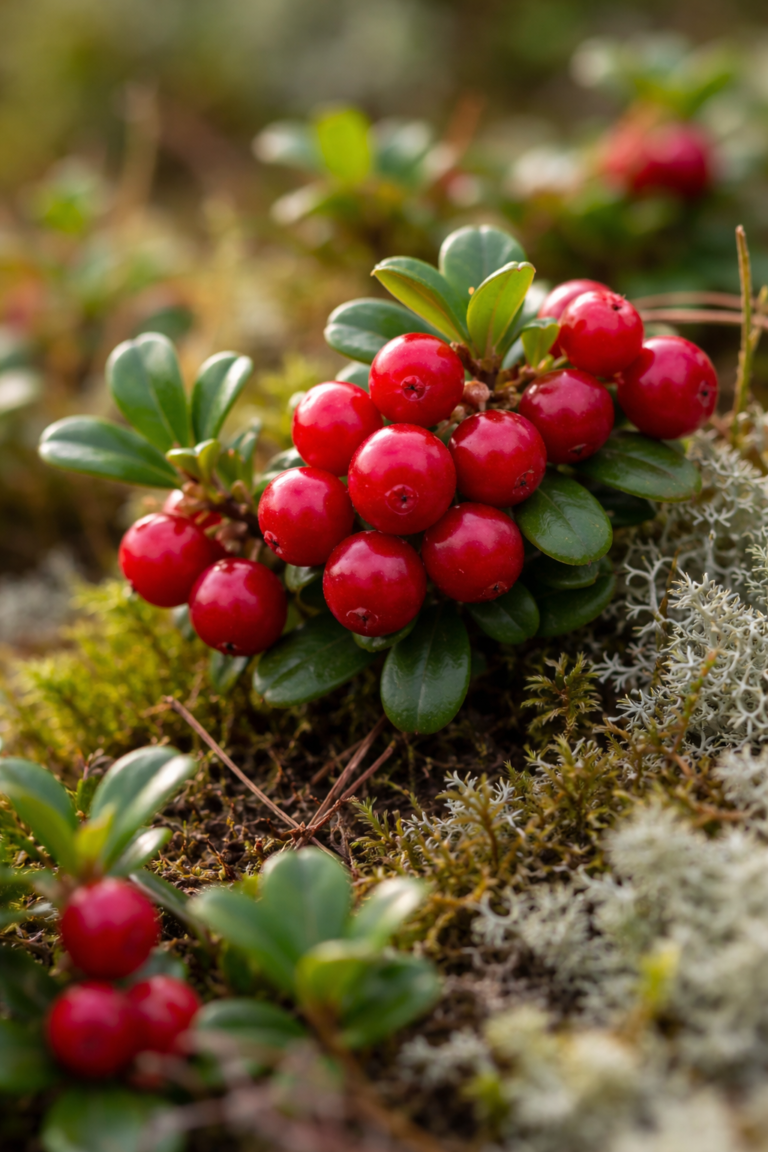
Lingonberry (Lowbush Cranberry) in Alaska
Lingonberries, also known as lowbush cranberries in Alaska, are one of the most common and recognizable berries across the state. Small, bright red, and highly resilient, they grow low to the ground in both tundra and boreal forest landscapes.
They are widely used and are a dependable berry in areas where conditions are too harsh for larger plants. Lingonberries grow on low, woody plants that spread outward, forming patches rather than tall bushes.
Unlike many other berries, they ripen later in the season and often remain on the plant well into fall.
Where They Grow
Lingonberries are most common in:
• Boreal forests
• Tundra regions
• Mossy ground
• Open woodland areas
• Well-drained, acidic soils
They grow across Interior Alaska, Southcentral, and northern regions.
You’ll often find them in areas with moss and low vegetation, especially where the ground stays relatively dry compared to bog environments. They grow on small evergreen shrubs that hug the ground, often mixed with moss and lichen.
Peak harvest season typically runs from late August into September, though berries may persist after the first frost.
Identification
Lingonberries grow on low shrubs with:
• Small, oval-shaped evergreen leaves
• Smooth, glossy red berries
• Short, woody stems
• Low, spreading growth habit
These are dwarf shrubs, meaning they have woody stems but stay low and spread outward rather than growing upright.
The berries are firm, smaller than highbush cranberries, and have a sharp, tart flavor.
How it supports Alaska
Lingonberries provide food for:• Birds
• Bears
• Foxes
• Small mammals
Their low, spreading growth helps protect soil and maintain ground cover in forest and tundra environments.
Is It Edible?
Yes — lingonberries are edible and widely used across Alaska.They are very tart, especially when raw, and are rarely eaten plain unless fully ripe or softened by frost.
How People Use Them
Lingonberries are commonly used for:• Jam
• Jelly
• Syrup
• Sauces for meat dishes
• Baked goods
They are especially popular served with wild game.
A simple preparation is to cook them with sugar until they break down into a thick sauce. Their natural acidity makes them excellent for preserves. They also store well when frozen.
When harvesting, a berry scoop can speed up collection in dense patches, but hand-picking helps avoid stems and leaves.
Why It Matters in Alaska
Lingonberries are one of the most widely harvested and reliable berries in Alaska.They grow in large patches, produce consistently year after year, and thrive in cold, nutrient-poor environments. Because of this, they are an important food source for both people and wildlife.
They are also one of the last berries of the season, marking the transition into fall. They don’t stand out from a distance, but once you learn to spot them, they appear across large areas of land.
Like many of Alaska’s berries, they reward patience and attention — the more you look, the more you find.