
Currants in Alaska
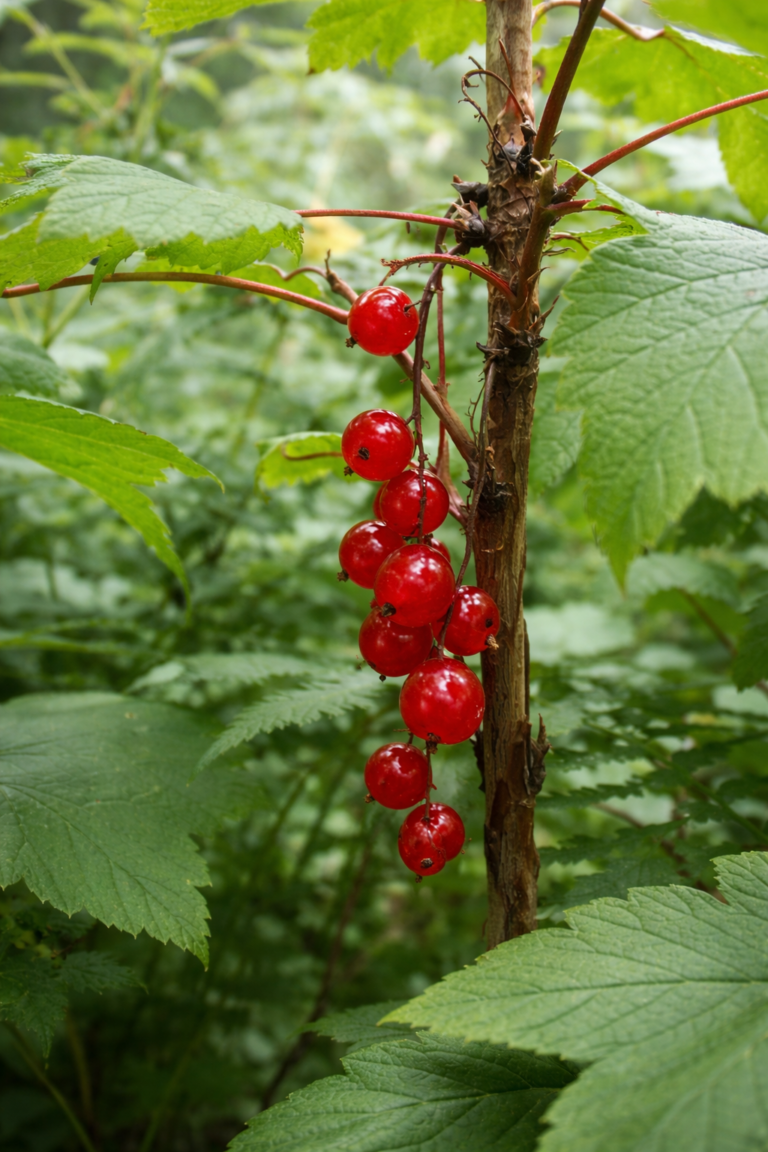
Red Currants in Alaska
Red currants are small, bright red berries that grow in hanging clusters on shrubs across parts of Alaska. Known for their tart flavor and translucent appearance, they are edible but can easily be confused with other berry-producing plants, making proper identification important.
What It Is
Red Currants (Ribes rubrum and related Ribes species) are deciduous shrubs that produce small, round berries in dangling clusters.
They are part of the same family as gooseberries but typically lack thorns.
Where It Grows
Red currants are commonly found in:
Interior Alaska forests
Southcentral Alaska woodlands
Southeast Alaska coastal regions
Forest edges and clearings
Moist, well-drained soils
They often grow in partially shaded areas with good moisture.
Plant Characteristics
Red currants grow as low to medium shrubs, typically reaching 3 to 6 feet in height.
Key features include:
Bright red, translucent berries
Berries hanging in long clusters (strands)
Lobed leaves similar to maple leaves
Smooth stems without thorns
Compact, upright growth pattern
The hanging berry clusters are one of the easiest ways to identify them.
Flowers & Seasonal Changes
Red currants bloom in late spring with small, greenish or yellowish flowers.
By mid to late summer, the berries develop into bright red clusters.
The berries become more translucent as they ripen.
Toxicity & Danger
Red currants are not toxic and are safe to eat when properly identified.
However, potential risks include:
Confusion with other berry-producing shrubs
Eating unripe berries, which are very tart
Misidentification with less desirable species
They are generally safe but require correct identification.
Why It’s Dangerous
Red currants can be risky because:
They grow alongside other similar-looking plants
Clusters may resemble less familiar berry species
People may assume all clustered berries are safe
Beginners may confuse them with gooseberries or other Ribes species
The main concern is proper identification.
Medicinal & Historical Notes
Red currants have been used as a food source for generations.
They are commonly used in:
Jams and jellies
Sauces and syrups
Baked goods
Their tart flavor makes them especially useful in preserves.
Identification Tips
Bright red berries growing in hanging strands
Translucent skin with visible seeds
Lobed leaves resembling small maple leaves
Smooth, thornless stems
Shrub growing in clusters or patches
The dangling berry clusters are the most recognizable feature.
Why It Matters in Alaska
Red currants are important to recognize because:
They are a common edible berry
They grow in accessible areas
They can be confused with similar plants
They are widely used for food and preserves
Understanding plants like red currants helps build safe foraging knowledge and confidence in Alaska.