
Snowshoe Hares in Alaska
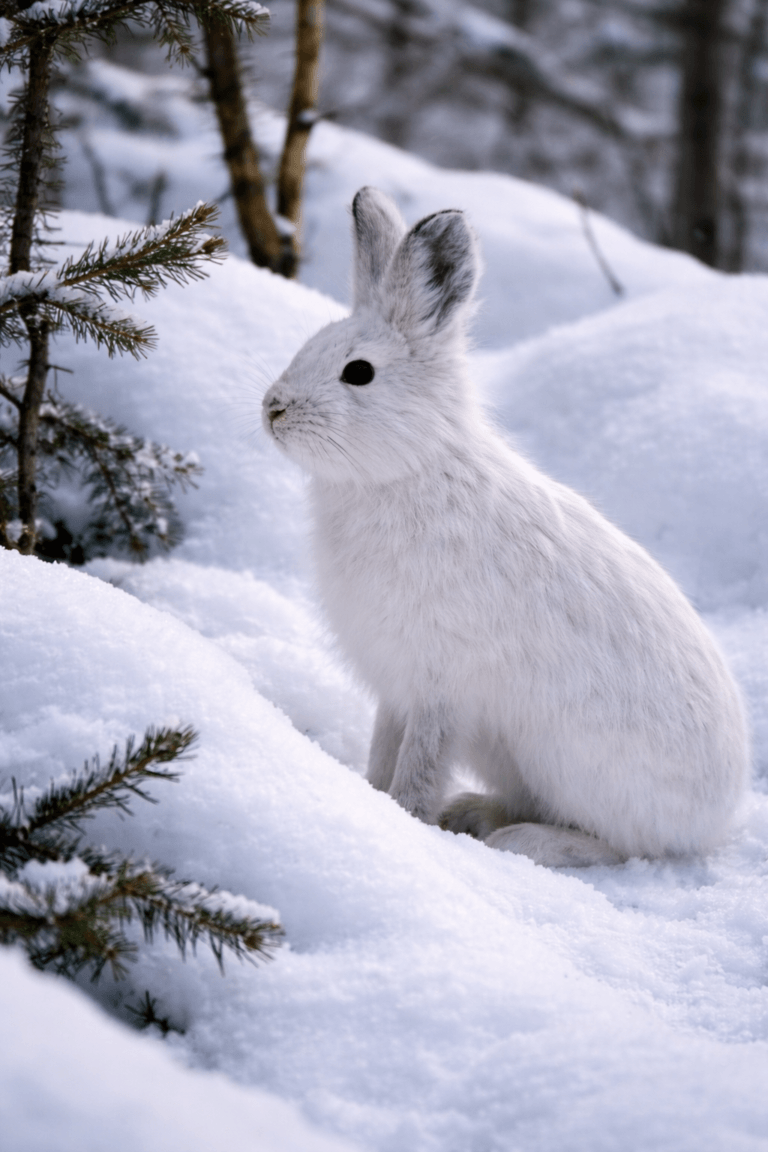
Snowshoe Hares in Alaska
Snowshoe hares are a familiar but often overlooked animal in Alaska’s boreal forests. They are best known for their seasonal camouflage — brown in summer, white in winter. Their large hind feet help them move easily across deep snow, giving them their name.
They are small, quiet, and essential to the northern food chain.
Where Snowshoe Hares Live
Snowshoe hares are common in:
• Interior Alaska
• Boreal forest
• Willow and alder thickets
• Young spruce stands
They prefer dense cover where they can hide from predators.
Seasonal Color Change
In summer:
• Brown fur blends with forest floor.
In winter:
• White fur blends with snow.
This change is triggered by daylight length, not temperature.
Predators and Population Cycles
Snowshoe hare populations naturally rise and fall in cycles.
They are a key food source for:
• Lynx
• Fox
• Owls
• Hawks
Lynx populations in Alaska closely follow snowshoe hare numbers.
Role in the Ecosystem
Snowshoe hares:
• Shape vegetation through browsing
• Feed major predator species
• Help drive natural population cycles
They are small, but they influence the entire boreal system.
Subsistence and Use
Snowshoe hares have long been harvested in Alaska for food and fur.
They are lean and often prepared in stews or slow-cooked dishes.
Future Alaska Recipes pages can expand on traditional and modern hare preparations.