
Polar Bears in Alaska
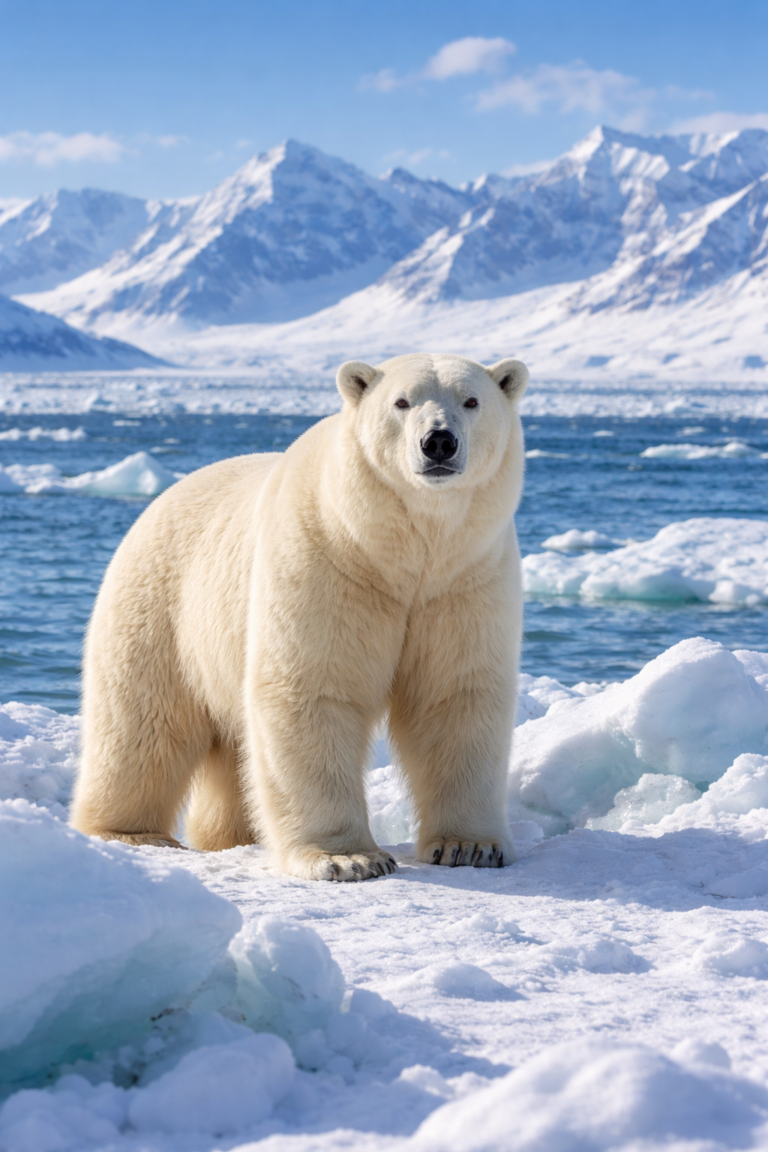
Polar bears belong to the edge of Alaska — the far north where sea ice meets open water and land feels secondary to ocean. You won’t see them in forests or along Southcentral highways. They move with ice, wind, and shifting Arctic seasons.
Seeing one in the wild isn’t casual. It’s serious country. They are the largest land carnivore on earth, built almost entirely for life on sea ice.
Identification
Polar bears are massive, long-bodied bears adapted for Arctic hunting.
-
Color: Cream to yellow-white fur
-
Size: Adult males can exceed 1,000 pounds
-
Neck: Longer and more slender than brown bears
-
Paws: Large and wide for ice travel and swimming
Their fur isn’t truly white — it’s translucent, helping trap heat. Beneath it, their skin is black to absorb sunlight.
From a distance, they move deliberately across ice, often with nose low as they scent for seals.
Where You’ll See Them in Alaska
Polar bears are found primarily in:
-
Arctic coastal Alaska
-
Beaufort Sea
-
Chukchi Sea
-
Areas near Utqiaġvik (Barrow)
-
Western Arctic coastline
They rely heavily on sea ice to hunt seals, their primary food source.
As sea ice shifts seasonally, bears may move closer to shore, especially in late summer and fall when ice retreats.
Viewing typically occurs in Arctic communities or through guided northern tours. This is not roadside wildlife.
Seasonal Patterns
-
Winter & Spring: Hunting seals on sea ice
-
Summer: Following retreating ice northward
-
Fall: Some move onto coastal land while waiting for ice formation
-
Denning: Females den in snowdrifts during winter
Sea ice is central to their survival. Without stable ice platforms, hunting becomes far more difficult.
Polar bears hold deep importance in Arctic Indigenous cultures, particularly among Iñupiat communities. They are respected as powerful animals tied closely to sea and seasonal cycles.
Because polar bears are apex predators, safety protocols in Arctic communities are serious and non-negotiable. Observing from a distance with trained guides is essential. This is not wildlife you approach casually.
Arctic wind exposure near polar bear habitat is intense. Even clear days can carry sharp cold across open ice and coastline. Windproof outer layers, insulated boots, and awareness of conditions are critical in polar bear territory.
Polar bears do not blend into Alaska’s wilderness quietly. They dominate it.