
Sea Otters in Alaska
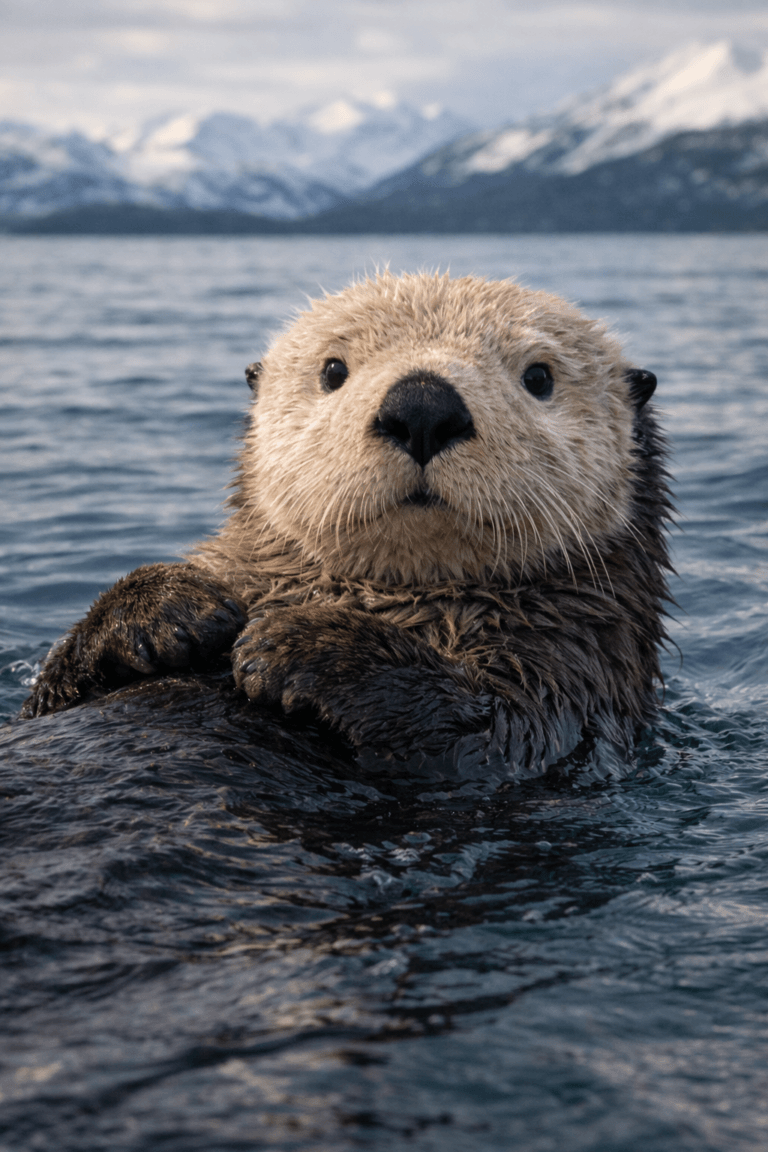
Sea otters are often the first marine mammal people fall in love with in Alaska. You’ll see them floating on their backs, paws folded over their chest, rolling gently with the swell like they have nowhere else to be. But that relaxed surface image hides a tough animal built for cold water survival. Sea otters spend nearly their entire lives in the ocean. They don’t haul out on rocks the way sea lions do. They sleep, groom, eat, and raise their pups while floating.
Identification
Sea otters are medium-sized marine mammals with thick fur and expressive faces.
Color: Dark brown body, lighter tan or cream head in adults
Size: 3–4 feet long
Build: Compact with strong rear flippers
Behavior: Often floating on back while feeding
Unlike seals or sea lions, otters have no blubber layer. Instead, they rely on incredibly dense fur — among the thickest of any mammal — to stay warm.
They frequently roll and groom at the surface, trapping air in their fur for insulation.
Where You’ll See Them in Alaska
Sea otters are common in:
Southeast Alaska
Prince William Sound
Kenai Fjords
Kodiak Island
Parts of the Aleutian chain
They prefer coastal kelp forests and sheltered bays where food is abundant.
Often, you’ll see small groups called “rafts” floating together, sometimes wrapped in kelp strands to keep from drifting apart.
Seasonal Patterns
Sea otters remain in Alaska year-round.
Pups: Often seen riding on the mother’s chest
Feeding: Dive repeatedly for shellfish, sea urchins, and crabs
Winter: Still active in open coastal waters
Because they lack blubber, constant grooming is critical. A sea otter that can’t maintain its fur loses insulation quickly.
Sea otters were heavily hunted during the fur trade and nearly disappeared from many parts of Alaska. Today, populations have rebounded in many regions, though they remain carefully managed.
If viewing from a boat, it’s best to maintain distance and let them float undisturbed. Otters are sensitive to repeated approach. From shore, binoculars allow closer viewing without altering their behavior.
Coastal winds and spray can make wildlife viewing colder than expected, even on clear days. Layered outerwear is often more important than temperature alone suggests. Sea otters may look relaxed, but they live in constant motion — diving, feeding, grooming, and drifting with Alaska’s coastal tide cycles.