
Orcas (Killer Whales) In Alaska
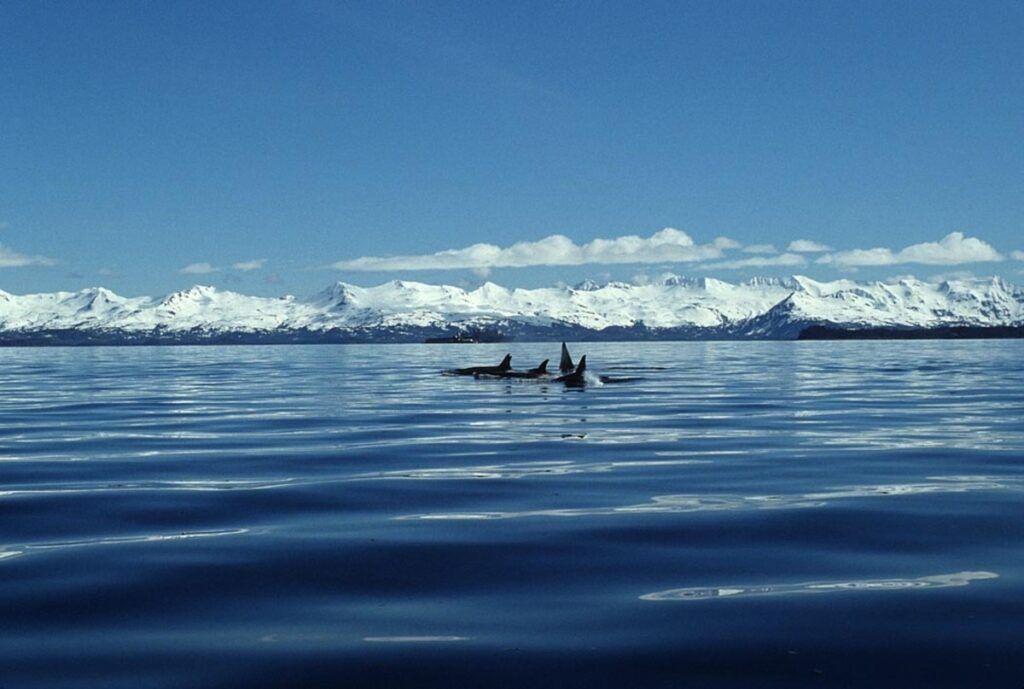
When an orca surfaces, the ocean changes. The tall black dorsal fin cuts through the water first, clean and unmistakable. Even from a distance, they carry presence. Despite the name “killer whale,” orcas are actually the largest member of the dolphin family. In Alaska, they move through coastal waters with quiet coordination, often in tight family groups that stay together for life.
Identification
Orcas are easy to recognize, though pods vary slightly in size and behavior.
Color: Black body with bright white eye patch and underside
Dorsal fin: Tall and straight in males (up to six feet), shorter and curved in females
Size: 20–30 feet long
Blow: Low and bushy compared to baleen whales
Each pod has distinct vocal patterns and hunting strategies.
Where You’ll See Them in Alaska
Orcas are found throughout:
Southeast Alaska
Prince William Sound
Kenai Fjords
Kodiak waters
The Aleutian chain
Some pods primarily hunt fish — especially salmon. Others specialize in marine mammals. These groups maintain different behaviors and do not typically mix diets. They often travel in steady lines, surfacing in rhythm before disappearing again beneath the surface.
Seasonal Patterns
Unlike many baleen whales, some orca populations remain in Alaska year-round. Sightings increase during summer when marine life activity peaks and waters are more navigable.
Because they stay close to productive coastal systems, you’re most likely to encounter them near feeding zones and marine travel corridors.
Orcas hold deep cultural meaning for many Alaska Native communities. Among the Tlingit people of Southeast Alaska, whales — including orcas — appear in clan crests, carvings, and stories. They are respected as powerful beings connected to both sea and lineage. In many traditions, whales are not simply animals but relatives, teachers, and symbols of strength and continuity.
Viewing them today carries that weight. It’s not just wildlife watching — it’s witnessing something layered in both ecology and history.
Boat-based viewing is common, but maintaining respectful distance is essential. Alaska regulations require vessels to keep specific distances from marine mammals. Watching from shore, especially from elevated coastal points, can be quieter and just as powerful.
Coastal wind exposure is stronger than it feels near docks, and long viewing sessions are more comfortable with wind-resistant layers and stable footing on wet decks. Orcas are silent at the surface, but beneath the water they are constantly communicating. The longer you watch a pod move together, the more obvious their coordination becomes.