
Harbor Seals in Alaska
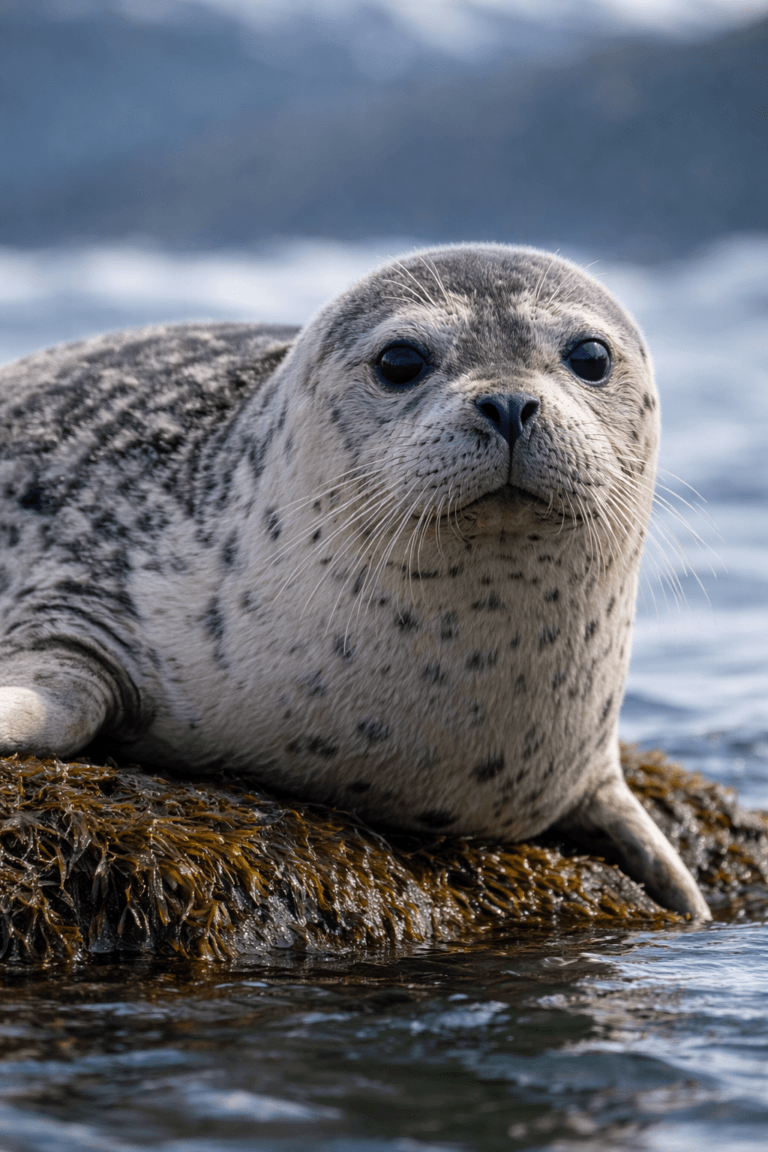
Harbor seals are easy to overlook at first. A rounded head pops up in quiet water, dark eyes just above the surface, then it disappears without splash or drama. They don’t announce themselves the way whales do. They watch.
In Alaska, harbor seals are part of everyday coastal life. You’ll see them resting on rocks at low tide, hauled out on glacial ice, or drifting in sheltered coves with only their heads visible.
Identification
Harbor seals are medium-sized true seals with a smooth, rounded profile.
Color: Varies widely — gray, brown, spotted, or mottled
Size: 5–6 feet long
Head: Rounded with large dark eyes
No external ear flaps (true seals)
They move awkwardly on land but are extremely agile in water.
When hauled out, they often lie in loose groups, facing different directions but staying close together.
Where You’ll See Them in Alaska
Harbor seals are common in:
Southeast Alaska
Prince William Sound
Kenai Fjords
Glacier Bay
Protected bays and inlets statewide
They favor sheltered coastal waters, river mouths, and floating glacial ice.
In places like Kenai Fjords and Prince William Sound, seals frequently haul out on chunks of calving glacier ice. From a distance, they look like smooth gray shapes scattered across white ice.
Seasonal Patterns
Harbor seals remain in Alaska year-round.
Spring & Summer: Pupping season in protected areas
Summer: Increased haul-out activity on rocks and ice
Winter: Often seen in ice-free coastal waters
They rely heavily on consistent haul-out sites to rest, regulate body temperature, and raise pups.
In parts of coastal Alaska, harbor seals have long been part of subsistence traditions, especially in Southeast and western communities. Like other marine mammals, their harvest is regulated and rooted in generations of coastal knowledge.
Because seals depend on undisturbed haul-out areas, maintaining distance is critical. If a group suddenly slides into the water all at once, it usually means they felt pressured. Quiet observation from a boat at regulated distances or from shore is best.
Cold coastal wind can make seal watching surprisingly chilly, especially when sitting still near glacial ice. A wind-resistant outer layer and steady footing on wet decks make longer viewing sessions far more comfortable. Harbor seals may not breach or splash, but their quiet presence along Alaska’s coastlines is constant — part of the rhythm of tide and shoreline.