
Bowhead Whales in Alaska
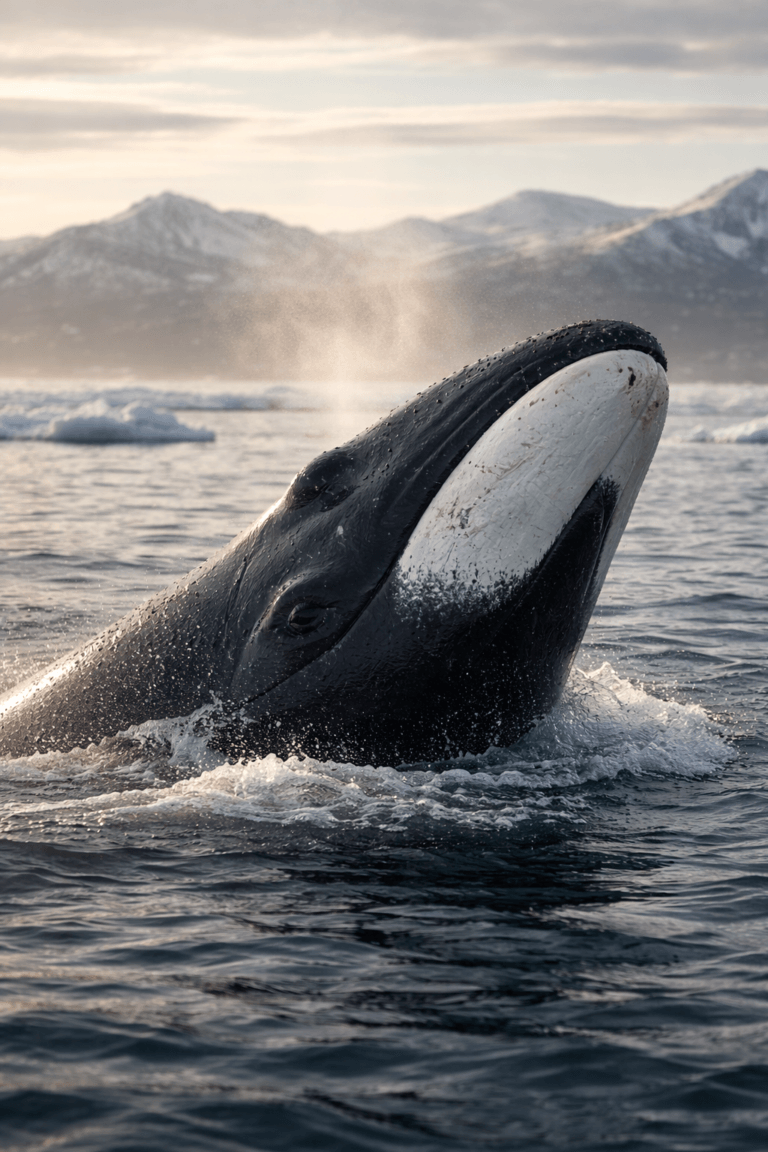
The Bowhead Whale feels older than almost anything else in Alaska’s waters. Massive, slow-moving, built for ice and darkness, they live in places where most ships won’t even travel.
You won’t see bowheads in Kenai Fjords or Southeast tours. These whales belong to Arctic Alaska — the Beaufort and Chukchi Seas — where sea ice shapes the year. They are among the longest-living mammals on earth, with some individuals estimated to live well over 100 years.
Identification
Bowhead whales are large baleen whales with a powerful, rounded head that makes up nearly one-third of their body length.
Color: Dark body with a lighter white chin patch
Size: 45–60 feet long
Head: Massive, arched mouth for filter feeding
Dorsal fin: None
Their skull is strong enough to break through sea ice for breathing holes — something few whales can do.
At the surface, you’ll see a tall, V-shaped blow, often visible in cold Arctic air.
Where You’ll See Them in Alaska
Bowheads are found in:
Beaufort Sea
Chukchi Sea
Northern Arctic coastline
Offshore waters near Utqiaġvik (Barrow)
They follow seasonal ice edges and plankton-rich waters.
These are not casual roadside sightings. Viewing typically happens through Arctic tours, research efforts, or local community observation.
Seasonal Patterns
Spring migration: Westward past northern Alaska
Summer feeding: Arctic waters
Fall migration: Eastward return
Winter: Often within shifting sea ice
Sea ice is central to their life cycle. They move with it, using leads and openings to travel and feed.
Bowhead whales hold profound cultural importance for Iñupiat communities of northern Alaska. For generations, subsistence whaling has been practiced with deep knowledge, ceremony, and regulation. The whale is not viewed as a resource alone but as a respected being central to community life.
Modern management balances conservation with Indigenous subsistence rights, and Alaska’s bowhead population is considered stable.
Arctic viewing conditions are severe. Wind across sea ice carries intense chill even in late spring. Layered insulation and wind protection are essential for anyone traveling in bowhead territory. Bowheads are not dramatic surface whales. They move steadily, quietly, and deliberately — built for endurance rather than spectacle.