
Wolverines in Alaska
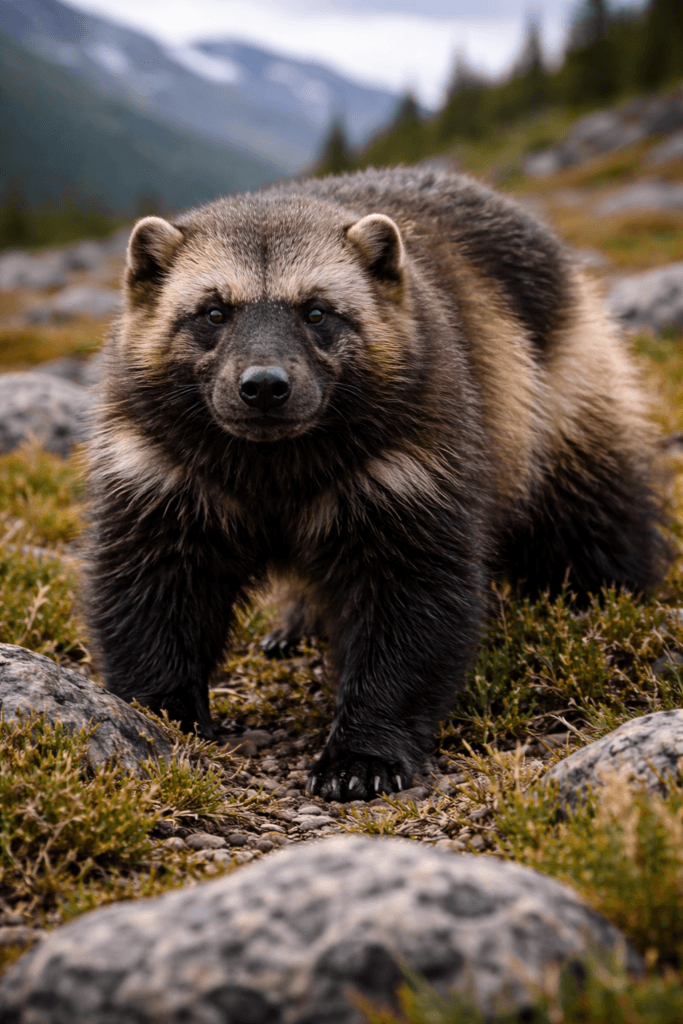
Wolverine in Alaska
Wolverines are rarely seen.
If someone tells you they casually saw one on a hike, they’re lucky.
Stocky. Muscular. Low to the ground. Built for snow and cold.
They look like a compact bear crossed with a weasel — and they move like they own the place.
Where They Live
Wolverines prefer:
• Remote mountain ranges
• Tundra
• High alpine terrain
• Deep snow regions
• Areas far from roads
They need space. Large territories. Quiet country.
You’ll find them in Interior Alaska, the Brooks Range, and mountain systems statewide.
When You Might Notice Them
Winter is the best time to detect them — not see them, but detect them.
Look for:
• Wide, bounding tracks in snow
• Tracks that cover surprising distance
• Signs of scavenging
They travel efficiently across deep snow where many animals struggle.
Seeing one in summer is possible but rare.
How to Identify Them
Key traits:
• Stocky body
• Thick dark fur
• Lighter stripe along sides
• Short, powerful legs
• Rounded head
Tracks are distinct.
They move in a bounding pattern — sets of tracks grouped together rather than a steady walk.
They’re larger than you expect if you’ve only seen pictures.
Safety Considerations
Wolverines are not known for attacking humans.
They are bold around food, though.
If camping in remote country:
• Secure food
• Don’t leave scraps
• Store meat properly
Standard wilderness food storage practices apply.
Again, bear spray is common backcountry gear in Alaska for a reason.
Why It Matters in Alaska
Wolverines represent true wild country.
They survive in places most people don’t stay long.
When you see tracks, it means the landscape is still functioning as remote country.
Recognizing a wolverine track feels like discovering a secret.
Learn more northern wildlife in Animals of Alaska.