
Moose in Alaska
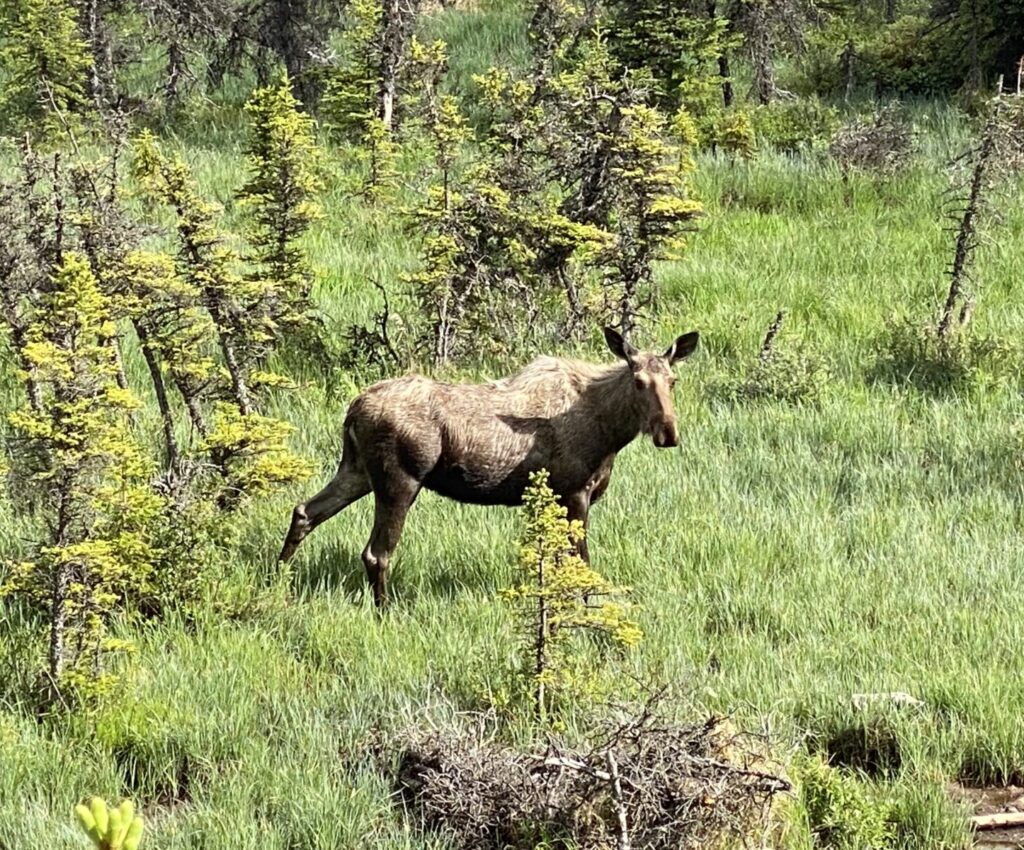
Moose in Alaska
Moose are one of the most recognizable animals in Alaska. Massive, quiet, and surprisingly adaptable, they live across much of the state — from Interior forests to road edges in town.
Seeing a moose in the wild feels dramatic the first time. They move slowly, but they are powerful and unpredictable.
They are not gentle woodland creatures.
They are large wild animals.
Where Moose Live
Moose are found throughout:
• Interior Alaska
• Southcentral
• River corridors
• Boreal forest
• Willow thickets
• Suburban greenbelts
They prefer areas with shrubs and young trees, especially willow and birch, which make up much of their diet.
In winter, they often move into lower elevations and closer to human communities where food is easier to access.
Size and Identification
Alaska moose (the Alaska–Yukon subspecies) are the largest moose in the world.
Adult bulls can weigh:
• 1,200–1,600 pounds
Cows are smaller but still enormous.
Bulls grow antlers each year, shedding them in winter and regrowing them through summer. Full racks can span over five feet across.
Moose have:
• Long legs
• A pronounced shoulder hump
• A bell-shaped dewlap under the throat
• Dark brown coat
They can run up to 35 miles per hour despite their size.
Behavior and Seasonal Patterns
Spring:
Cows give birth to calves. Mothers are extremely protective during this time.
Summer:
Moose feed heavily on shrubs and aquatic plants.
Fall:
The rut (breeding season) begins. Bulls become more aggressive and unpredictable.
Winter:
They conserve energy and browse on woody vegetation.
Viewing Moose Safely
Moose account for more wildlife injuries in Alaska than bears.
Safety rules:
• Never approach
• Keep distance (at least 50 yards)
• Give cows with calves extra space
• Do not get between a moose and its escape route
If a moose lays its ears back or lowers its head, it is agitated.
Back away slowly.
A quality pair of binoculars makes it easier to observe moose safely from a distance without putting yourself in their space.
Moose and Alaska Life
Moose are part of everyday Alaska life. They cross highways, wander neighborhoods, and browse along rivers.
They are also an important subsistence species for many families across the state.
They are not rare here — but they should always be respected.
(Internal link back to: Animals of Alaska)
Moose as Food in Alaska
For many Alaska families, moose is not just wildlife — it is an important food source.
Moose meat is lean, high in protein, and commonly prepared as:
• Roasts
• Steaks
• Burger
• Sausage
• Stew meat
Traditional and modern recipes vary by region and family, but slow cooking methods are especially popular because of how lean the meat is.
In the future, this section will link to full moose recipes in the Alaska Recipes area.