
Lynx in Alaska
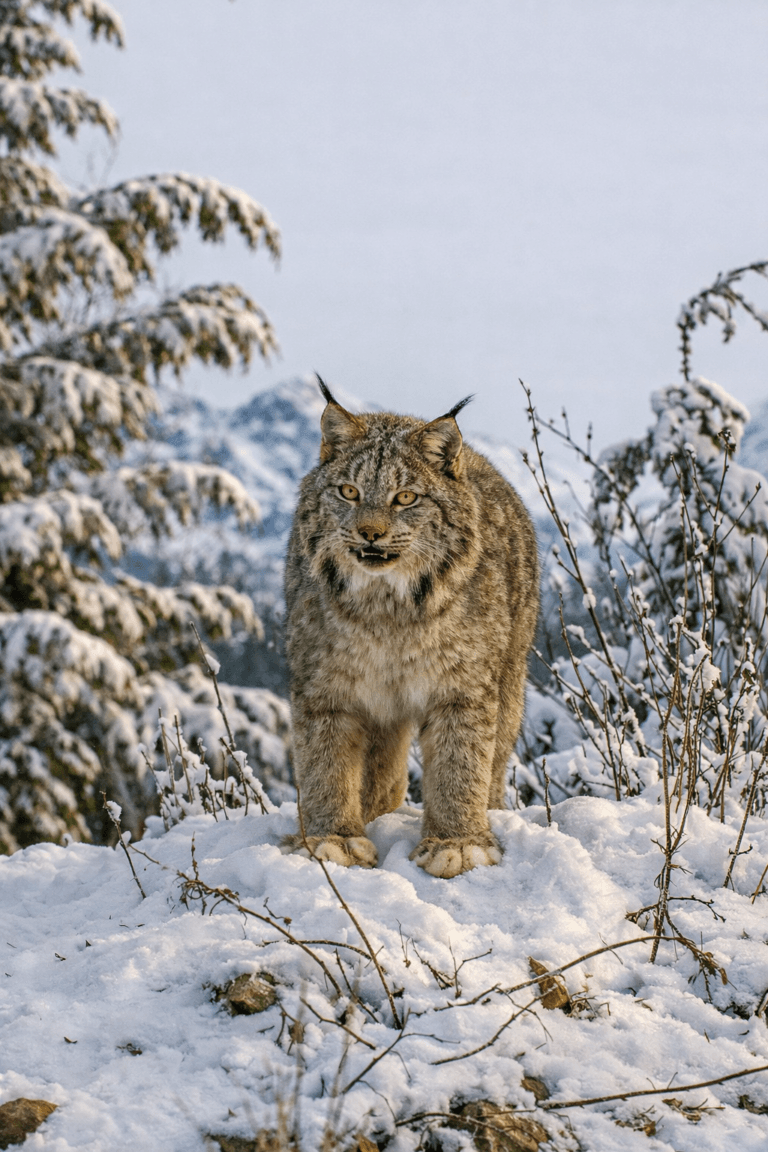
Lynx in Alaska
The lynx represents Alaska’s quiet wilderness — present, patient, and rarely revealed. They are elusive forest predators closely tied to the rhythm of Alaska’s boreal ecosystem. Rarely seen but widely present, they move quietly through dense spruce forests. They are specialists — especially when it comes to hunting snowshoe hares.
Where Lynx Live
Lynx are commonly found in:
• Interior Alaska
• Boreal forest
• Dense spruce stands
• Willow and alder thickets
They prefer thick cover where prey is abundant.
Identifying Lynx
Lynx can be identified by:
• Tufted black ear tips
• Short black-tipped tail
• Large padded paws
• Thick winter coat
Their oversized paws help them move easily across deep snow.
Population Cycles
Lynx populations rise and fall in roughly ten-year cycles, closely tracking snowshoe hare numbers. When hares decline, lynx numbers eventually follow.
This predator-prey cycle is one of Alaska’s most studied natural rhythms.
Viewing Lynx
Lynx are rarely seen in the wild. Tracks in snow are often the only evidence of their presence.
A compact field guide to Alaska mammals can help identify track patterns during winter travel.