
Grizzly Bears in Alaska
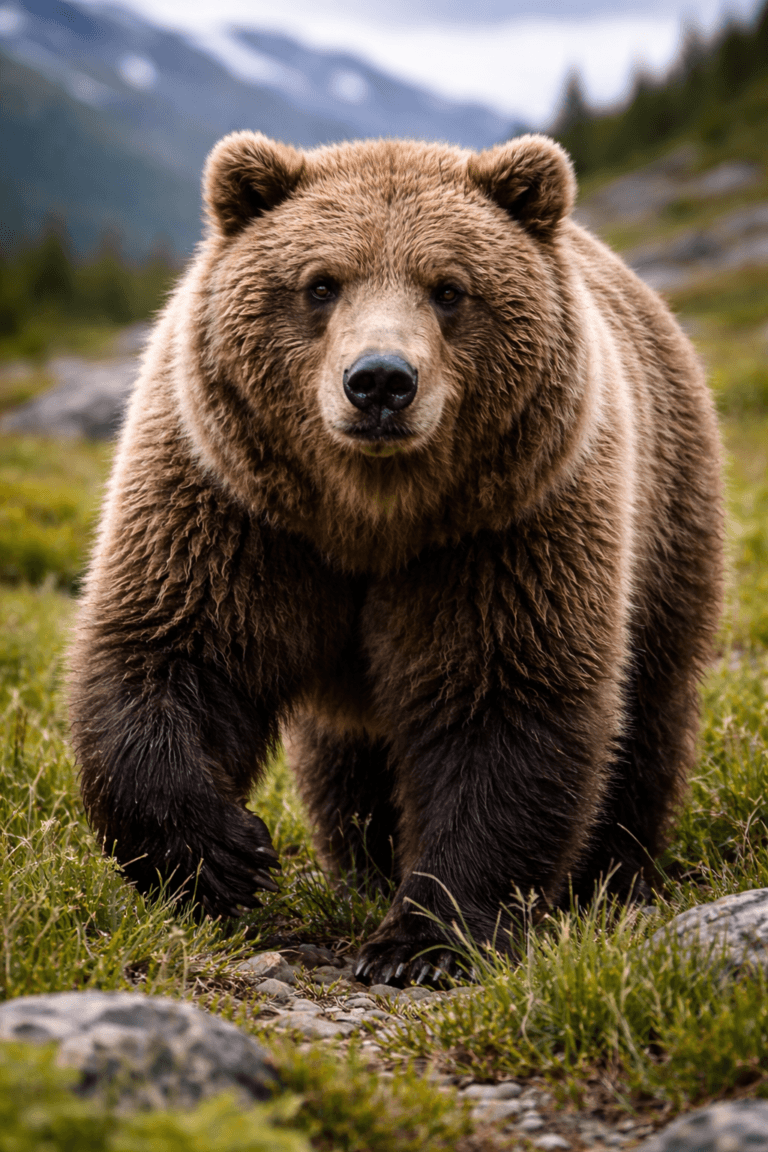
Brown & Grizzly Bears in Alaska
In Alaska, “brown bear” and “grizzly bear” usually refer to the same species.
The difference is mostly location and size.
Coastal brown bears tend to be larger. Interior grizzlies are often slightly smaller.
But both demand respect.
If you spend time outdoors in Alaska, you are in bear country.
Where They Live
Brown and grizzly bears are found in:
• Coastal Alaska
• Interior forests
• River systems
• Mountain valleys
• Tundra regions
If there is food and space, bears will use it.
Salmon streams, berry patches, and open meadows are common feeding areas.
When You Might Notice Them
Spring through fall.
Spring: emerging from dens
Summer: feeding heavily
Late summer: salmon season
Fall: intense feeding before winter
Tracks, scat, and overturned ground are often seen before the bear itself.
How to Identify Them
Key traits:
• Large body
• Prominent shoulder hump
• Dish-shaped face
• Long claws
• Wide tracks
Bear tracks show:
• Five toes
• Large front pad
• Claw marks visible ahead of toes
The shoulder hump is the easiest visual difference from black bears.
Safety Considerations
This is serious territory.
Basic Alaska bear safety:
• Carry bear spray
• Make noise while hiking
• Secure food
• Cook away from sleeping areas
• Never run
If you encounter a bear:
Stay calm.
Do not run.
Use bear spray if necessary.
In Alaska, bear spray is not optional gear in remote country. It’s standard.
Why It Matters in Alaska
Bears shape how people move here.
You don’t wander silently through brush.
You don’t leave food out.
You pay attention to wind and visibility.
Understanding bears is part of understanding Alaska.
They aren’t just wildlife. They define how you travel.
Learn more northern species in Animals of Alaska.