
Pacific Halibut in Alaska
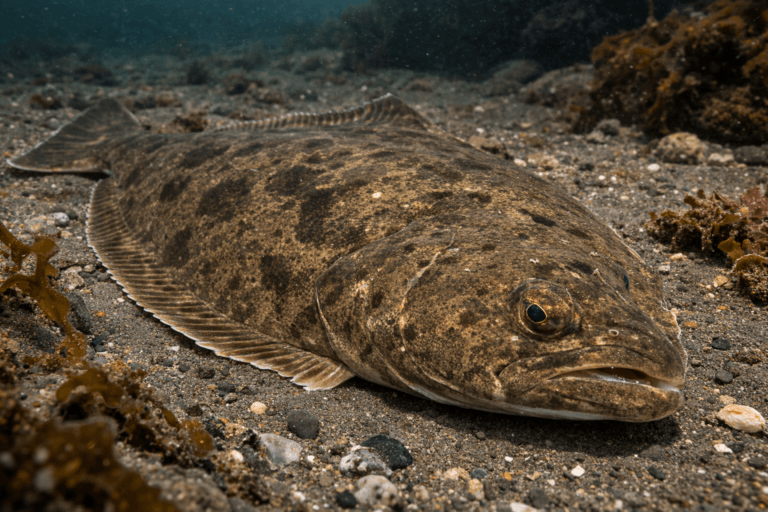
Pacific halibut don’t migrate upriver. They stay offshore in deep, cold saltwater, lying flat against the ocean floor — massive, patient predators of Alaska’s coastal waters. They are one of the largest flatfish in the world, and Alaska’s coastline supports some of the most productive halibut fisheries anywhere.
Halibut fishing is less about riverbanks and more about tide, depth, and weather windows.
Identification
Pacific halibut are broad, heavy flatfish.
-
Color: Dark brown topside, white underside
-
Shape: Diamond-like body with both eyes on one side
-
Size: Commonly 20–100+ pounds
-
Texture: Firm white flesh
Large halibut can exceed 200 pounds, though most sport-caught fish are smaller.
Where You’ll See Them in Alaska
Halibut are found in:
-
Gulf of Alaska
-
Southeast Alaska waters
-
Prince William Sound
-
Kodiak coastal waters
-
Offshore continental shelf areas
They prefer deep, cold marine environments.
Most halibut are caught by charter or commercial vessels rather than shore fishing.
Seasonal Patterns
-
Spring–Summer: Peak fishing season
-
Summer: Prime charter activity
-
Fall: Fishing slows with weather shifts
Ocean conditions matter more than calendar dates. Wind and swell determine safe access.
Halibut trips often mean long hours offshore. Layered waterproof gear and steady sea legs matter more than temperature alone.
Halibut don’t flash like salmon in shallow rivers. They wait below.