
King Salmon in Alaska
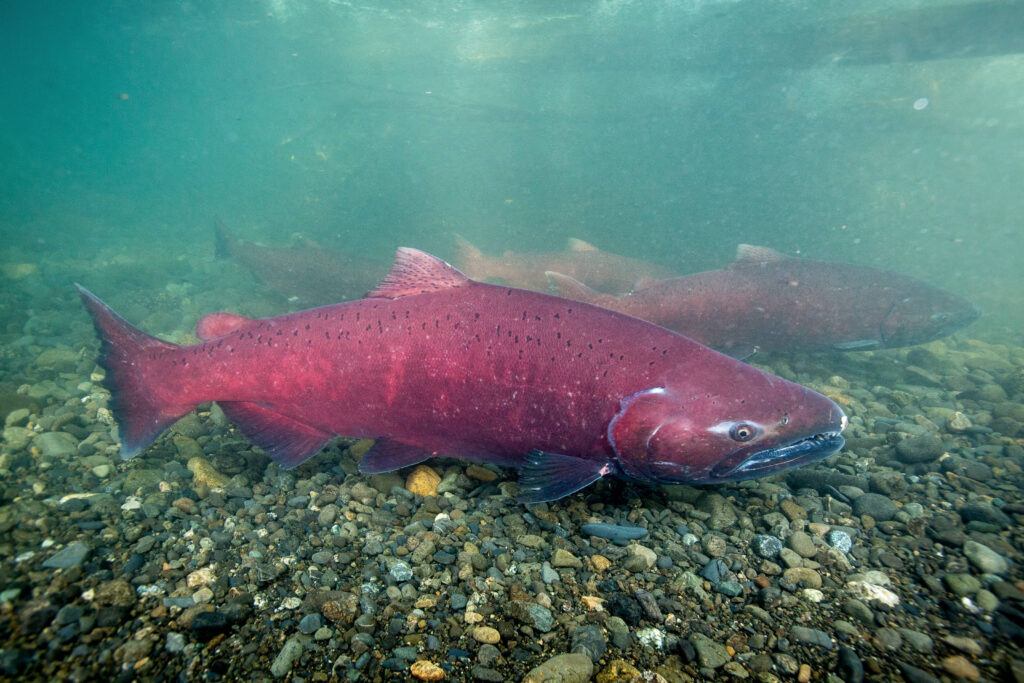
(Chinook Salmon)
King salmon are woven into Alaska. If you’ve stood on a riverbank in June and watched a thick-bodied fish push upstream against glacial current, you understand why they’re called kings. They’re the largest of the Pacific salmon species, powerful and deliberate, built for long migration routes that stretch from ocean feeding grounds to inland spawning rivers. In Alaska, king salmon aren’t just fish. They shape fishing seasons, community rhythms, and entire ecosystems.
Identification
King salmon are heavy-bodied, strong fish with a distinct presence.
Size: Commonly 20–40 pounds, though much larger fish are caught
Color (ocean phase): Silver body with dark blue-green back
Color (spawning phase): Darker bronze or olive tones
Mouth: Black gums — a key identifying feature
Tail: Small black spots across both lobes
They are broader and thicker than most other salmon species.
Where You’ll See Them in Alaska
King salmon run in rivers across much of the state, including:
Kenai River
Yukon River
Kuskokwim River
Copper River
Susitna River
Southeast Alaska streams
They migrate from the ocean into freshwater systems, sometimes traveling hundreds of miles inland to reach spawning grounds.
In coastal towns, they are often seen at fish cleaning stations, docks, and river mouths during peak season.
Seasonal Patterns
Ocean phase: Several years feeding in saltwater
River return: Late spring through summer, depending on region
Spawning: After reaching natal streams
Lifecycle: Adults die after spawning
Timing varies by river system. Some Interior runs occur later than Southcentral runs.
King salmon are central to both sport fishing and subsistence harvest across Alaska. In some years, strict management measures limit harvest due to population fluctuations. The health of king runs is closely monitored statewide.
If you’re fishing for kings, sturdy gear matters. Heavy rods, strong reels, and durable line are necessary for fish of this size. Even from shore, solid footing is critical — glacial rivers move fast and banks can be unstable.
For observers, riverbanks during king season offer a front-row view of Alaska’s seasonal pulse. You’ll see anglers shoulder-to-shoulder, bears drawn to fish-rich streams, and eagles perched nearby. King salmon don’t rush upstream in chaos. They move steadily, conserving strength, pushing toward the exact stream where their life began.