
Dolly Varden in Alaska
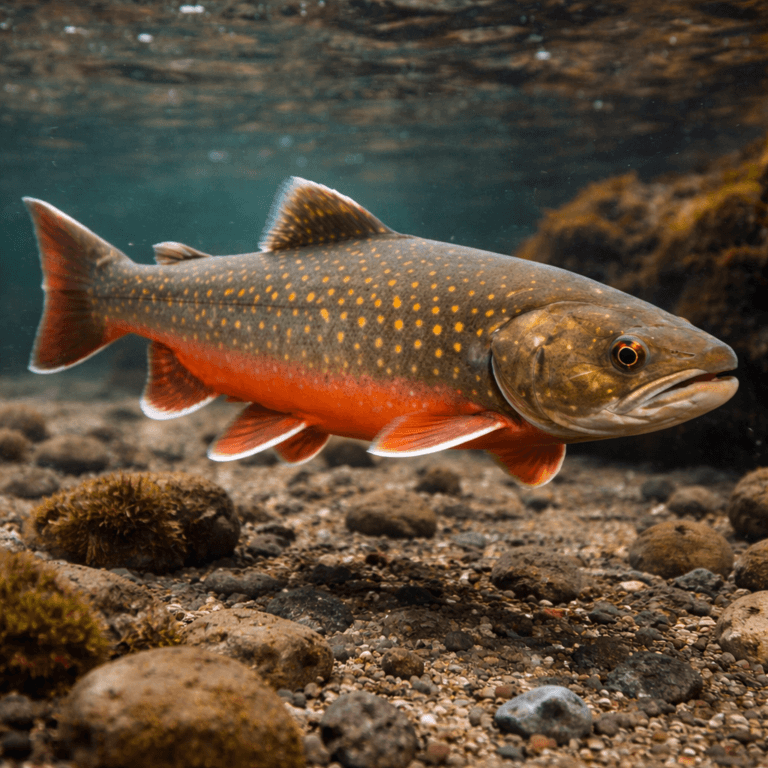
Dolly Varden are often mistaken for trout, but they are actually a species of char — close relatives of Arctic char. In clear Alaska streams, their speckled bodies flash orange and pink against cold water. They are adaptable, found in both freshwater and coastal environments, and move between systems more fluidly than many anglers expect. They feel like a fish that belongs in cold water.
Identification
Dolly Varden are colorful and streamlined.
-
Color: Dark body with pale spots
-
Spawning phase: Bright orange-red underside
-
Size: 1–10+ pounds
-
Body shape: Sleek, trout-like
They are often confused with Arctic char, but location and subtle coloring differences help separate them.
Where You’ll See Them in Alaska
Dolly Varden are common in:
-
Coastal streams
-
Southcentral rivers
-
Southeast Alaska
-
Interior clear-water systems
They are often found in the same systems as salmon, feeding on eggs and juvenile fish.
Seasonal Patterns
-
Spring: Move into freshwater
-
Summer: Active in rivers and coastal streams
-
Fall: Spawning migrations
-
Winter: Some remain in freshwater; others move to sea
Dolly Varden are popular among fly anglers for their aggressive strikes and vibrant spawning colors.
Cold water systems mean cold conditions year-round. Even summer fishing can require insulated waders and layered clothing.
Dolly Varden move between worlds — river and ocean — without drawing much attention, but they are a steady presence in Alaska waters.