
Chum Salmon in Alaska
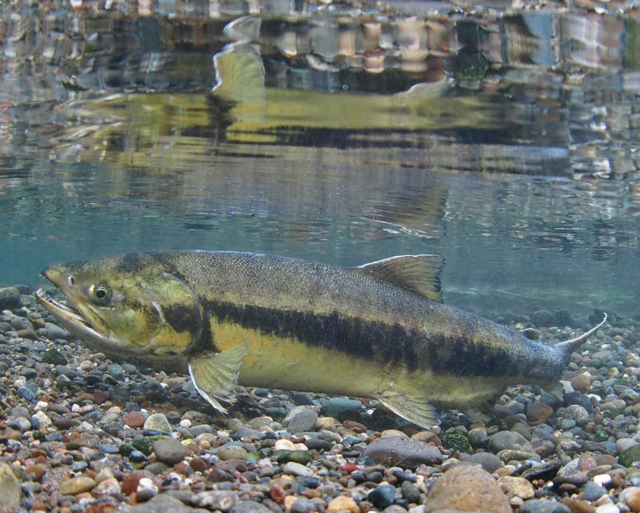
Chum salmon are powerful, broad-shouldered fish built for distance. When they enter freshwater, they transform dramatically — striped sides, enlarged teeth, and a more aggressive look than any other salmon species. They’re often called “dog salmon” because of those pronounced spawning teeth, but that nickname undersells their importance. In western and northern Alaska especially, chum are deeply tied to subsistence harvest and winter food systems. They are strong fish in strong rivers.
Identification
Chum are large-bodied and muscular.
-
Ocean phase: Silver body with faint vertical bars
-
Spawning phase: Dark vertical stripes, enlarged canine-like teeth
-
Average size: 8–15 pounds
-
Build: Thick, heavy through the midsection
In spawning form, they are unmistakable — bold stripes and an almost prehistoric profile.
Where You’ll See Them in Alaska
Chum salmon are common in:
-
Yukon River system
-
Kuskokwim River
-
Western Alaska drainages
-
Arctic coastal rivers
-
Some Interior river systems
They travel long distances upstream, often farther than other salmon species.
Seasonal Patterns
-
Summer: River entries begin
-
Late Summer–Fall: Spawning
-
Fall: Post-spawn die-off enriches waterways
Chum are especially valued for drying and smoking in many rural communities.
Remote river systems where chum run can be powerful and cold. Water levels shift quickly, and currents are often stronger than they appear. Respect the river. Chum don’t get the same spotlight as kings or sockeye, but in many parts of Alaska, they are foundational