
Ermine in Alaska
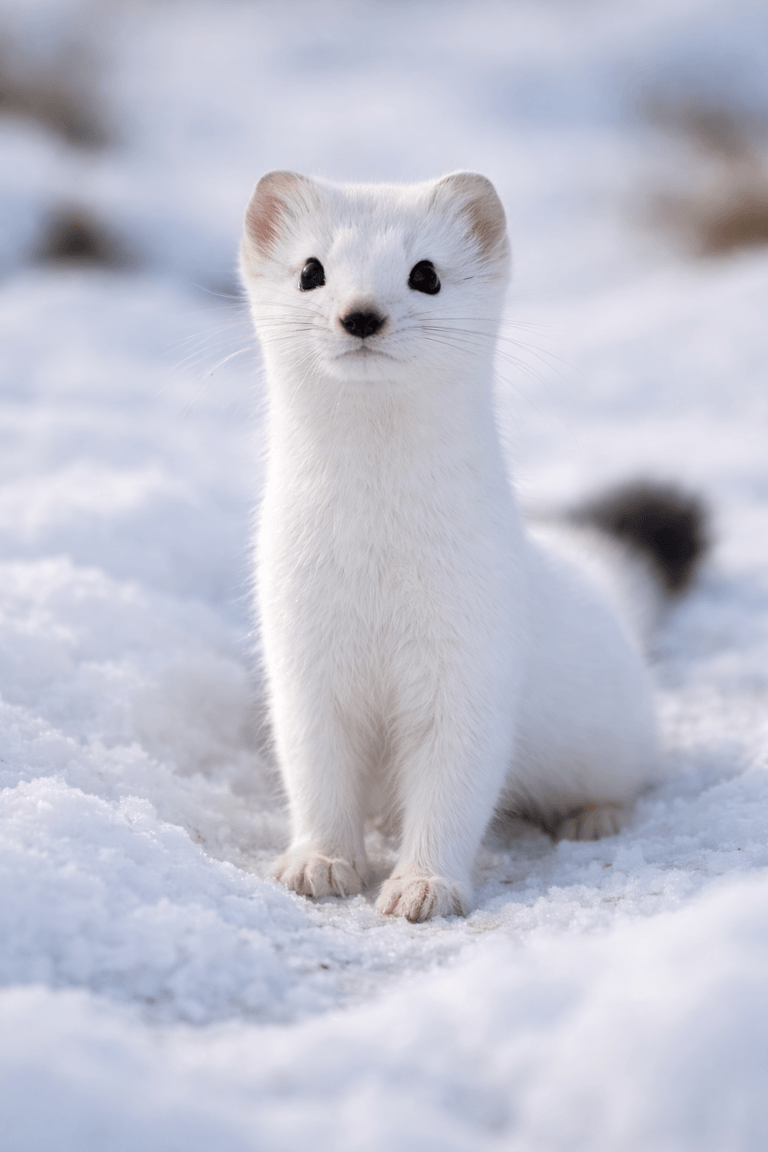
The ermine is easy to miss — a quick flash of white across snow or brown slipping through tundra grass. Small but fierce, it hunts with precision and moves with constant awareness. In winter, its white coat blends perfectly with snow. In summer, it turns rich brown with a pale underside. That seasonal shift is one of the clearest transformations in Alaska’s small predators. Despite its size, the ermine is a capable hunter.
Identification
Ermine are slender, long-bodied mammals with short legs and quick movements.
-
Winter coat: White with black tail tip
-
Summer coat: Brown back, white belly
-
Size: 7–13 inches body length
-
Tail: Always tipped in black
The black tail tip remains year-round and is one of the easiest identifiers.
They move in quick, bounding patterns, often weaving through low vegetation or snow tunnels.
Where You’ll See Them in Alaska
Ermine are found across much of Alaska, including:
-
Arctic tundra
-
Interior forests
-
Alpine slopes
-
Western open country
They are highly adaptable and occupy both forested and open landscapes.
Most sightings are brief — a fast crossing or movement between rocks or brush.
Seasonal Patterns
-
Winter: White camouflage in snow
-
Spring: Breeding season begins
-
Summer: Brown coat blends into vegetation
-
Fall: Feeding heavily before snow season
Ermine are active year-round and hunt small mammals, birds, and rodents. They often follow vole and lemming populations closely.
In tundra ecosystems, they play an important predator role in small-mammal cycles.
Historically, ermine fur was highly valued and used in trade, particularly for its winter-white coat.
If exploring tundra or boreal terrain, steady footing is important — ermine habitat often includes uneven ground, brush, and hidden burrows. Cold exposure is less about temperature and more about wind in open country. Ermine may be small, but they carry the posture of something much larger.