
Black Bears in Alaska
Black Bears in Alaska
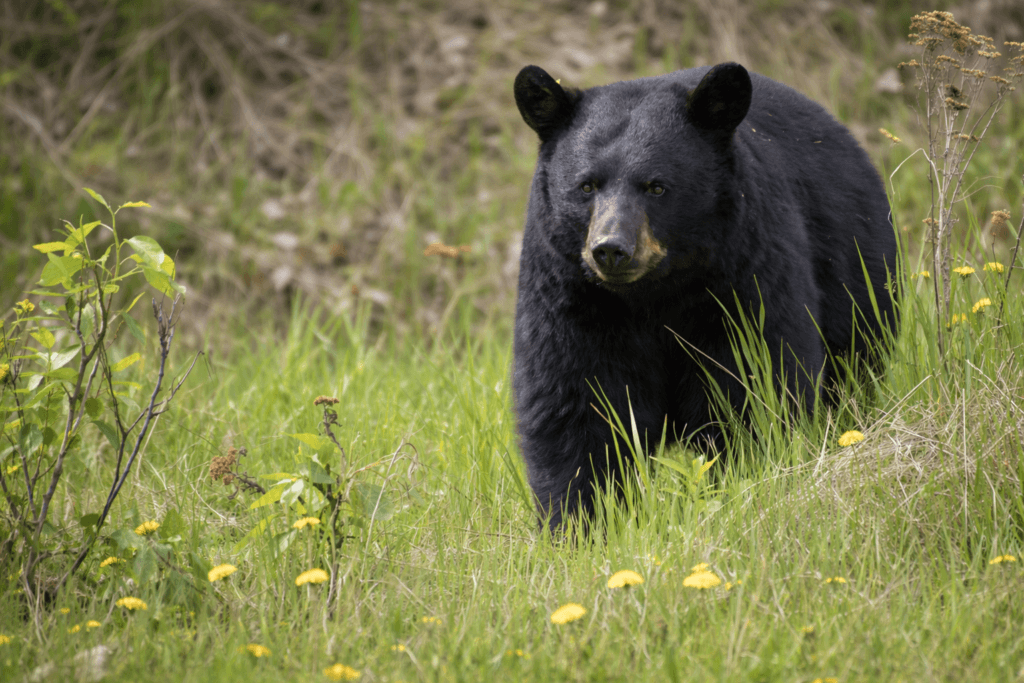
Black bears are common across much of Alaska, especially in forested and coastal regions. Despite the name, they are not always black. In Alaska, they can range from deep brown to cinnamon-colored.
They are smaller than grizzlies but still powerful, intelligent, and highly adaptable.
In many parts of Alaska, black bears are part of everyday wilderness life.
Where Black Bears Live
Black bears are commonly found in:
• Southeast Alaska
• Southcentral Alaska
• Interior forests
• River corridors
• Coastal salmon streams
They prefer forest cover and often avoid open tundra where grizzlies dominate.
Black Bear vs. Grizzly
Key differences:
• No shoulder hump
• Straighter facial profile
• Smaller body size
• Shorter claws
Black bears are strong climbers and often escape threats by climbing trees — something adult grizzlies typically cannot do.
Seasonal Behavior
Spring:
Emerging from dens and feeding on new vegetation.
Summer:
Salmon runs become a major food source in coastal regions.
Fall:
Hyperphagia — a period of intense feeding before winter denning.
Winter:
Denning begins, often in hillside burrows or under root systems.
Safety Around Black Bears
While generally less aggressive than grizzlies, black bears should never be approached.
Basic safety:
• Store food properly
• Keep distance
• Make noise while hiking
• Carry bear spray in remote areas
Binoculars allow for safe viewing without encroaching on their space.
Black Bears and Alaska Life
Black bears are an important part of Alaska’s ecosystem and are also harvested for subsistence and sport in regulated seasons.
They are adaptable, intelligent, and closely tied to salmon, berry crops, and forest health.