
Willow Ptarmigans in Alaska
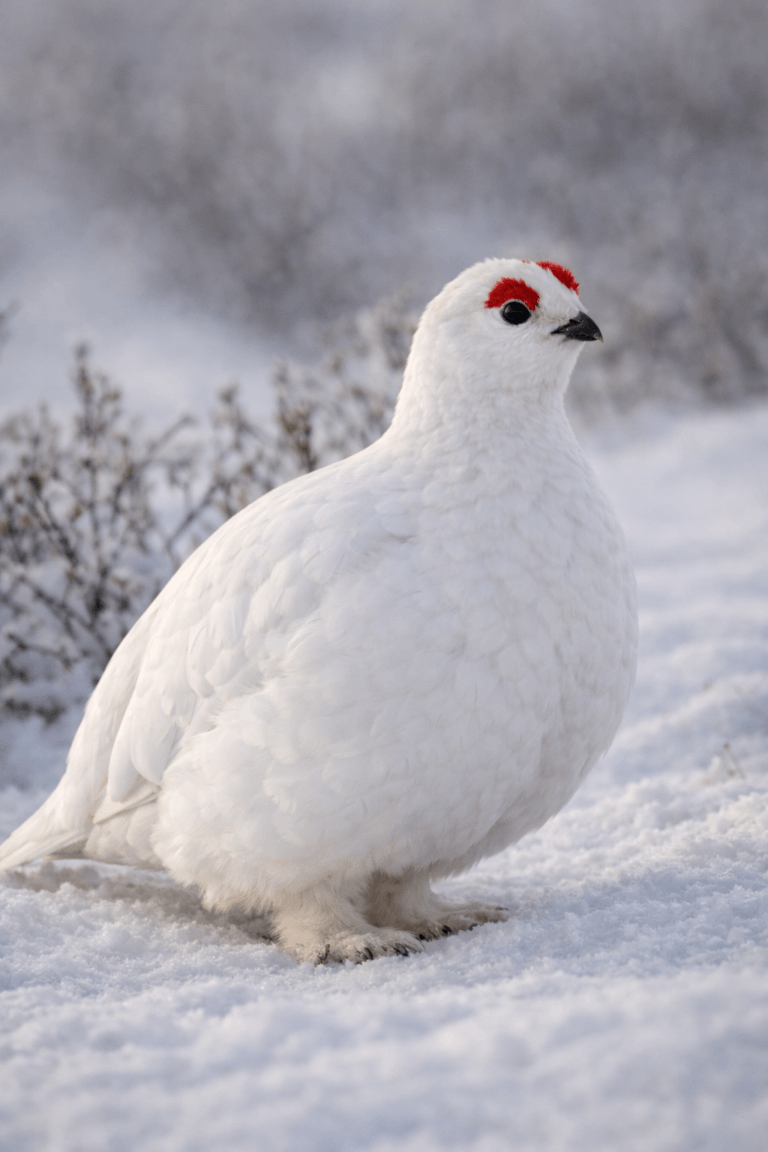
The Willow Ptarmigan is one of the few birds that truly feels built for Alaska. If you’ve spent time along Interior river bottoms or out on open tundra, you’ve probably flushed one from low brush without warning. In winter, they nearly vanish into the snow — white on white, moving only when necessary.
They survive where temperatures drop far below zero and wind sweeps across open country. Feathered feet act like natural snowshoes, helping them move across soft snow and stay insulated from the cold.
Identification
Willow Ptarmigan change dramatically through the year:
Summer: mottled brown, tan, and white for camouflage in brush
Fall: patchy mix as they transition
Winter: almost entirely white
Spring males: bright red eyebrow combs during breeding season
They are stocky, chicken-sized birds with short rounded wings and a low, ground-hugging posture. When flushed, they fly low and fast before dropping back into cover.
Where You’ll See Them in Alaska
You’ll most often find them in:
Willow thickets
River corridors
Tundra flats
Edges of Interior forests
Arctic regions
In winter, they often gather in small flocks and burrow directly into snowbanks for warmth. These snow roosts can be surprisingly effective insulation during deep cold. The Willow Ptarmigan is Alaska’s state bird and remains an important subsistence species in many rural communities. In fall, hunters pursue them along river bottoms and tundra edges, just as families have for generations.
Seasonal Behavior
Spring: Territorial males call loudly and display.
Summer: Ground nests are hidden in low vegetation.
Fall: Family groups begin to form before winter sets in.
Winter: Snow burrowing becomes a key survival strategy.
If you’re walking ptarmigan habitat in shoulder seasons, waterproof boots matter more than you think. Tundra ground often looks dry while hiding soft, saturated soil underneath.