
Snow Bunting in Alaska
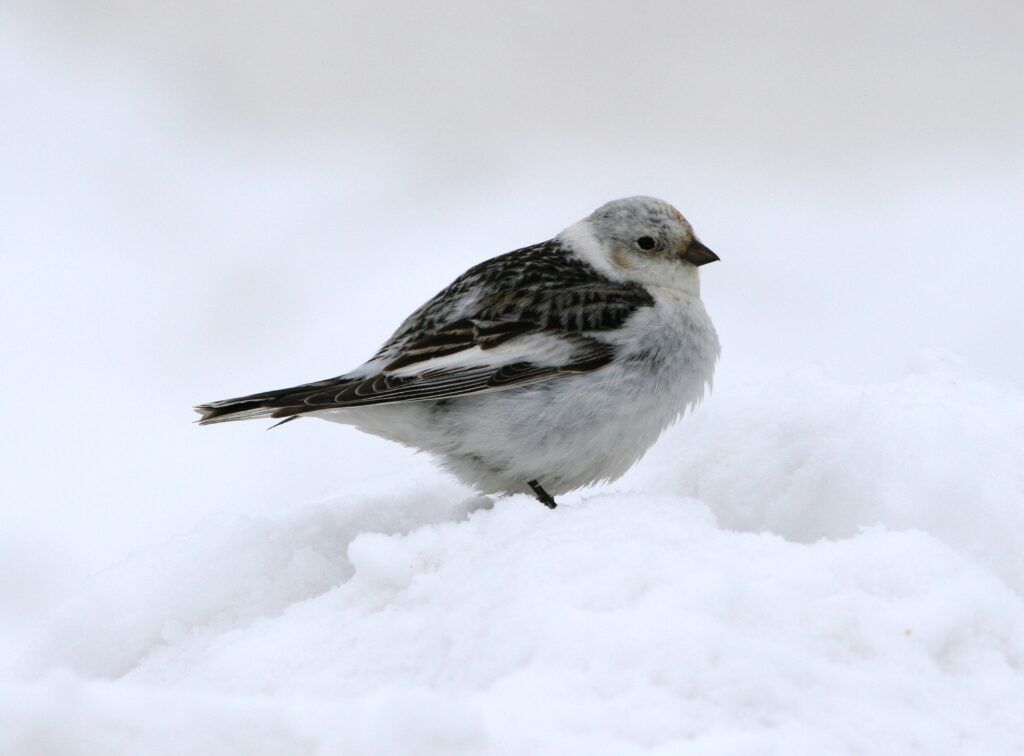
Snow Buntings arrive in Alaska’s Arctic during the short northern summer, bringing flashes of white and black across rocky tundra. They are small, hardy songbirds that nest in some of the most exposed terrain in the state.
Unlike forest birds, snow buntings belong to open ground, gravel ridges, and wind-carved rock fields.
They are often one of the first signs of life returning to Arctic landscapes in spring.
Identification
Snow Buntings are compact, sparrow-sized birds with striking seasonal plumage.
-
Breeding males: White body with bold black wings and back
-
Females: Softer brown and white tones
-
Winter plumage: More muted and brown-streaked
-
Size: About 6–7 inches long
In flight, the white flashes are noticeable against tundra terrain.
They move quickly between rocks and low vegetation.
Where You’ll See Them in Alaska
Snow Buntings are most common in:
-
Northern Alaska tundra
-
Arctic coastal plains
-
Rocky ridgelines
-
High alpine zones
They prefer open, treeless environments and nest in crevices or rocky ground.
Most sightings occur during the short Arctic summer breeding season.
Seasonal Patterns
-
Spring: Migration north into Arctic Alaska
-
Summer: Nesting and raising young in tundra
-
Fall: Begin migrating south
-
Winter: Move into southern Canada and the lower 48
Snow Buntings are long-distance migrants despite their Arctic breeding grounds.
They feed on seeds and insects, shifting diet with the season.
Because they inhabit exposed terrain, viewing usually involves wind and wide-open sky. Even in June, wind layers are often necessary in tundra country.
Snow Buntings don’t dominate the landscape. They move through it quietly — small flashes of life in big open space.